Description
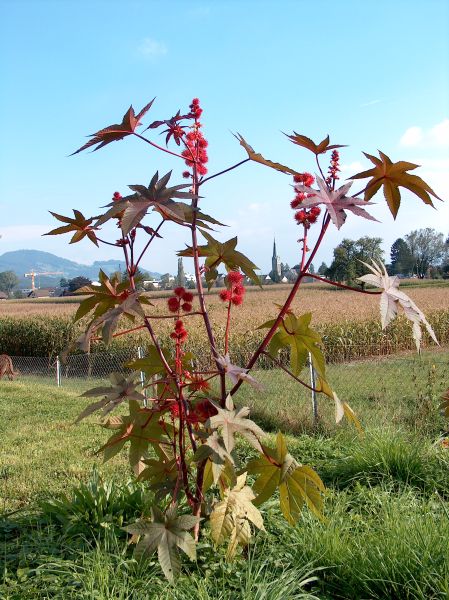
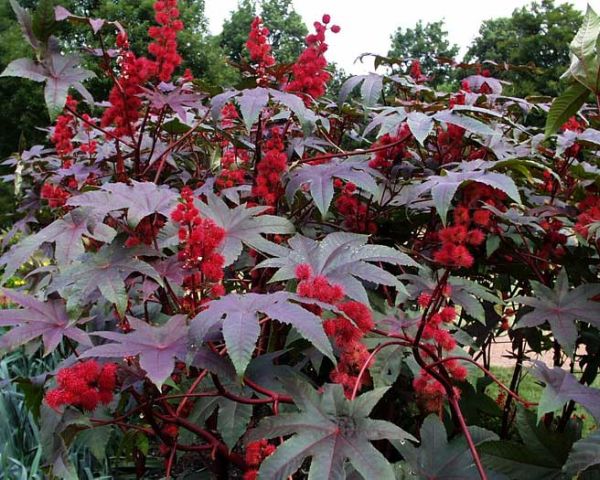
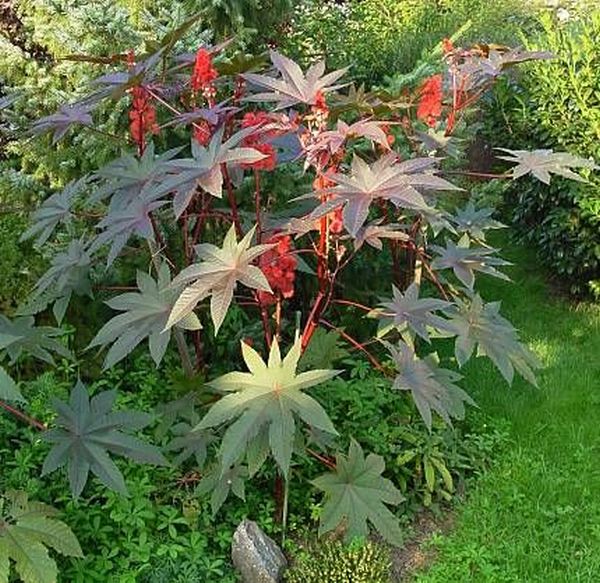
The castor oil plant is an annual of the spurge family (Euphorbiaceae). It comes from Africa. Its habit varies with latitude. In our conditions the plants reach 2–3 m in height, taking the form of a large shrub or small tree with woody, heavily branched stems.
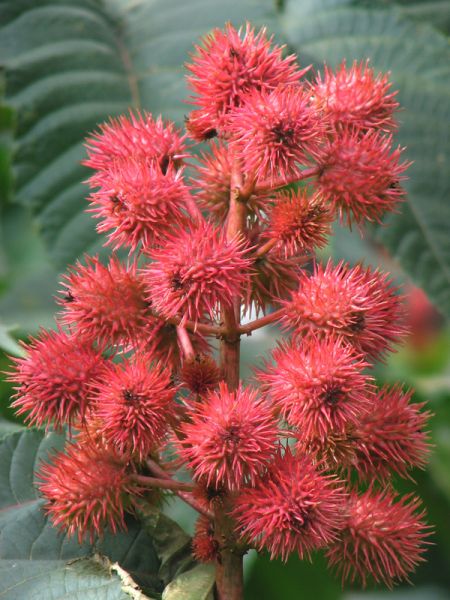
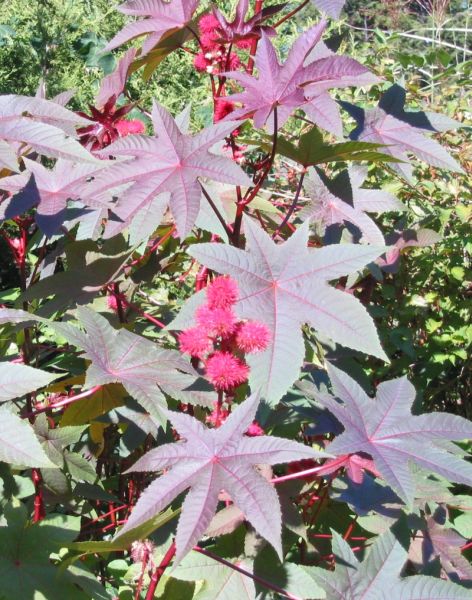
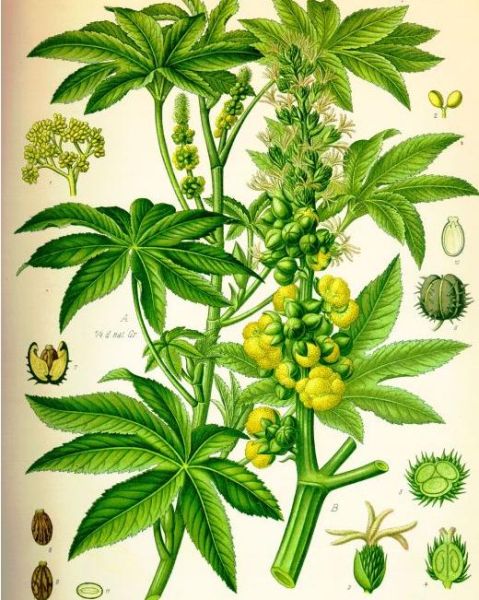
The stem varies in colour from green through red to dark purple, as do the leaves, depending on the subspecies. The leaves are long-stalked, shaped like horse-chestnut leaves, toothed, and here reach 50 cm across. The castor oil plant flowers from late summer to autumn. The decorative flowers are small and unisexual, gathered in panicles in groups along the axis of the inflorescence, and mostly wind-pollinated. The fruits are warty-spiny, three-chambered seed capsules that split along three seams, with one seed in each chamber. The oval seeds are about 2 cm long, with a hard seed coat, glossy and mottled in various colours.
Requirements
The castor oil plant needs fertile soil and a warm, sunny position.
Propagation
It is propagated from seed sown in March in individual pots. Plant out in the final position after 15 May, when the danger of spring frosts has passed.
Care
In Poland it is grown as an annual from seed. It is very sensitive to frost – seedlings freeze at −1°C. In the 1960s field trials of castor oil plants were carried out in Poland, but they failed because of the low yield of ripe seed caused by the short growing season; mature plants freeze at −3°C.