Description
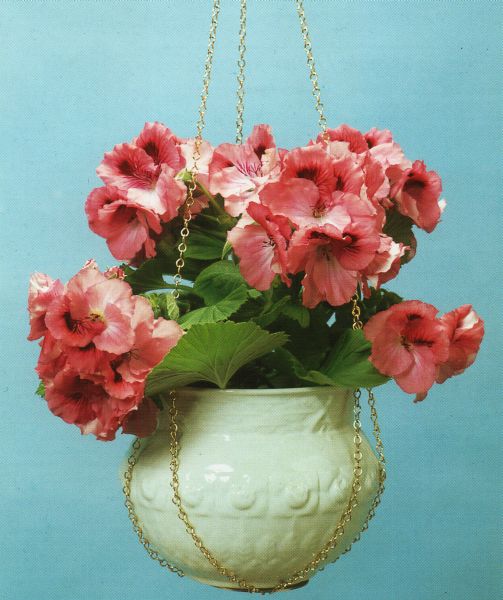
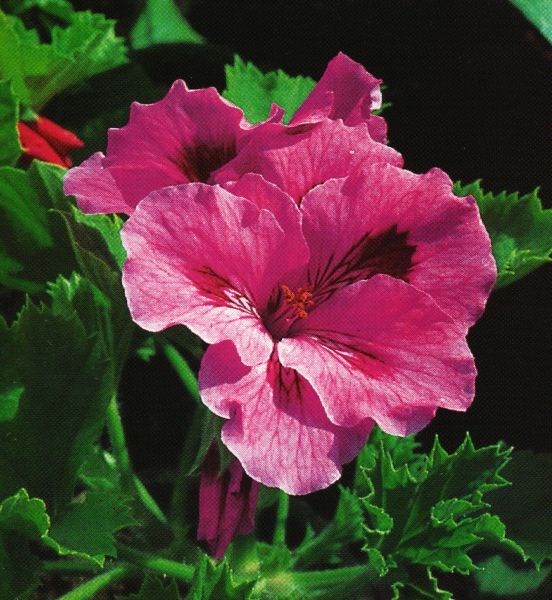
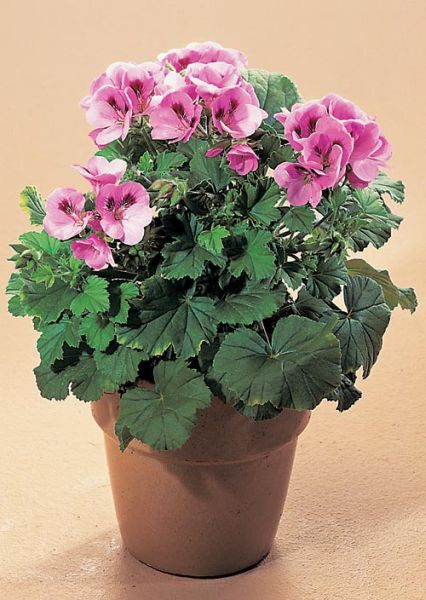
The regal pelargonium is known for its large flowers in a wide range of colours. The plant often has only one stem but grows into the size of a shrub. In England, Germany and France regal pelargoniums, thanks to their beauty, were the most widespread of all the groups.
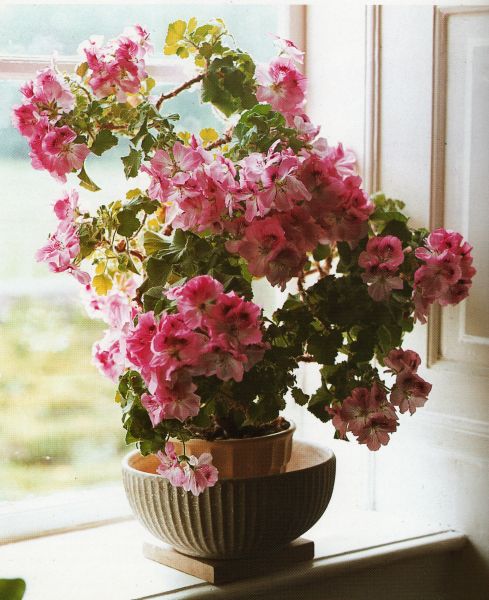
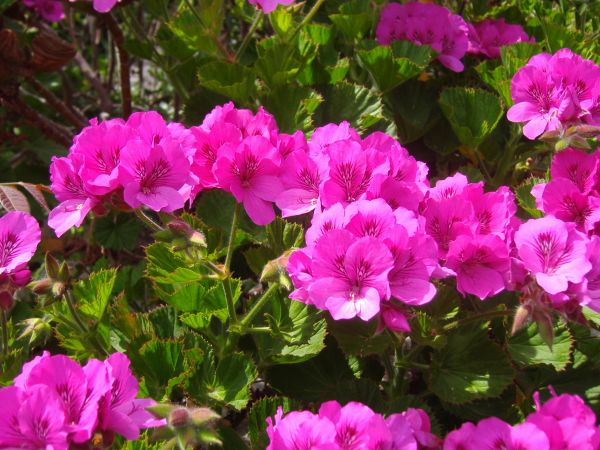
After a while regal pelargoniums form a dense shrub up to 50 cm tall. The flowers are gathered in umbels of 8–12, and a single flower can be 5 cm across. With good care they flower from May until late autumn, and they can also be brought into flower at other times of year.
Requirements
Regal pelargoniums should stand indoors at sunny windows where they get sun for as long as possible, but they must always be protected from harsh midday sun.
In summer pelargoniums must be watered generously. The plants overwinter at 8–12°C.
Propagation
Pieces of shoot can be used straight away as cuttings. The tips must not be too woody. Cut off shoot tips 8–10 cm long with one, or better two, pairs of leaves. Put the cuttings straight into water, or dip them in rooting hormone and plant them in a mix of sand and peat whose temperature must not exceed 10°C. Cover the pot with a plastic bag and place it in a warm, very bright spot. Roots form after 2–3 weeks. Then move the plant to pots of loam-based compost and keep it at no more than 12°C – otherwise no flowers will form.
Flowers in winter too
Regal pelargoniums are above all houseplants. They can also be made to flower in winter with a little help. To flower, they need short days – a longer dark period – for some time. This is best achieved with a black, opaque bag placed over the plant, so that it gets no more than 9–10 hours of light a day. Doing this for a month will bring the pelargonium into flower. The same effect can be achieved by keeping the plant in a room below 10°C.
Care
All pelargoniums love bright, sunny positions. During flowering they should be placed somewhere especially bright, but remember that on hot days the sun can scorch the leaves.
In summer pelargoniums must be watered generously; in the winter months keep the plant almost dry. Feed once a week from March to September, using a potassium-rich fertiliser before flowering. Do not mist pelargoniums.
Repot young plants in spring and older ones rarely. Pelargoniums like to be crowded and flower better when their roots fill the pot well. Use a loam-based mix as compost.
When plants get sick
Weak growth – the position is too dark. Move the plant elsewhere, but not into direct sun.
Leaves turning yellow – the compost is too dry. Yellow spots also often appear. Water more.
Many weak shoots growing from the root collar may result from a bacterial disease. Discard the plant.
Fungal diseases appear in damp, too cool conditions. They can be recognised by rotting shoots and greyish mould on the affected leaves. The plant wilts and must be discarded.
White insects are often whitefly or aphids. They can be controlled with chemical products.
Lots of leaves, few flowers may be normal, but may also be caused by too much fertiliser. Remember to use the right dose.
Before you buy
Choose a dense, bushy plant. It is advisable to check the undersides of the leaves, as that is where pests like to hide.
Average lifespan: – Most pelargoniums live to a ripe old age. They flower most beautifully in their third year.
Difficulty of care: – Easy to care for.