Description
The Chinese peony is a perennial of the buttercup family (Ranunculaceae) from Siberia and China. The plants have thickened tuberous roots and grow vigorously to 70–100 cm. The stems are stiff and upright, slightly woody at the base. The leaves are deeply divided and borne on bluish stalks.
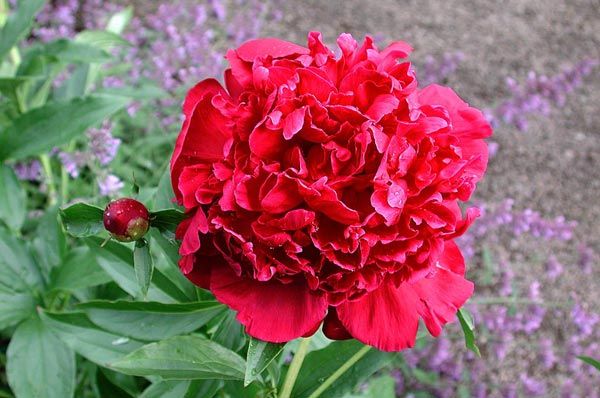
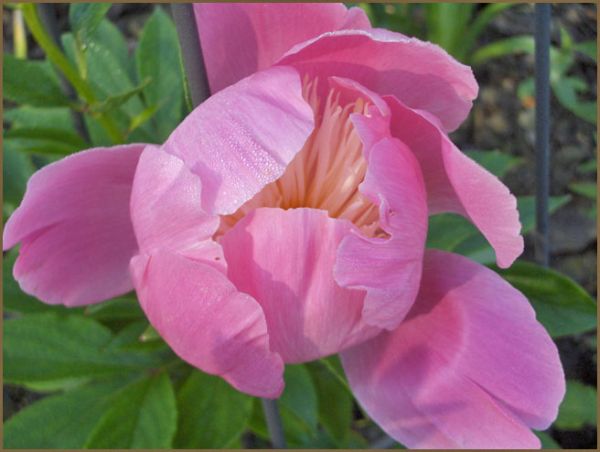
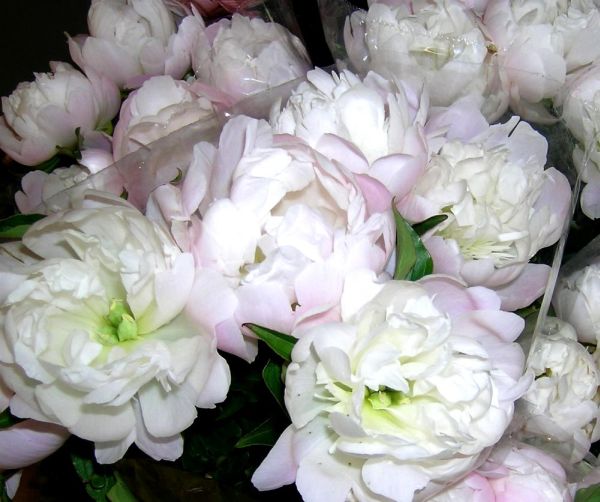
They flower from the end of May into June, opening just as the irises finish. The flowers of garden varieties are white, pink, crimson or purple in various shades, with a light rose scent. They may be single, anemone-form or double.
In floriculture only hybrid varieties matter. The following groups are distinguished:
– single-flowered peonies
– Japanese peonies – with normal petals in one whorl and a centre of narrow, often differently coloured petals transformed from stamens
– anemone-form peonies – with outer petals in several whorls and fairly broad central petals arranged in a ball
– double Chinese peonies.
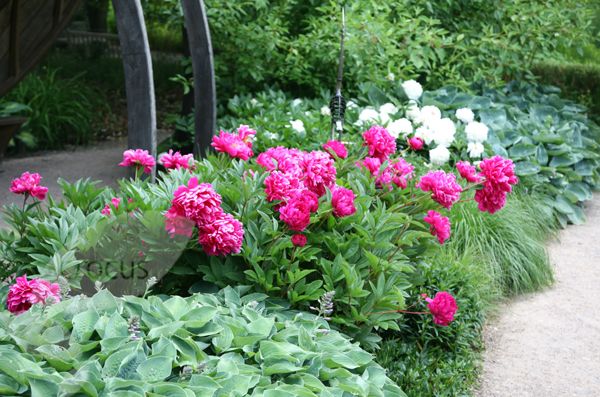
They are used in large single-species borders, in groups on lawns and under ornamental shrubs; as cut flowers they last up to 10 days in water.
Requirements
The soil should be fertile, humus-rich, deeply cultivated (at least 50 cm) and slightly acidic. A sunny or lightly shaded position.
Propagation
Propagate by dividing the tuberous roots from August to September. Each division should have 2–3 healthy roots and 2–3 buds at the base of the stem. Plant 100 x 100 cm apart, not too deep – so that the buds are covered by only 5 cm of soil.
Care
Peonies need generous feeding and do not tolerate lime; organic fertilisers are better than mineral ones. Every spring spread well-rotted manure or peat-and-manure compost between the plants. Do not put fertiliser in the middle of the clump, where new shoots will grow. In summer you can feed with liquid manure. Peonies are long-lived and can grow in one place for 10–15 years if carefully tended. Cover the plants with spruce branches for winter.