Description
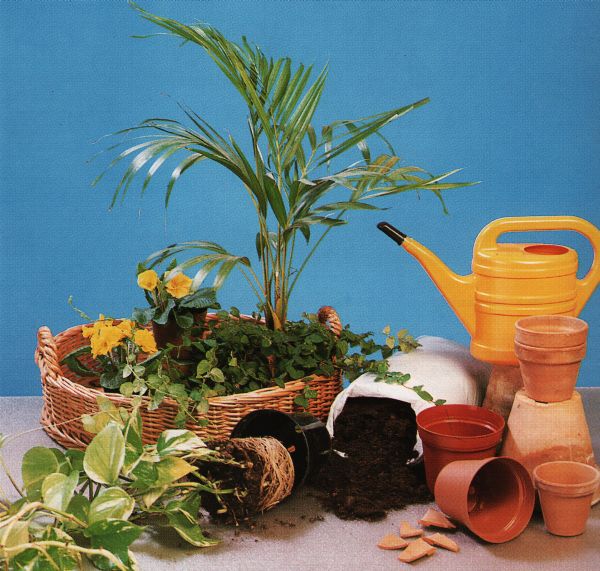
The best time to repot plants is early spring. By then they have finished their winter rest and need fresh soil, and often a new pot as well.
Once these basic needs are met, the plants are reasonably well prepared for the start of the growing season. However, repotting is not strictly limited to spring. Many plants, especially young ones, can be repotted at other times of the year too. I will try to explain how best to do it.
By February–March most of the nutrients in the soil are exhausted, even if the plants have been fed regularly all year. The plant needs a new growing medium and new space for its roots. It is often necessary to move it to a larger pot, as this can determine the shape the developing plant will take.
You also need to pay attention to the roots. Some plants, such as palms and climbers, do better in narrow, tall pots. Others – succulents – in flat, shallow ones. This often affects how well they flower. And do not forget that the size of the pot should match the size of the plant.
Clay pots
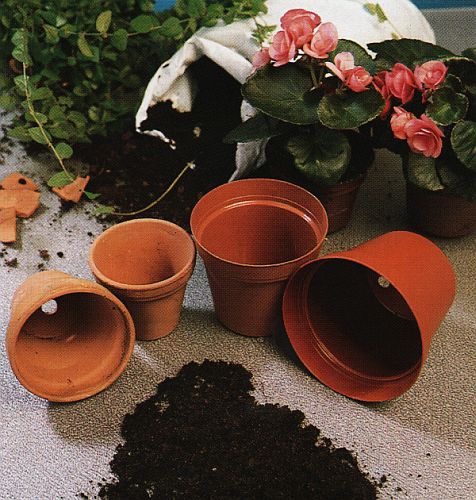
Clay pots absorb a lot of moisture. They can also take up and release excess water into the air just as quickly. This is quite an advantage, because a plant in such a pot will not become waterlogged. In addition, evaporation occurs when temperatures are high, so it indirectly helps cool the soil. This is especially useful when the plant stands in full sun. When the plant starts to dry out, the clay pot will supply it with moisture. In a clay pot it is also easy to check how moist the soil is by tapping it: if the sound is dull, the plant has enough water. The biggest drawback of clay pots is that pests settle on their walls and mineral salts build up there. So when repotting, scrub the pot well, ideally with soapy water.
Plastic pots
The main reasons for the popularity of plastic pots are their low price and durability – they do not break. Unlike clay pots, plastic ones do not let water evaporate. This means you do not need to water as often, but there is a greater risk of the plants becoming waterlogged. The walls of plastic pots are very smooth, so they are easier to keep clean. On the other hand, removing a plant from them – to repot it or plant it elsewhere – can be tricky.
If the plant's label gives no special instructions, both clay and plastic pots can be used. There are, however, plants for which the type of pot does matter.
Self-watering pots
Containers with an automatic water supply are practical, especially for plants that need water in steady amounts, such as ferns.
These devices may take away some of the pleasure of traditional watering, but they certainly make plant care easier and remove the risk of neglect and drying out. Plants watered this way develop better. When using self-watering pots for different species, remember that the plants should have similar preferences for soil moisture.
It does not matter whether you use a ceramic, clay or plastic pot. What matters most is that it is the right size and clean.
How to start repotting
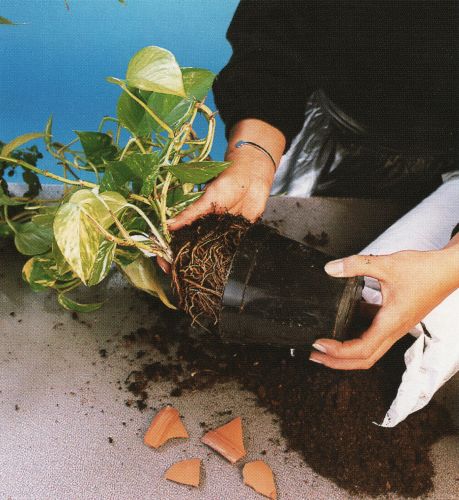
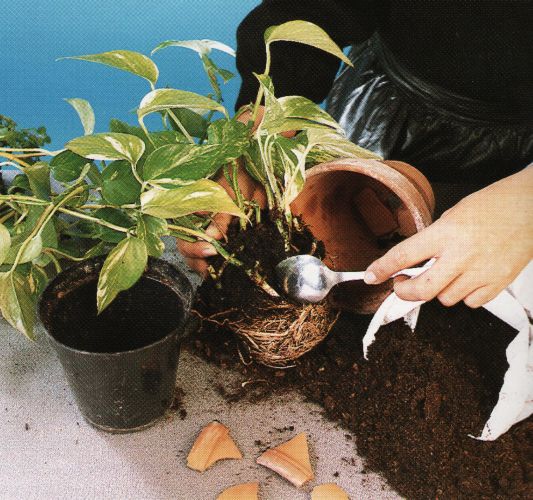
First of all, have everything you will need at hand: pots, potting mix, gravel, expanded clay, a spoon, sticks, scissors and newspapers to cover the work surface. Start by gently removing the plant from its old pot. Hold the plant at its base with one hand, keeping the soil in place with your fingers. Then turn the pot upside down and tap it against the edge of a table until the root ball slides out. Next, remove as much of the old soil from the root ball as possible – a spoon or a stick works best. Cut off and discard any rotten or damaged roots.
Replanting
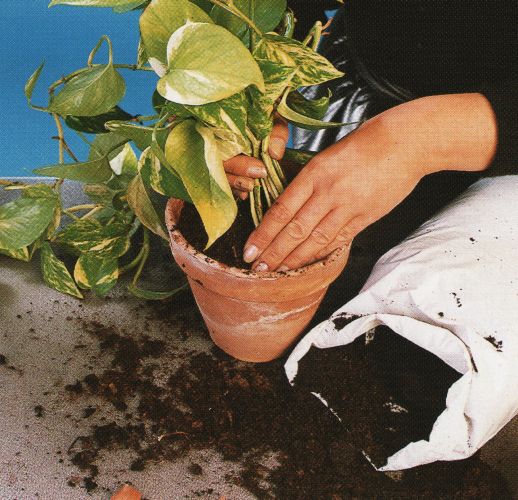
Put a layer of expanded clay or gravel at the bottom of a pot with a drainage hole. This ensures good drainage. Sprinkle some potting mix over the drainage layer and set the plant on it. Then fill the pot with soil all around, up to the rim. Press the soil firmly around the roots and tap the whole pot gently on the edge of the table so that the soil settles.
For large plants it is enough to replace just the top layer of soil and add fertiliser to it. This is better than taking such a plant out of its pot, as handling a large plant is much more complicated.
Plenty of water
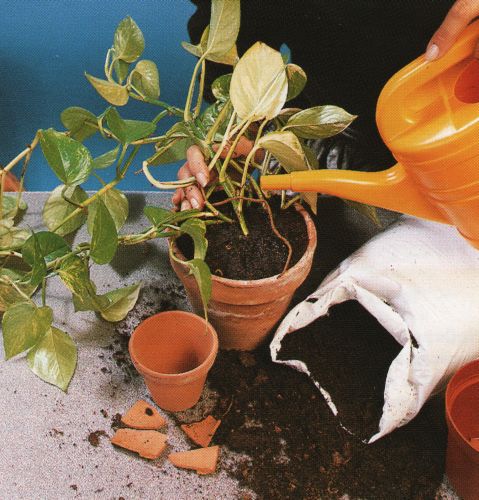
Whether you have repotted the plant or only refreshed the top layer of soil, water it thoroughly. This way the soil settles snugly around the roots. If you use clay pots, soak them in water for a few hours before planting so that they absorb water; otherwise they will draw too much water from the soil. The potting mix must not be too dry either, as it then takes too long to moisten. For the first five or six weeks after repotting, do not feed the plants, because any fresh potting mix contains enough nutrients for the start of the growing season.