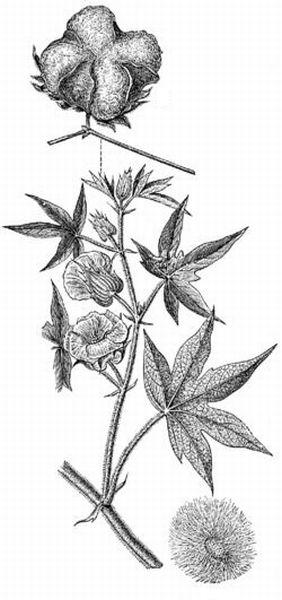
Description
Cotton is a genus of the mallow family comprising 40 to 70 species (depending on the taxonomic treatment). In the wild they grow in dry areas on every continent except Australia and Antarctica.
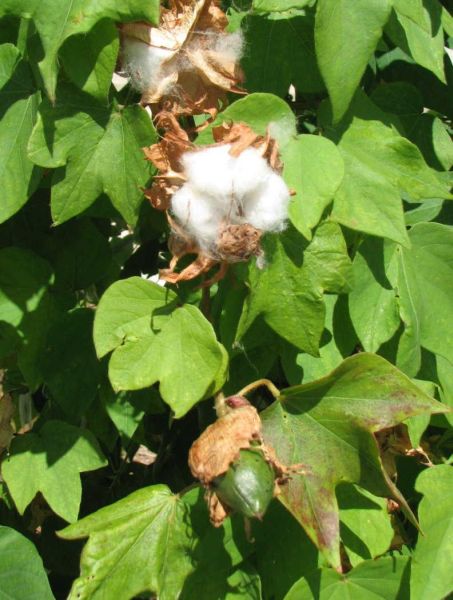
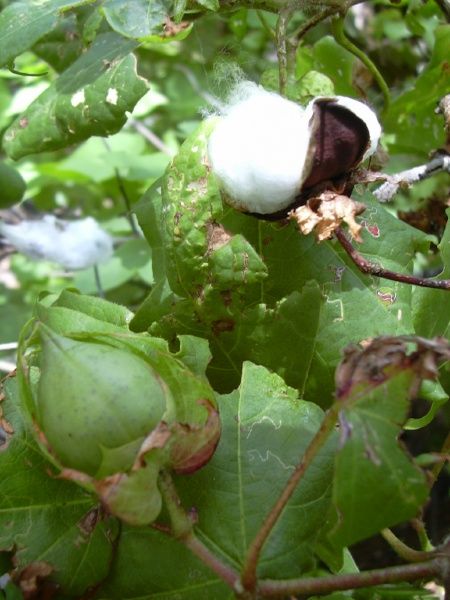
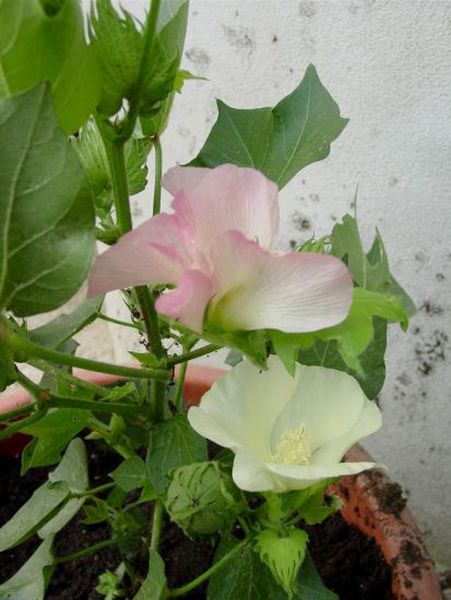
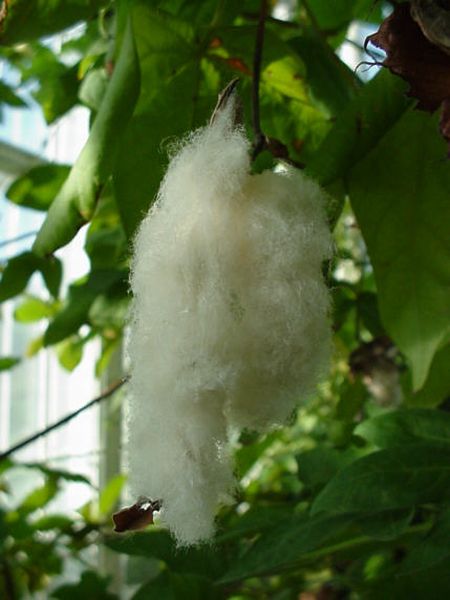
A perennial 50–80 cm tall with lobed leaves, grown indoors, on terraces and in conservatories. In summer and autumn large creamy-yellow or pink bell-shaped flowers appear. After flowering, the plants are decorated by white, fluffy, woolly bolls. Cut stems with bolls are suitable for dried arrangements.
Requirements
The plant needs a constantly bright position but does not tolerate scorching sun. In summer it likes higher temperatures of 18–24°C; in winter the temperature should not fall below 15°C. Cotton needs regular, generous watering.
Propagation
Sow the seeds in March–April, 2–3 per pot 6–8 cm across or in cell trays. At above 20°C they come up after 7–14 days. Pinch out the seedlings at the 4–5-leaf stage to make them bush out.
Care
During flowering, cotton needs regular watering. The soil can dry out a little between waterings, though, as it does not tolerate waterlogged roots. Once a week add liquid fertiliser to the water. Outside the flowering period water more sparingly.
Cotton grows best in porous, nutrient-rich soil with good drainage. Only perennial plants are repotted, every 2–3 years. The plant is not pruned.
When plants get sick
The flowers drop – the result of low temperatures or overwatering. Move the plant somewhere warmer or water less.
Aphids – remove with a cotton bud soaked in methylated spirit.
Before you buy
Young cotton plants cannot usually be bought. You can grow the plant yourself from seed, available in well-stocked shops.
Average lifespan: – it can live a very long time, although the seeds sold here are usually of annual plants.
Difficulty of care: – needs regular, generous watering.