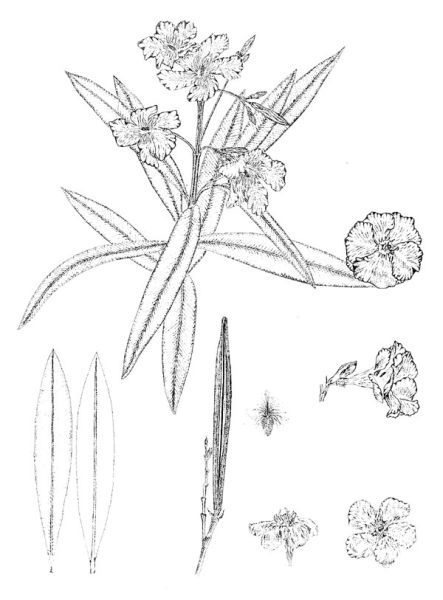
Description
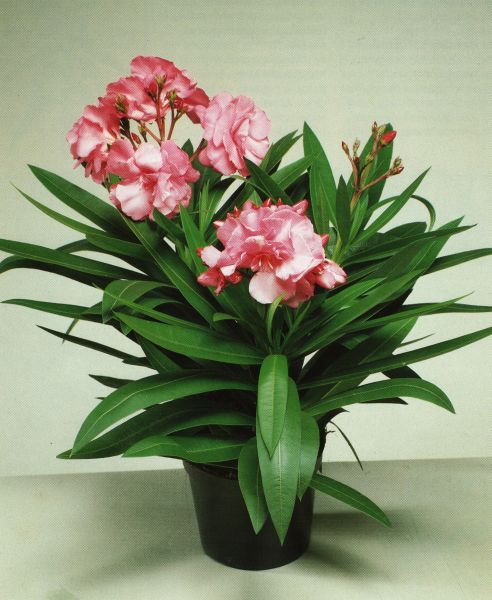
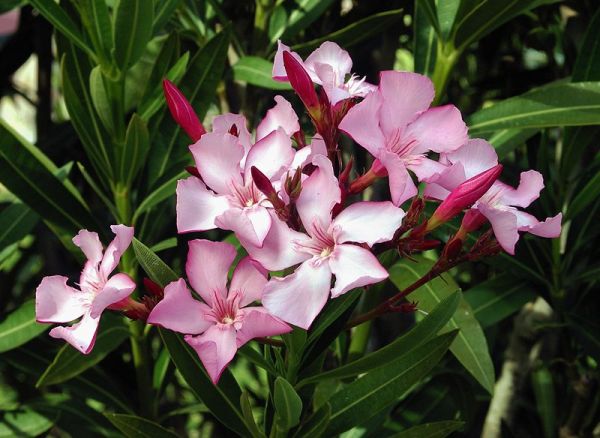
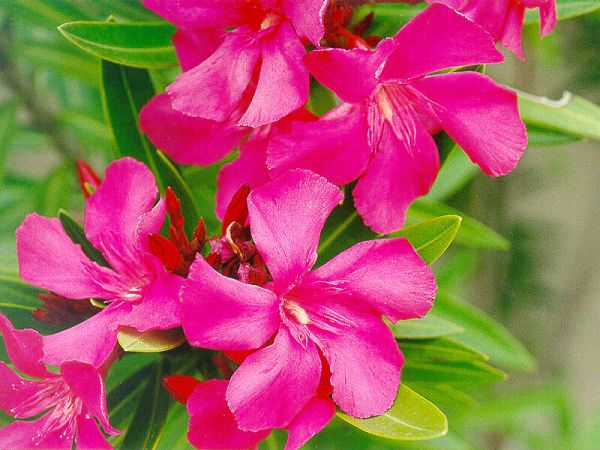
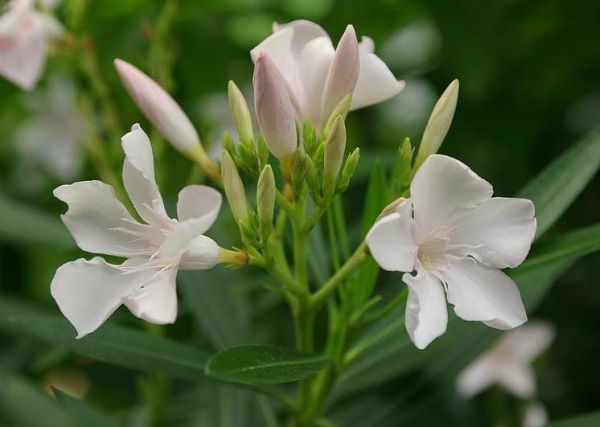
In its natural habitat oleander grows along riverbeds. The leaves grow in groups of three, close to the stem. The flowers grow at the tips of the shoots and appear in June. They are beautifully fragrant.
Depending on how it is pruned, the plant forms a shrub 50–150 cm tall and can even grow into a tree reaching 3–4 metres. Plants grown at home are not as big, but just as beautiful. It can be grown successfully on terraces and balconies.
Oleanders should not be grown if there are small children in the house. All parts of the plant are poisonous. It is enough for a child to pick a flower and then lick their fingers to get a headache and vomiting. Take care when pruning too.
Requirements
Oleander needs plenty of water, especially in summer. The root ball must never dry out, and this applies in winter too. It tolerates dry air from radiators, but it will produce more flowers in a cooler spot.
Propagation
In June and July cut off 15–20 cm shoot tips and use them as cuttings. Put them in a dark bottle of water; roots will form after 2–3 weeks. Then plant the young plant in a pot of fertile compost. Pinch it back several times so that it branches.
Care
January–February – Keep the plant in a cool, bright room. Water sparingly, but never let the compost dry out.
March–April – The growing period begins. Move the plant to a warmer place and gradually water more often. When the plant has grown, repot it. The shoots can be pruned. Start feeding.
September–December – Growth slowly comes to an end. In September, before the first frosts, bring the plant back indoors from the garden. Keep it in a cool place so that it flowers the following year. Water less and do not feed.
From spring to autumn it does best outdoors, where it grows more lushly. Oleander withstands temperatures down to 0°C, but does not tolerate prolonged frost.
Repot young plants every year and older ones as needed. Loamy soil is best for repotting.
When plants get sick
Overlong shoots and pale leaves are a sign of too little light or nutrients.
Yellow or brown spots on the leaves are caused by fungi. Use a fungicide.
Aphids, mealybugs and scale insects attack the shoot tips, stems and leaves. Spray the plant several times with insecticide and wash it with lukewarm water.
Before you buy
When buying a plant between April and early June, choose a specimen with plenty of buds. Check that it is healthy.
Average lifespan: – Can live for a very long time.
Difficulty of care: – Easy to grow.