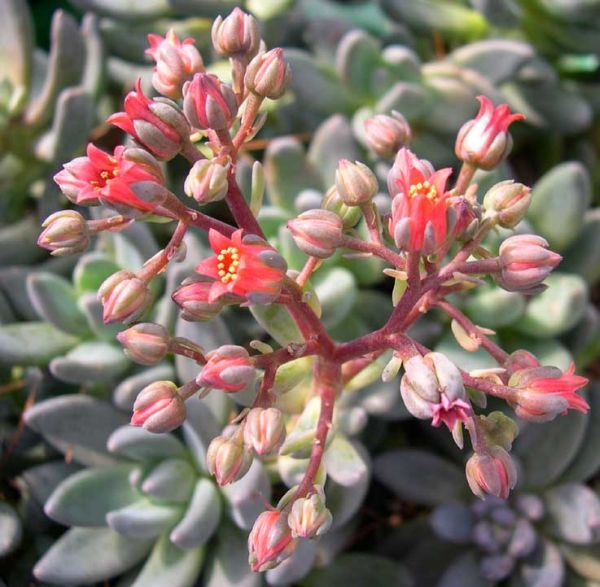
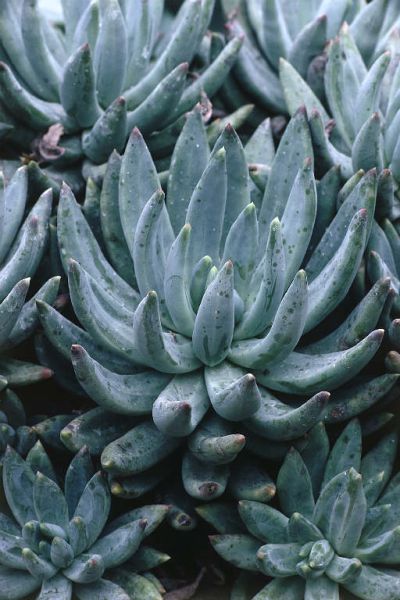
Description
You would search for pachyveria in the wild in vain, because it is a hybrid of two succulents of the stonecrop family – echeveria and pachyphytum.
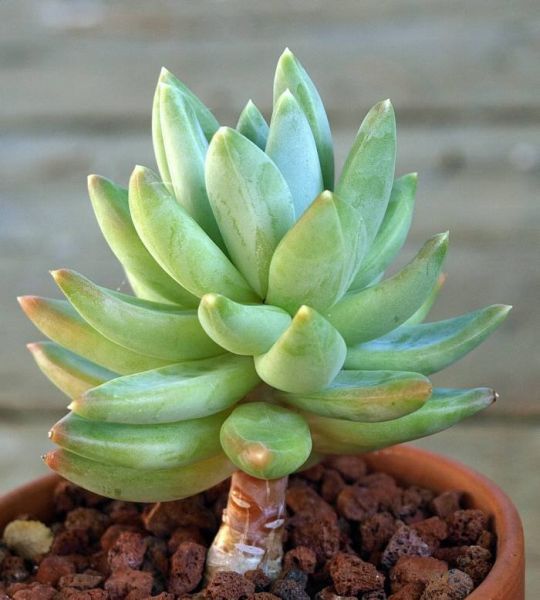
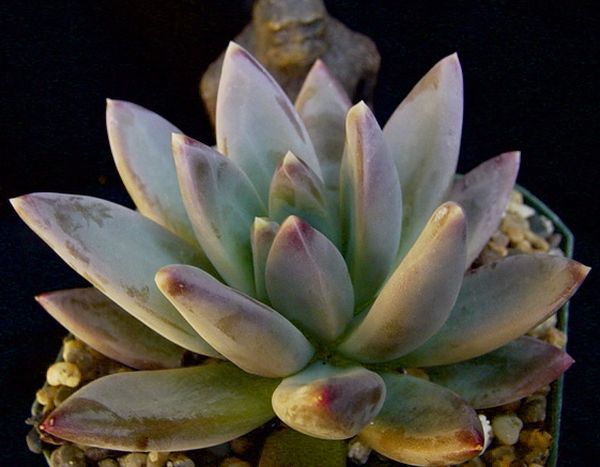
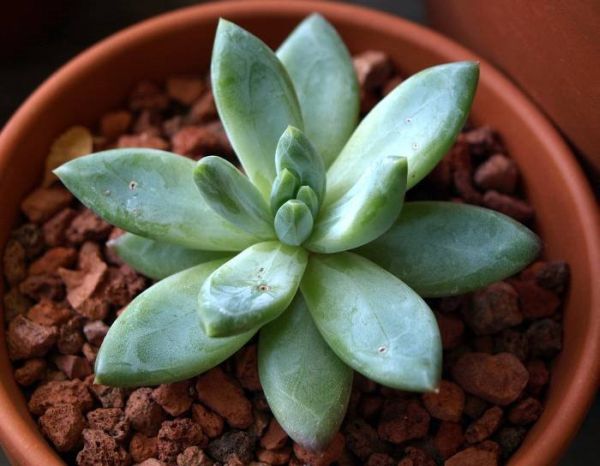
Pachyveria leaves are thick and fleshy. They are covered with a layer of wax that protects them from drying out and also reflects the sun's rays. This layer must never be rubbed off.
Propagation
Pachyveria is very easy to propagate. The easiest method is from whole leaf rosettes cut off the mother plant.
The plant can also be propagated from leaf cuttings. Let the cut surface dry before planting – this prevents the cuttings rotting in moist soil. In a warm, lightly shaded spot the cuttings root quickly.
Care
Take care when watering and never spray the plant with water. Water moderately, always in small amounts, letting the soil dry out before the next watering. In winter water only when the fleshy leaves begin to wrinkle.
From mid-June, when it is warm enough outside, the plant can be moved outdoors to a place sheltered from rain and strong wind. In winter keep pachyveria in a bright, cooler place. In spring and autumn bring it back into the room.
The plant is best repotted in spring into a pot filled with special cactus compost, with a thick drainage layer at the bottom.
Pachyveria is not pruned. Regularly remove withered leaves from the rosette.
When plants get sick
Rotting of the roots and stem base is caused by overwatering. In that case make cuttings from the leaves and discard the rest of the plant.
Aphids and thrips attacking pachyveria are hard to control, as both water and chemicals damage the wax on the leaves. Use insecticide sticks pushed into the soil.
Before you buy
Pachyveria and its varieties are often offered for sale. Check that the leaves are undamaged and the plant is well rooted.
Average lifespan: – Can live for a very long time.
Difficulty of care: – Pachyveria is easy to grow.