Description
Originally the pineapple grew only in the tropics and subtropics of South America. It was named by the Brazilians. It was discovered in the 18th century by the French botanist Charles Plumier, who brought it to Europe. Later the pineapple was also cultivated in Africa and Asia, where it still grows wild today. Australia has extensive pineapple plantations. The largest exporter of pineapples, however, is Hawaii. The plants sold in our part of the world mostly come from Florida or Côte d'Ivoire. The pineapple is grown both as a crop and as an ornamental plant.
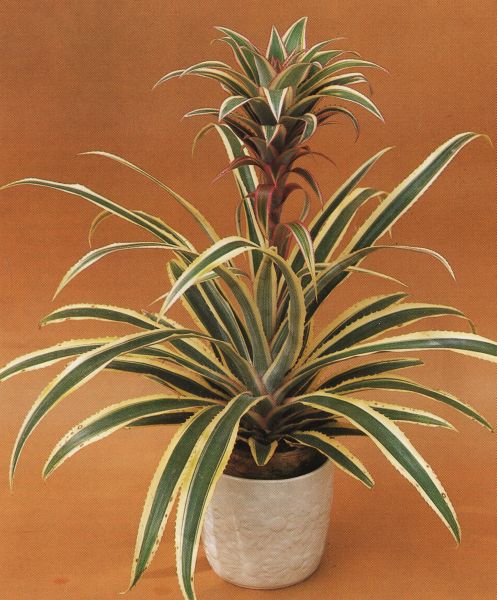
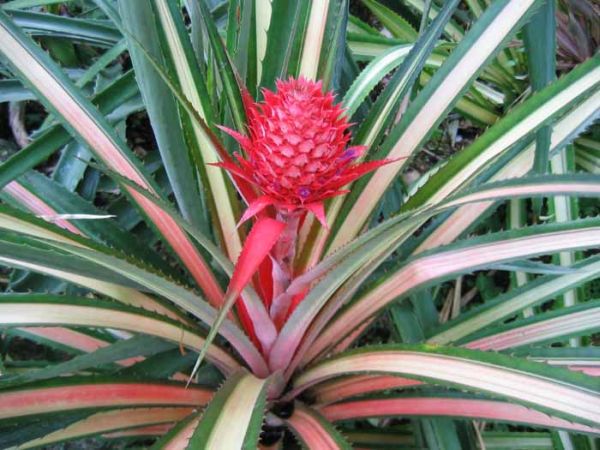
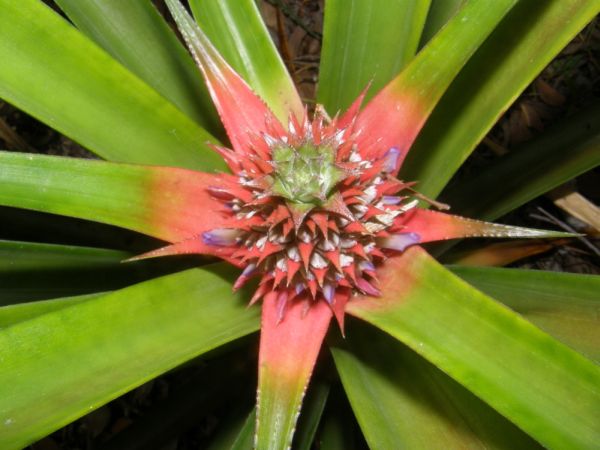
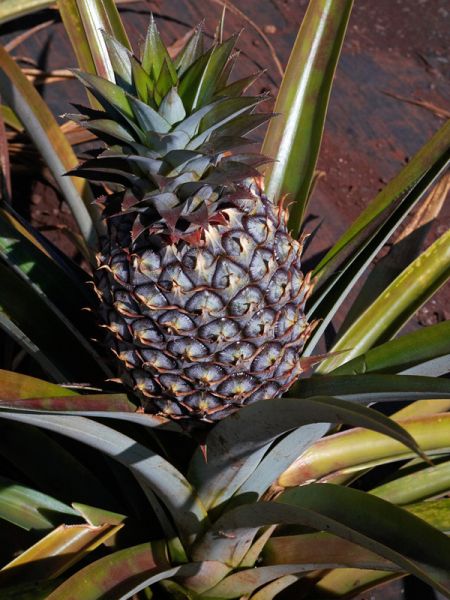
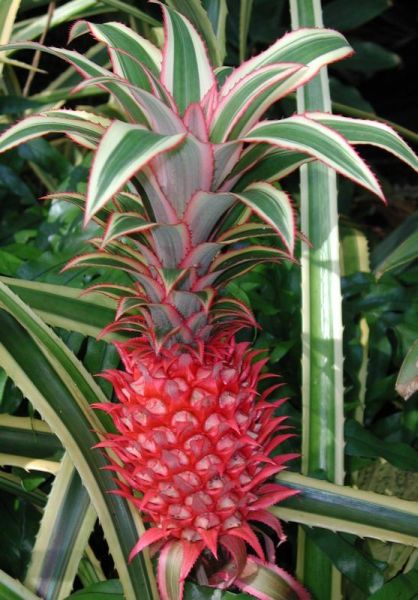
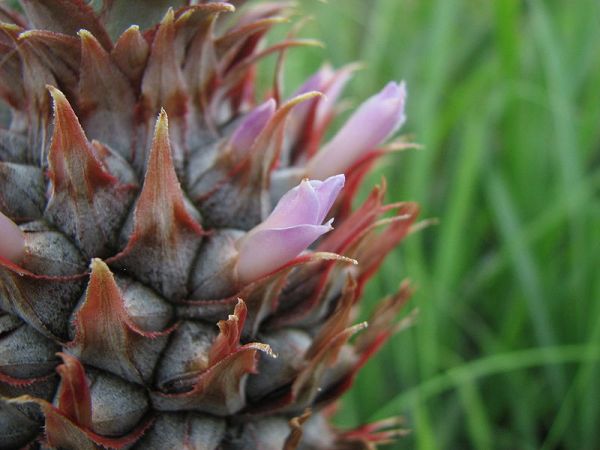
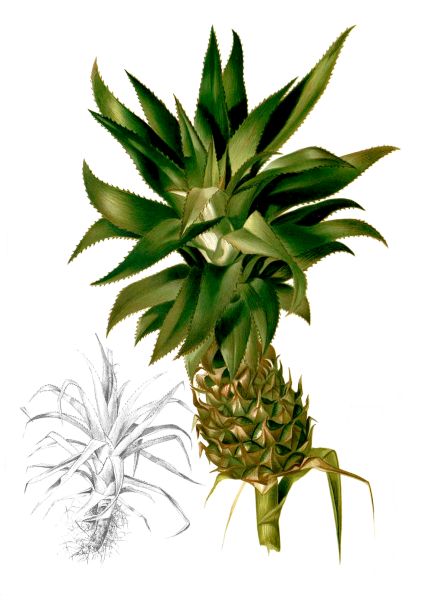
A characteristic feature of bromeliads is a dense funnel of leaves from which a single flower emerges on a long stalk. After flowering and fruiting, bromeliads die. Ananas comosus has long, sword-shaped leaves 80–100 cm long with sharp spines along the edges. The leaves form a distinct rosette, from the centre of which a 40 cm flower stalk grows. The fruit itself later develops from the pink-tinted flowers.
Requirements
The pineapple likes a bright, sunny, warm position all year round. It tolerates both sun and shade, but grows best in partial shade. In summer the temperature should be about 18–20°C, in winter 15–18°C.
In summer the pineapple needs plenty of water. The soil should never dry out completely.
It needs a nutrient-rich, free-draining growing medium. It also needs plenty of space, because of its sharp leaf edges and spines.
Propagation
The plant can be propagated from offshoots that form after the mother plant has flowered. Put on protective gloves, cut the offshoot from the dying plant with a sharp knife and plant it in a pot. The offshoot should already have its own roots. Then keep it warm and in a humid environment.
Propagation from the crown – the new rosettes that form at the top of the fruit can be used. First, however, you have to wait three to four years for the pineapple to flower. Then cut off the rosette with 2 cm of fruit, let it dry and plant it in sandy soil, then keep it covered with a plastic bag in a warm, humid place. New roots will soon appear. The rosette should keep all its central leaves. This method can also be used to propagate the tops of pineapples bought in a shop.
Care
In summer water the pineapple twice a week, including into the rosette. In high temperatures mist the plant with water. Feed about once a month, but only into the soil, never into the rosette. In winter it does not need watering as often.
There is no need to repot the plant, because it dies by itself after flowering. Pruning as such is not used with pineapples – simply cut off any damaged leaves.
When plants get sick
Pale leaves – the plant has stood in a dark place for too long. Move it to a different position.
White or yellowish spots on the leaves or stem – a typical sign of an attack by sap-sucking pests. Spray with a solution of soapy water and spirit or a diluted insecticide.
Leaf edges or whole leaves curl – the air around the plant is too dry. Mist the plant and move it to a suitable, cooler environment. This should help the plant as a whole, but the damaged leaves will not recover.
The base of the plant rots – the pineapple has stood too long in cold, wet conditions. You can try to save it by letting it dry and moving it somewhere warmer. Cover the base with potting compost mixed with sand and wait for new roots to appear. If the roots are badly damaged, however, the plant cannot be saved.
Before you buy
A true fruiting pineapple is very rarely found in shops. Varieties with multicoloured leaves that do not grow very tall are on sale. Do not buy plants that have offshoots and have already flowered, as they will not flower again and the whole plant will die.
Average lifespan: – after three or four years, when the plant has flowered and the fruit has ripened, the plant dies. But it can be propagated beforehand.
Difficulty of care: – an easy plant to look after.
Season: – available all year round.