Description
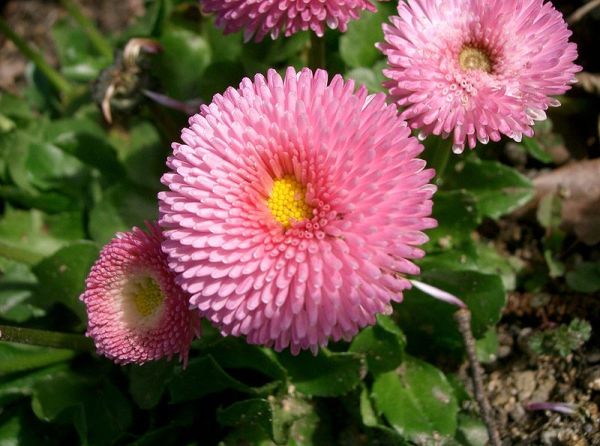
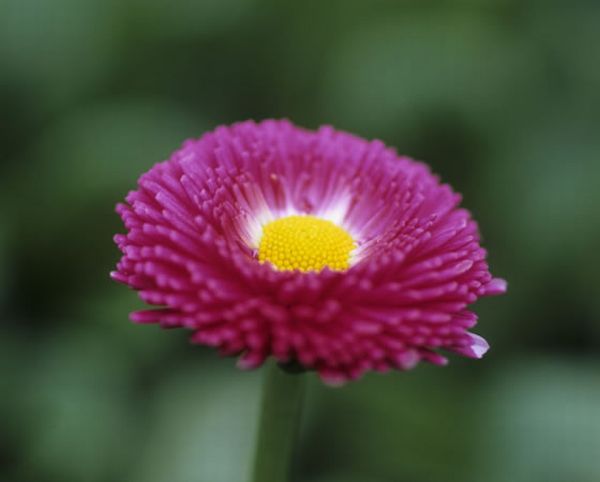
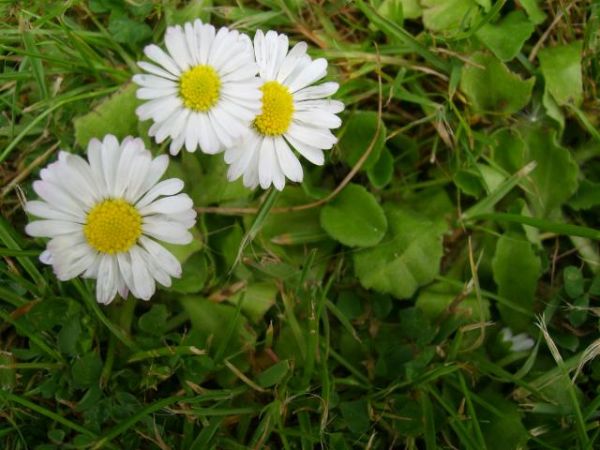
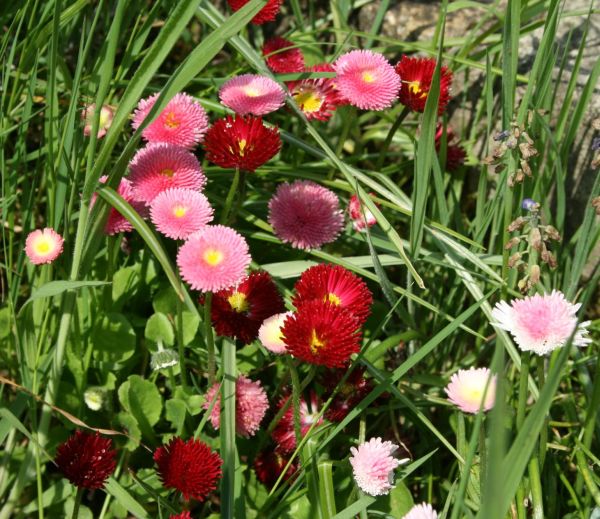
The common daisy comes from Europe and also grows wild in Poland. The garden varieties grown today are treated as biennials: in the first year only a rosette of basal leaves grows; in the second year very short, leafy shoots form in the axils of the old leaves. From their tips, flower heads rise on stiff stalks 8–10 cm above the leaves. The flowers are white, pink or carmine. Varieties differ not only in flower colour but also in structure – some consist only of tubular florets, others only of ray florets.
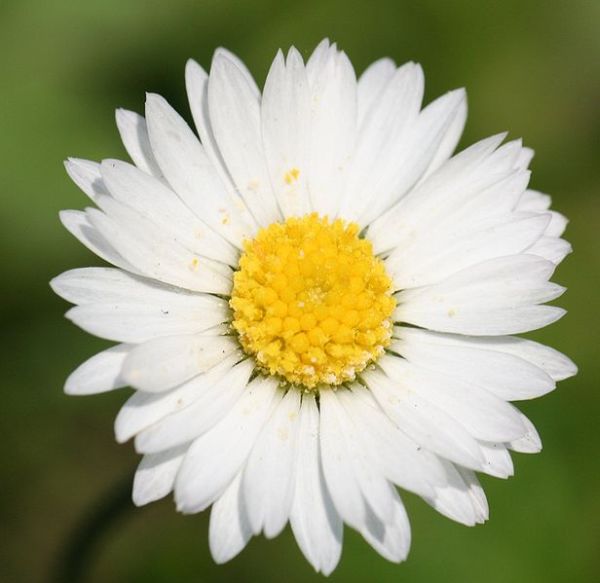
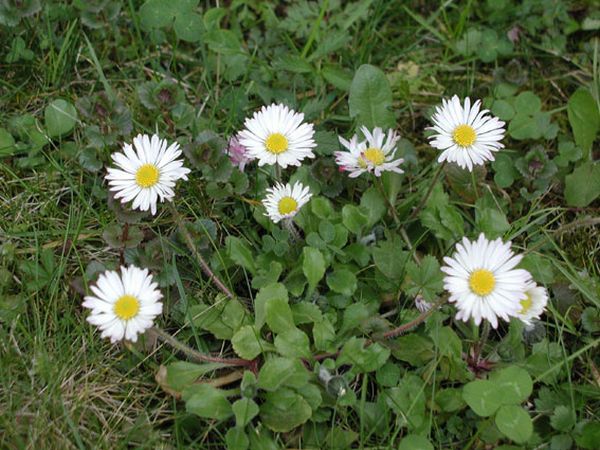
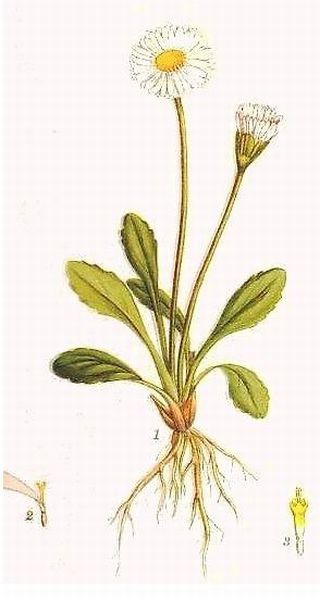
A herbaceous plant of the aster family reaching 5 to 15 cm in height. The single-veined leaves at the base are oval and form a rosette. The stem is hairy. At its tip is a flower head: on the outside there is a single row of white female ray florets, and inside are yellow tubular bisexual florets. A characteristic feature of the common daisy is the red edges of the white ray florets. The fruit is an achene. It grows in meadows, pastures, parks, gardens and woodland edges, and likes clay soils rich in minerals. The daisy has medicinal properties and has been used for disorders of the urinary, respiratory, digestive and circulatory systems.
Requirements
Daisies need fertile, not too dry soil and a sunny or partially shaded position.
Propagation
They are propagated by seed sown in June or early July in a seedbed. Once the seeds have come up, prick out the seedlings into beds.
Varieties with double flower heads are propagated by division.
Care
They are most often planted in flower beds, balcony boxes and other containers, and are also suitable as cut flowers. They must be covered for winter (for example with spruce branches) to protect them from frost.