Description
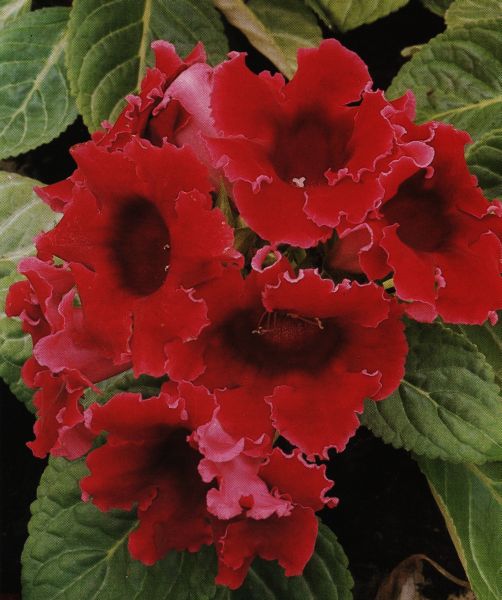
Gloxinia has velvety leaves and large bell-shaped flowers. In winter only the tubers remain, which revive in spring and produce new flowers. It comes from Brazil, where there are about 20 species. It reached Europe as early as the 18th century.
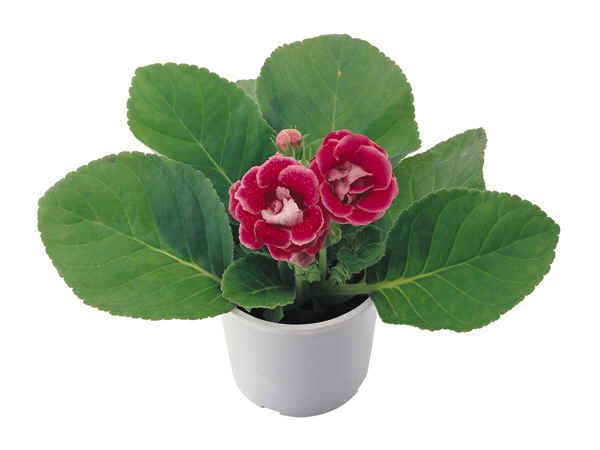
In its original form the gloxinia's flowers grew horizontally and resembled thimbles. Thanks to breeders, the flowers are now shaped like large bells, surrounded by light green leaves with soft, velvety hairs. Breeders are trying to obtain even lower plants with smaller leaves but even bigger flower bells.
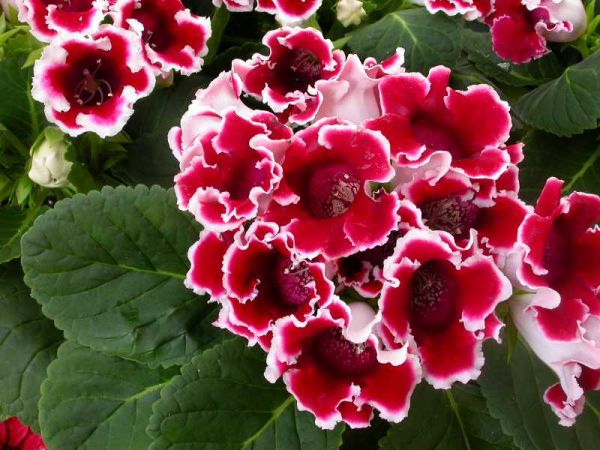
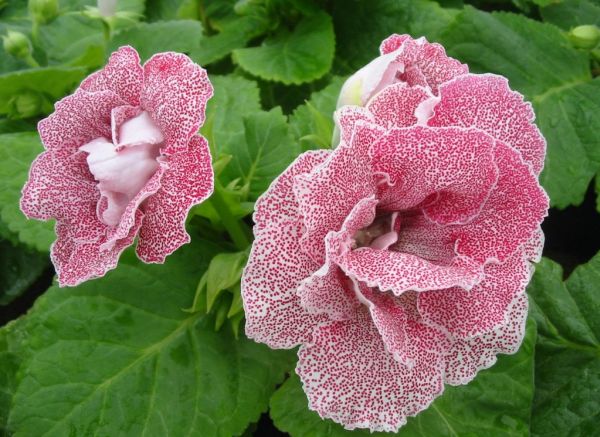
Gloxinia is a tuberous plant. Its leaves are 15–20 cm long, with stalks growing so densely that they look like rosettes, and the flowers grow among them. From May to September it bears beautiful bell-shaped flowers – velvety, white, red, violet, with two-coloured spots or white edges.
Requirements
As houseplants, gloxinias do best at 20–22°C. Below 15°C they stop growing. High air humidity is desirable.
Propagation
Dividing tubers
When the tubers start sprouting in spring, they can be divided. You need a sharp knife and a firm board. It is important that every piece of tuber has shoots, which are easiest to see once the tubers have been cleaned. Dust the cut surfaces with a sulphur preparation to prevent infection. Then plant each piece separately in a small pot with a mix of soil and sand. For the first few weeks the temperature should be 22–25°C.
From seed
Propagation from seed is cheap but laborious, as the seeds are very tiny. Scatter plenty of them on moist peat compost and keep them at 22–25°C. After sowing the seeds must germinate for two weeks in darkness. When the seedlings are big enough to handle, start pricking them out, and repeat after five weeks. As young plants need 14–16 hours of light a day, they must be given artificial light when the days are short.
Leaf cuttings
Fill a tray with a layer of coarse sand, then peat compost, and on top another 1 cm of sand. Moisten the mix. Choose a large, healthy leaf and make two cuts across the main vein. Pin the leaf to the compost. Finally cover the tray with glass or plastic and keep it at about 20°C. New plantlets will soon start growing at the cuts. When roots appear, the plantlets can be carefully broken off the leaf and moved to separate pots.
Stem cuttings
New shoots produced by the tubers can be used as cuttings. Plant them straight into pots of compost and keep them under plastic film until they root.
Care
Mist around the plants with a sprayer or stand them in trays of moist peat. In spring and summer these flowers need plenty of water, and less and less from September. At the same time make sure the leaves do not stay wet. During flowering feed once a week with a potassium-containing fertiliser.
Gloxinias are generally not repotted. Overwintered tubers can, however, be moved to a new pot in February and covered with 2 cm of compost. The leaves drop off by themselves in winter. The tubers need cleaning in spring.
When plants get sick
Pale, yellow or drooping leaves are a sign of too much sun or too few nutrients.
Flowers or leaves rotting – the plant is suffering from too much moisture. Let the compost dry out, then water less.
Aphids and spider mites deform the leaves. Use chemical products.
Brown rings on the leaves indicate a viral disease. It is incurable and the plant must be discarded.
Soft stems and drooping leaves show that the plant has too little moisture or is standing in a draught.
Before you buy
Do not buy plants with soft, yellowing leaves and few flowers. Take care when packing, as the leaves break easily.
Average lifespan: – Many plants are fit to be discarded after a year. The tubers can be kept, but often produce fewer flowers afterwards.
Difficulty of care: – Not very troublesome.