Description
The opium poppy originates from Asia Minor, the western Mediterranean and North Africa. It does not occur in the wild and was known in antiquity.
Documented accounts of opium being used to relieve pain come from Asia Minor around 1500 BC. Poppies have been grown for opium for about 2,000 years. In the 19th and 20th centuries numerous alkaloids were isolated from opium, their properties described, and semi-synthetic or synthetic derivatives developed, often far more potent. Morphine and codeine are the most important and most widely used alkaloids obtained from the opium poppy. They have pain-relieving, cough-suppressing and anti-diarrhoeal effects.
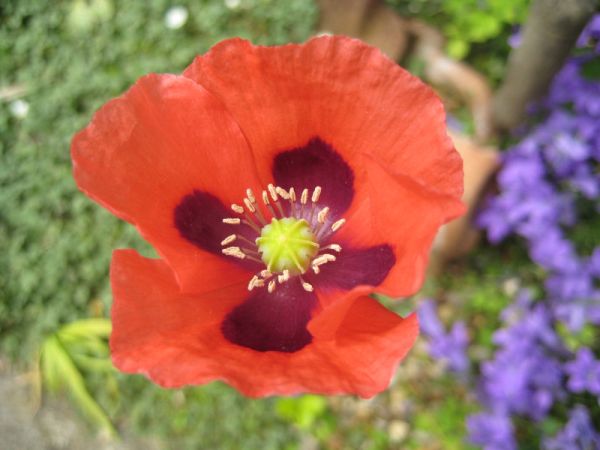
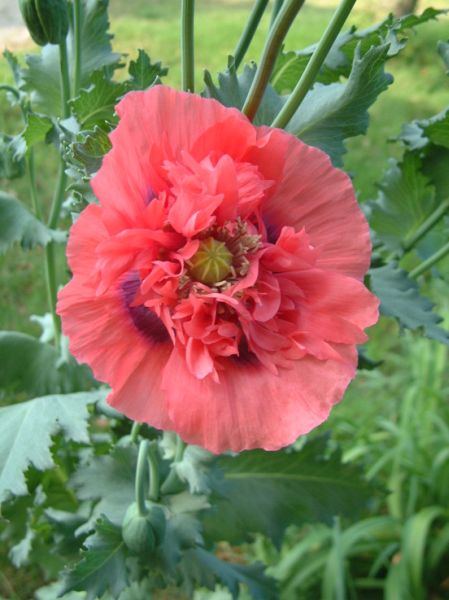
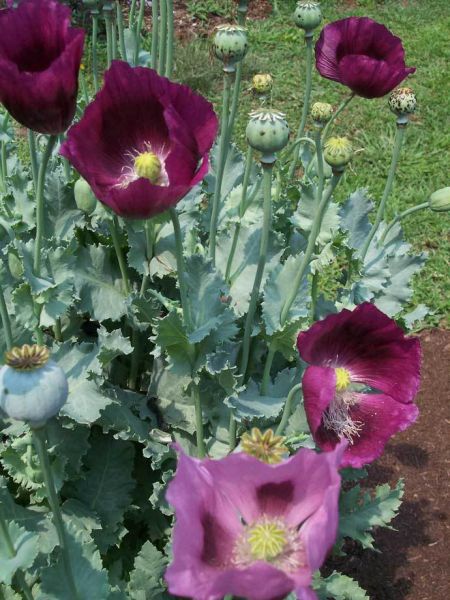
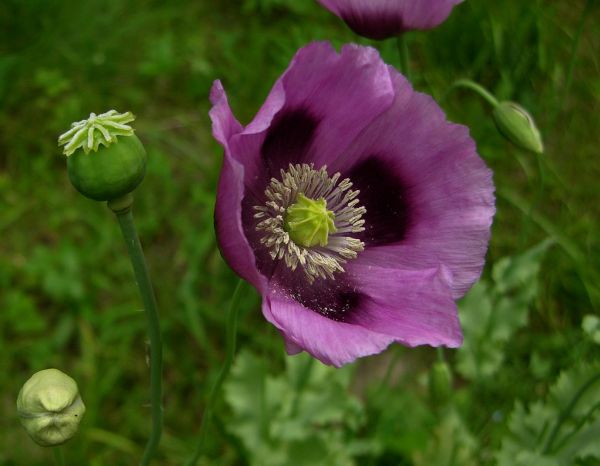
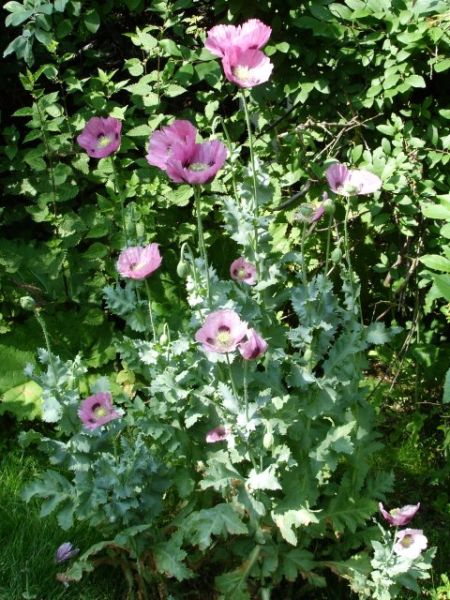
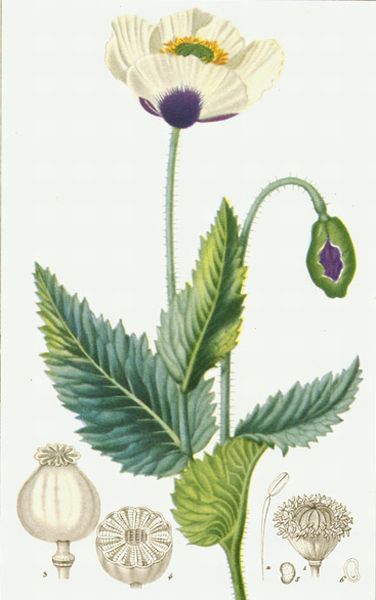
The stem grows 100–150 cm tall; it is straight, stiff, becomes woody, ends in a single flower and is covered with a distinct white bloom. The leaves are large, irregularly lobed and clasp the stem. The flowers are large, up to 10 cm across, white, light violet, pink, red or even yellow, with characteristic dark blotches at the base, single or double. The poppy flowers from June to July. Many ornamental varieties are grown in gardens. After flowering the plants dry up, and the fruits remain on the withering stems – round capsules (poppy heads) containing seeds whose colour depends on the variety.
Requirements
It needs fertile, chalky, free-draining soil and a sunny position.
Propagation
It is propagated from seed sown in batches from March to April directly in the final position. Thin out the seedlings to a final spacing of 25–30 x 20 cm. The plants do not like being transplanted.