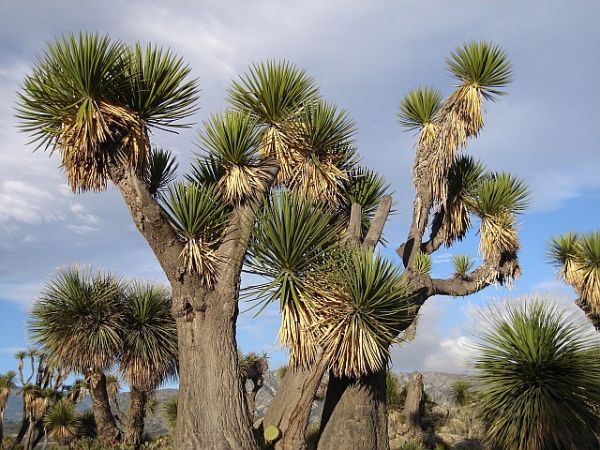
Description
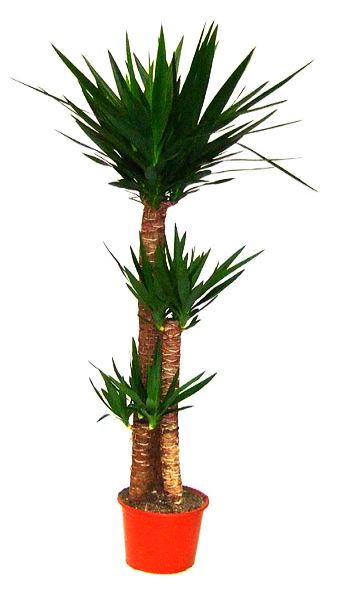
The yucca's natural habitat is Central America, where it reaches a dozen or more metres in height. The variety that has found its way into our homes is the slow-growing Yucca elephantipes, which stands out for its sturdy build, unusual beauty and modest requirements. Indoors it reaches 1.8 metres in height and 60 cm across.
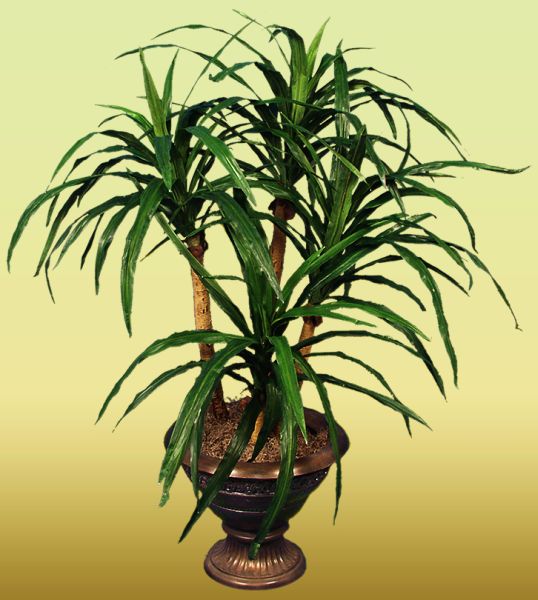
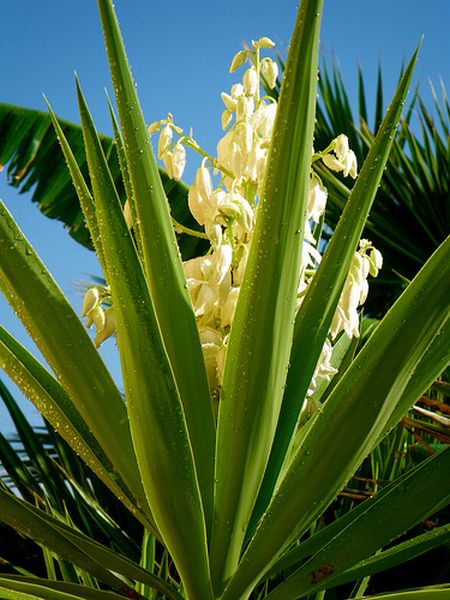
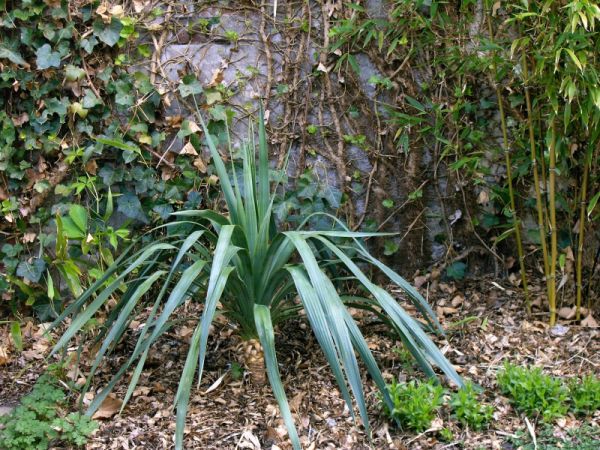
Depending on the species, yuccas are perennials with leaves in ground-level rosettes, or small trees with straight or branched trunks up to several metres tall, with rosettes of leaves at the ends of the shoots. Yucca leaves are usually stiff, thick and waxy, and their bell-shaped flowers, gathered in tall spikes, are white or cream. Indoors these plants flower very rarely.
Requirements
Yuccas do best in very sunny places. With too little light their leaves become pale green and limp, and the shoots stretch. Plants kept for a long time in rooms that are too dark eventually die.
Propagation
Propagation: in February or March sow yucca seeds in a mix of ordinary flower compost and sand, then cover them with a few centimetres of soil. Give the seeds high humidity, a temperature of about 21°C and a little shade. Germination should take place in a propagator; when the seedlings appear, move them somewhere brighter. After about three months, when the plants are a few centimetres tall, pot them up.
Yuccas that are too tall can be shortened by making an air layer on the stem (at any height). Indoor yuccas are best propagated by rooting whole rosettes or stem cuttings 5 to 15 cm long (only green, non-woody parts of the stem are suitable). Cut them with a sharp knife or secateurs; the cuts must be smooth and at right angles to the stem, so that the surface is as small as possible. Disinfect all wounds with charcoal or fungicide, and also protect stem cuttings against water loss by covering the upper cut surface with pruning sealant. Remove the leaves near the lower end of the cutting, leave it for a few hours for the wounds to dry, and then insert it in moist sand or perlite (rooting hormone will speed up root growth). Cover the container with film to keep the air around the cuttings humid. If the temperature during rooting is above 20°C, roots will form within 3–5 weeks. Uncover the container every day, at first for a few minutes and later for a few hours. Pot up the rooted plants.
Care
Yuccas do best in very sunny places. With too little light their leaves become pale green and limp, and the shoots stretch. Plants kept for a long time in rooms that are too dark eventually die. Potted yuccas need fairly moist compost. In summer water them 3–4 times a week, in the morning or evening; in winter much less often, every 7–10 days. Make sure no water is left in the saucer.
In winter yuccas grow best at about 15°C, but also tolerate temperatures down to a few degrees above zero. In rooms that are too warm and poorly lit, they should stand as close as possible to a window without a radiator beneath it. From spring to autumn temperature matters less for their growth, but high air humidity is important – raise it by misting the leaves with lukewarm water. During this period they can be put out in the garden or on the balcony.
Feed yuccas only in summer, every two weeks, using half the dose given by the manufacturer. Liquid compound fertilisers for pot plants or slow-release fertilisers are best. Foliar feeding and leaf shine are not recommended.
When plants get sick
Yucca leaves turning yellow and wilting may be a sign that the roots have rotted and no longer supply the plant with water. This usually results from overwatering.
Before you buy
Inspect a yucca carefully before buying. The trunk should be firm along its whole length, without wounds or damage, and the leaves healthy and free of pests.
Average lifespan: – Can live for a very long time.
Difficulty of care: – Easy to grow.