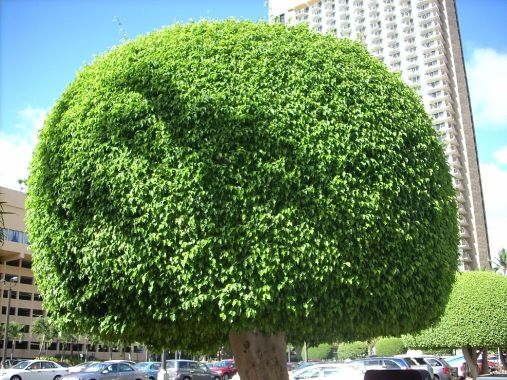
Description
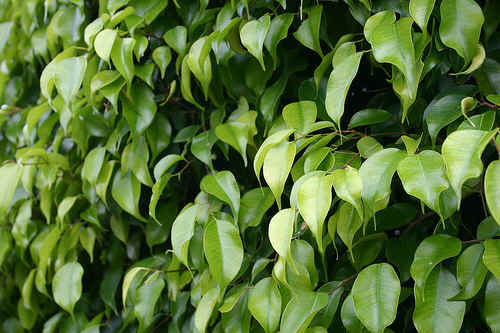
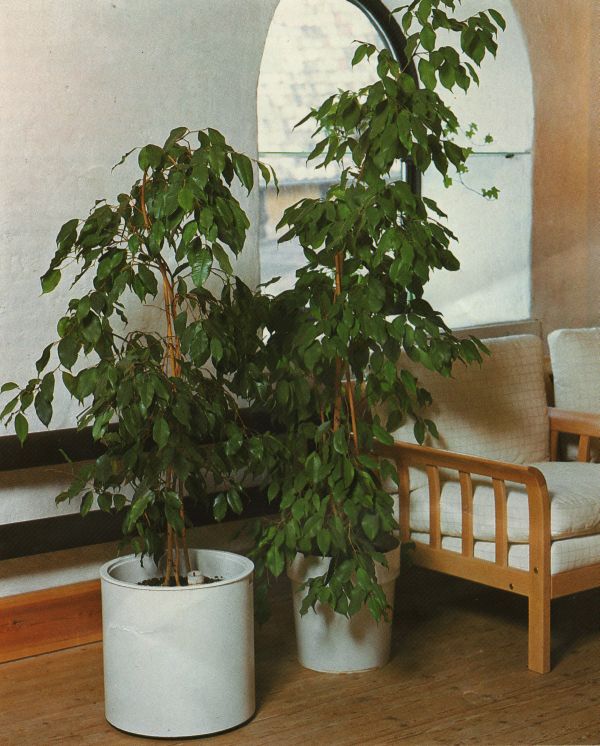
A species of the mulberry family. It grows wild from southern Asia to northern Australia and is the official tree of the city of Bangkok in Thailand. In Poland it is often grown as an ornamental pot plant. In its natural habitat it is a tree up to 30 m tall, with delicate, drooping branches. The evergreen, decorative weeping fig is one of the most popular houseplants. Even when it reaches several metres, it does not overwhelm a room and blends in with its surroundings.
Requirements
The weeping fig does best in summer at 20–25°C. In winter the temperature should not fall below 17°C. A temporary rise to 30°C does no harm, provided the plant is not in the sun.
It grows well in ordinary flower compost.
The plant does best in full light. It also tolerates a darker spot, but then often drops its leaves, and it is a good idea to use artificial lighting.
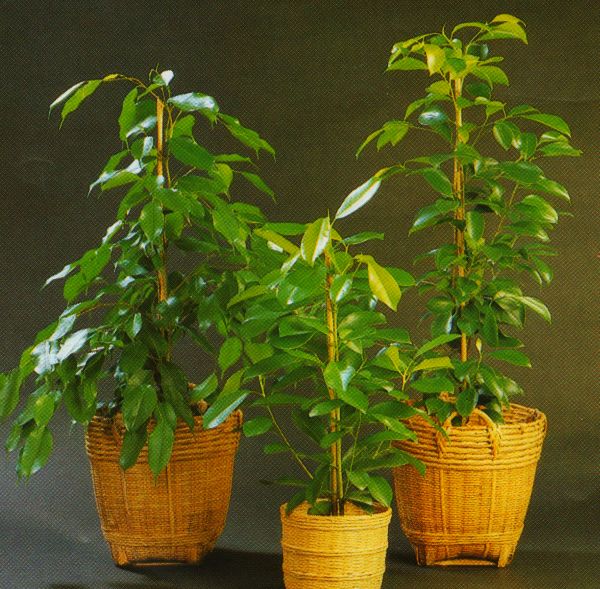
The weeping fig needs warmth and high air humidity. Small plants are suitable for grouping together, while larger ones look better on their own.
Propagation
The simplest method is to cut young shoots from the upper or side branches, ideally in spring. Cut 8–10 cm cuttings just above a pair of leaves. Remove the lowest leaves, plant the cutting in a mix of peat compost and sand, and use a rooting hormone. Bottom heat also stimulates rooting, so you can place the cutting on a windowsill above a radiator. To keep the fig at the desired height, remove the leading shoot. The wounds can be dusted with charcoal to stop the sap running. If the plant drops its leaves because of insufficient light, you can stimulate new shoots by cutting back older ones.
Care
During the growing period water generously. The root ball must not dry out, but no water should be left in the saucer. In high temperatures remember to spray the leaves thoroughly with lukewarm water. Feed every two weeks. In winter the fig does not need feeding or generous watering – although a plant kept under artificial light should still be fed, at a reduced dose (1/3 of normal).
Repot in spring, after the rest period. If the plant is growing well, repotting every year is not necessary. For large plants, replace the top layer of soil. If the plant stops growing or the pot becomes too tight (i.e. roots stick out of the drainage holes), repot it.
The leaves are a lovely fresh green, but dust and residues from water can dull them over time. Wash the leaves, ideally with distilled water, and use a leaf-shine product if you like. Skimmed milk also gives the leaves a shine.
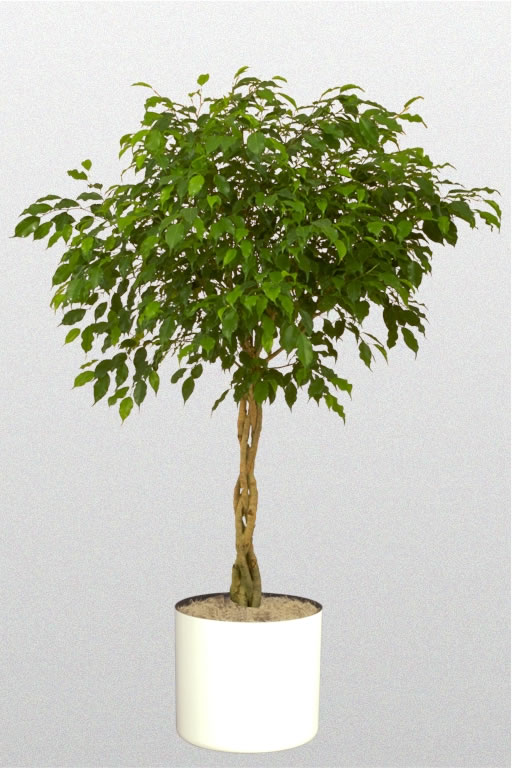
Once the fig has reached the desired height, cut back the shoot tips. In modern homes with low ceilings a full but lower plant shape looks best. If there are two plants in one pot, you can plait their stems together.
When plants get sick
Brown or yellow spots on the leaves are caused by spider mites, which feed on the undersides of the leaves. Remove the affected leaves and spray the plant with an insecticide containing pyrethrum.
The weeping fig can also be attacked by thrips and mealybugs. Mealybugs leave a cottony coating; thrips cause yellow, then silvery spots. An occasional infestation does not threaten the plant as long as the pests are removed quickly. Before resorting to chemicals, try removing the pests with a cotton bud soaked in spirit.
Leaf drop indicates too little light or humidity. Overwatering in winter can have the same effect.
Before you buy
The plant should have fresh, healthy leaves and be free of pests. It is best to buy young plants, which adapt more easily to new conditions.
Average lifespan: it can live a very long time.
Season: all year round
Difficulty of care: easy to grow
Varieties: more than 20 species of ficus and countless varieties are on sale. All varieties are cared for in the same way.