Description
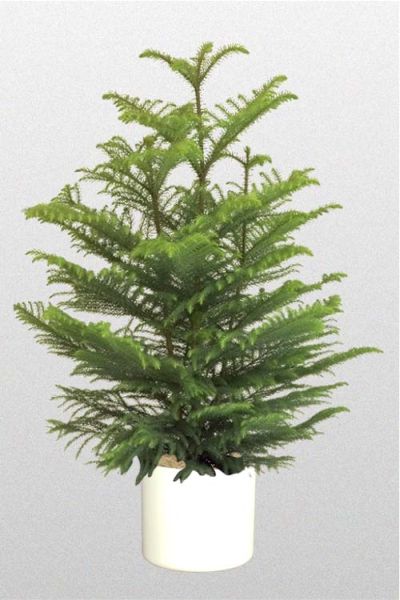
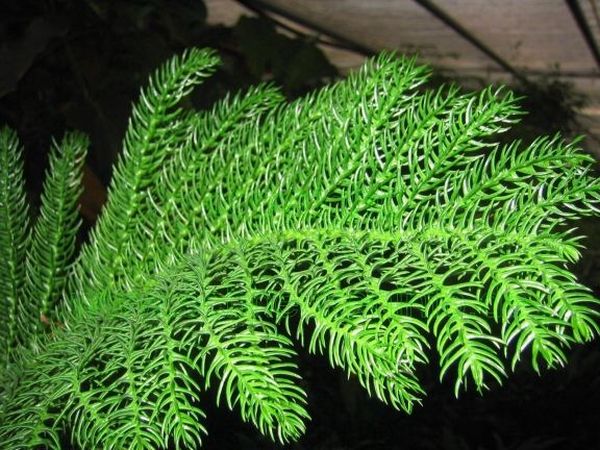
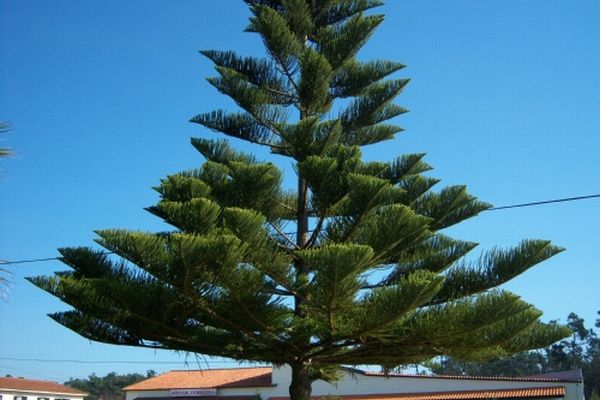
The Norfolk Island pine is a coniferous tree discovered at the end of the 18th century on Norfolk Island in the South Pacific. In the wild it is a huge tree, growing up to 60 m tall. Grown in a pot it grows slowly and reaches only 90 to 180 cm. The young shoot tips are flexible and later become woody. It looks attractive thanks to its horizontal, tiered branches covered with 13 mm needles. In spring the needles are light green; later they darken. Araucarias are dioecious – there are male and female trees. In the wild the elongated male cones hang in clusters and may be yellowish-brown or reddish. The female cones are broader, egg-shaped and much larger. In our climate, however, pot-grown plants do not produce cones.
Requirements
It should be displayed away from other plants. It does well in large rooms, greenhouses and orangeries.
Propagation
From seed or from tip cuttings only, but this rarely succeeds for amateurs. Sow seeds straight after ripening in a propagator or greenhouse at 20°C. Once the root system has formed, lower the temperature to 15°C. In summer the young plants can be potted up separately.
Care
As it is not frost-hardy, it is grown only in pots. On fine summer days it will benefit from being put outside. The position should be bright but not in direct sun, up to partial shade. It likes fertile, slightly acidic, moist soil. Normal room temperature is fine during the growing season. Water with lukewarm, soft water often enough to keep the soil evenly moist. Mist the plant every 3 days and water with liquid fertiliser every 2 weeks; fertilisers for acid-loving plants work well. In winter it is worth lowering the temperature to about 10°C, but it must not fall below 5°C; reduce watering at this time. In spring, every 2 or 3 years, when the roots fill the pot, move the plant to a larger pot. Once the tree is taller than 90 cm, just replace the top layer of soil.
When plants get sick
Dry, yellowing needles mean the plant is too dry and too hot. Move it to a cool, well-ventilated place and water and mist it more often. The problem is especially common in winter in heated homes. If you cannot move it to a cooler room, place it as far from the radiators as possible. Without the right conditions the lower branches drop, exposing the bare trunk, and they never grow back there. Cigarette smoke can also harm the plant. The pests that appear are aphids and mealybugs.