Description
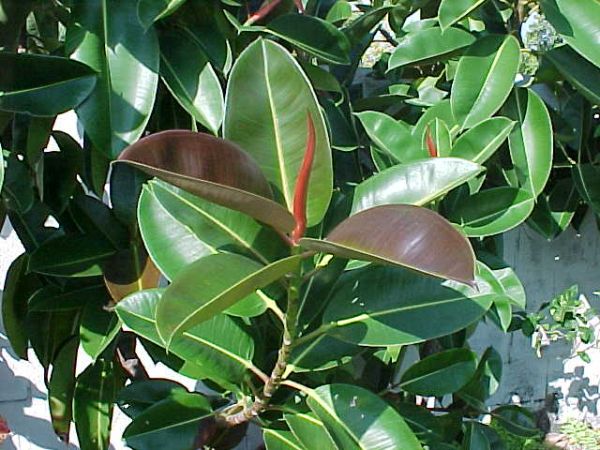
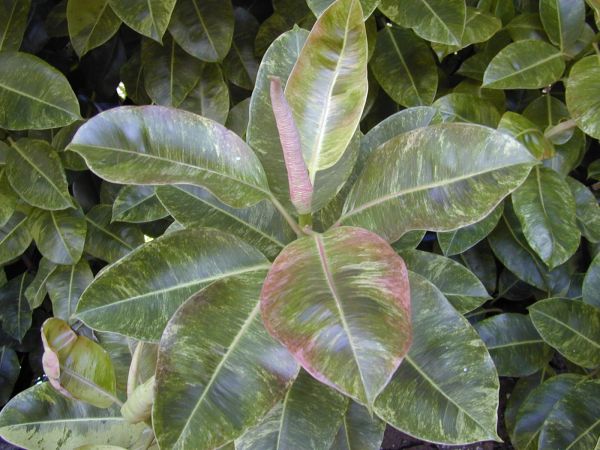
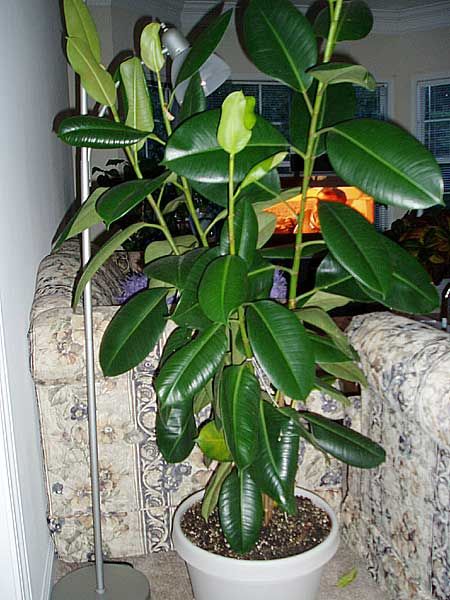
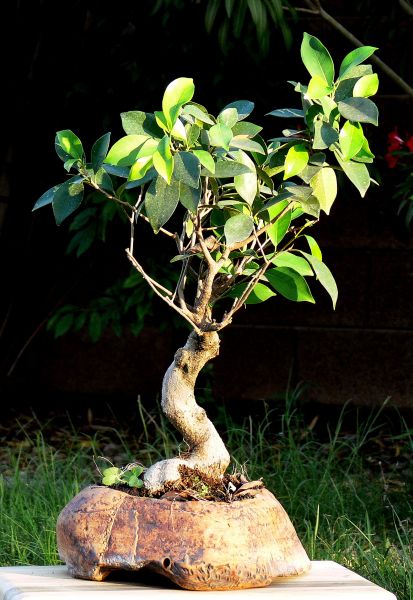
In the wild the rubber plant is a tree. It belongs to the mulberry family and comes from India, where it grows wild and reaches up to 30 m. In our homes it is one of the most commonly grown pot plants. It has large, elliptical, leathery, glossy leaves with smooth edges. Besides varieties with dark green leaves, there are also variegated ones, with yellow edges or mottling. When growing a rubber plant indoors you must give it space – it grows fast and takes up a lot of room. Dwarf varieties that stay much smaller are also available.
Requirements
The rubber plant likes bright positions but also tolerates darker places, although it will grow more slowly there. The temperature should be about 20°C; in winter it must not fall below 10°C, and variegated varieties tolerate a drop only to 18°C.
Propagation
At home it is best propagated by air layering: make a cut in the stem where there are no leaves, wrap it in moist moss or peat and cover with plastic film. When roots appear at the cut, cut the stem below them and pot up the new plant. Rubber plants can also be propagated from stem cuttings – cut 8 cm pieces with one bud each and root them.
Care
The plant does not need much water, and the soil should not stay wet for long. Water usually twice a week. In winter water less often, and because the air indoors is dry from heating, mist the plant. Clean the leaves by wiping them with a damp cloth. They can be polished, but not more than every two months. During growth feed once every two weeks with a fertiliser for decorative foliage plants.
Repot young rubber plants once a year and older ones as needed.
Tall specimens should be tied to a stake; they can also be shortened by cutting off the tip – new shoots will soon appear in its place.