Description
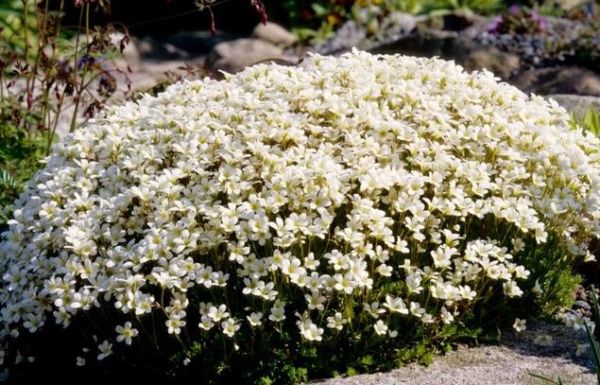
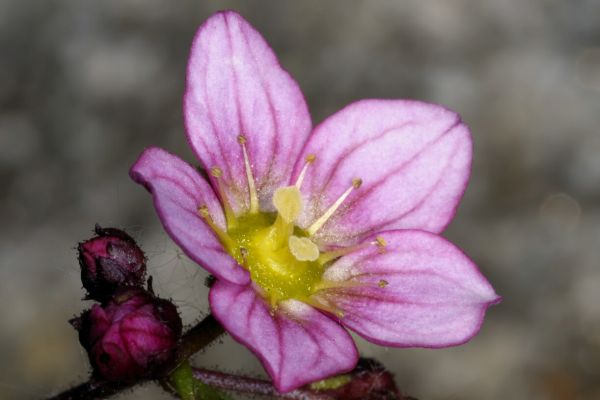
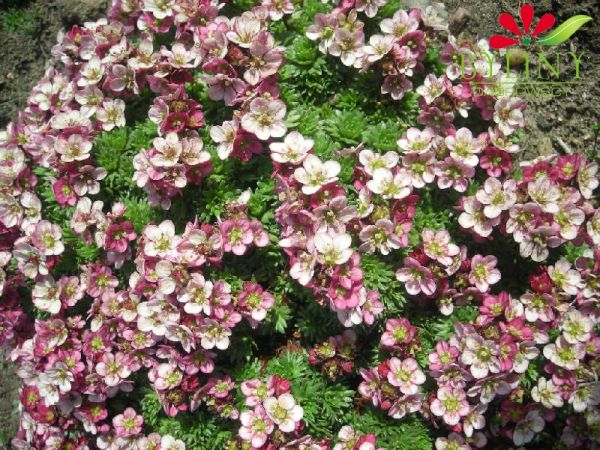
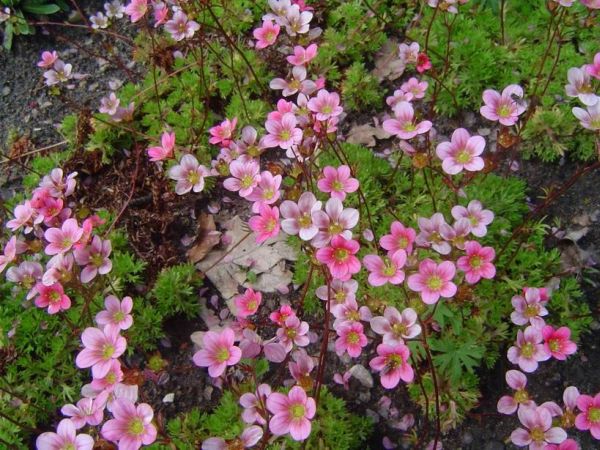
Saxifrages are represented by almost 400 species, natural hybrids and varieties, most of them in the northern hemisphere. The name itself (meaning "rock-breaker") suggests mountain plants – the most beautiful cushion-forming specimens with tiny leaf rosettes and relatively large, stemless flowers grow high in the Alps, Pyrenees and Himalayas. Saxifrages are also found lower in the mountains and, to a small extent, in the lowlands in shady woods, meadows and along streams. They differ greatly: there are seasonal species and perennials, evergreen and deciduous plants. Some form compact cushions of dense rosettes, others loose carpets of lying, sparsely leafy shoots. The flowers, in colours from white through all shades of yellow and pink to dark crimson, appear in early spring and spring. Some high-mountain species bloom as soon as the snow melts, and there are also saxifrages that flower only in September.
Requirements
Most saxifrages prefer a south-east or south-west aspect. In the wild the roots of mountain saxifrages push into tiny cracks and crevices in search of moisture and food. That is why the soil in a rock garden must be well drained with crushed rock, gravel, sterilised slag, brick rubble or expanded clay.
Care
Try to make sure rock garden plants are shaded at least during the hottest midday hours. Shelter can be provided by a piece of rock, a stone, a root or a dwarf shrub. It is worth knowing that plants with small, stiff, silvery leaves tolerate more sun than species with soft, juicy green rosettes, which need little light.
Good results come from planting saxifrages in crevices between flat, obliquely set stones, with drainage enriched lower down with lean clay and old compost. Porous calcareous tufa is an even better site, but unfortunately very expensive. Soil that is too fertile does not suit saxifrages, so do not feed them.
Overwintering. Plants that in the mountains, under a thick, dry blanket of snow, survive frosts below −20°C die in the lowlands during snowless, rainy winters. That is why rock gardens should be protected from excess autumn and winter rain, using obliquely set panes of glass, cold-frame lights or plastic roofs. Some more sensitive species are grown in pots and kept dry in cold frames from October.
When plants get sick
Fortunately, few diseases threaten saxifrages. Plants are usually lost because they are planted in the wrong place or overwintered badly. The centres of large cushions die mostly because of overcrowding; dividing them into smaller pieces rejuvenates the plant and improves flowering. Whole cushions may also die because of ants, which like to nest in them, or aphids feeding at the base of the roots. Birds – blackbirds and starlings – often signal these pests by pecking the cushions apart in search of insects. As a precaution, pour a diluted insecticide, e.g. an aphid treatment, into the centre of each cushion 2–3 times a season. Do not use aerosols, as they settle on the leaves.
Before you buy
When choosing saxifrages for your garden, be guided by the conditions you can offer – then you will certainly succeed. If you buy plants only for their beauty, growing them usually ends in failure. If your rock garden is in the mountains and carved in natural rock, you can safely grow most high-mountain rarities there. In the lowlands this is possible only if the rock garden imitates the natural habitat – and even then the plants will need occasional help to survive conditions unusual for them. In ordinary perennial gardens, from the foothills to the Baltic, you cannot hope to grow Alpine or Himalayan gems. Only saxifrages without a mountain pedigree, or hybrids and garden varieties, will settle in there.