


Description
There are more than a thousand species of azalea. Two of them can be grown as houseplants: the Indian azalea and the Japanese azalea; the latter can also grow outdoors, even in our climate.
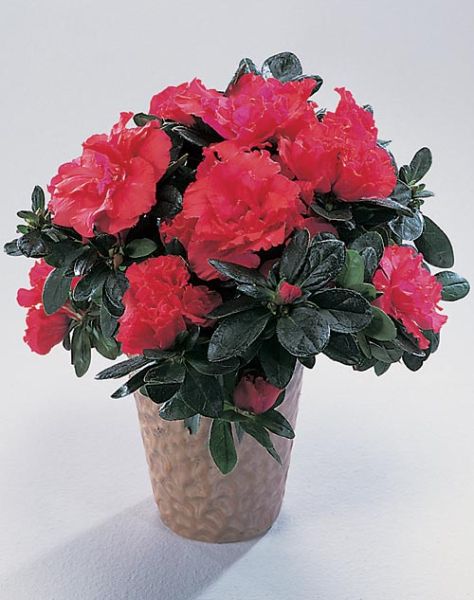
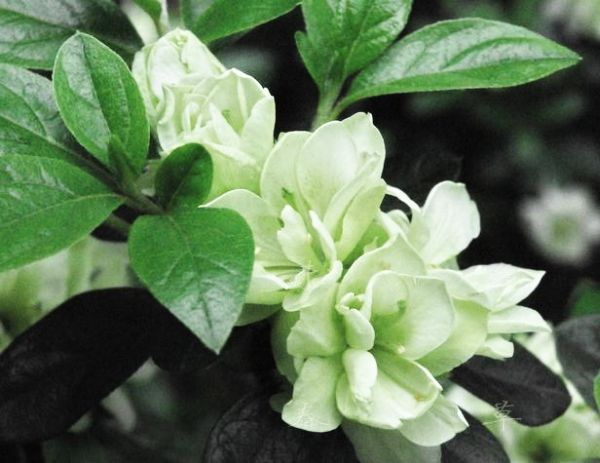
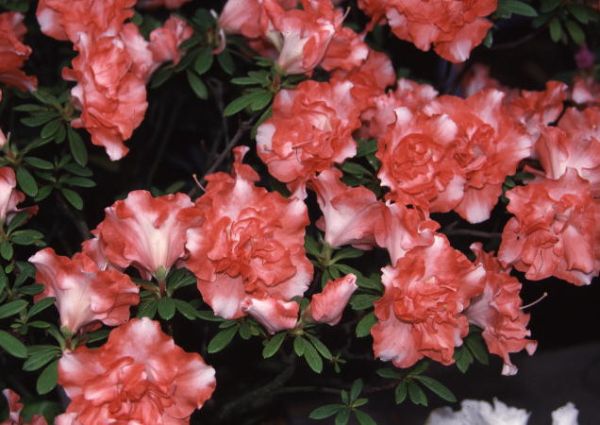
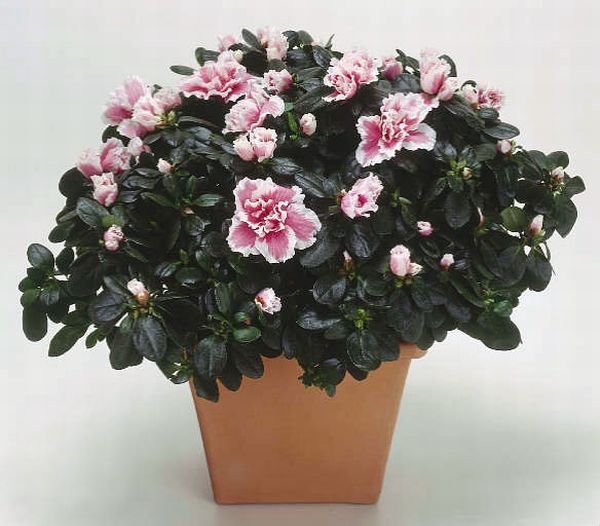
Indoor azaleas give plant breeders great scope. Their efforts produce new varieties – not only white, pink or red, but in a wide range of shades and flowering at different times, from autumn to spring. You can choose to suit your taste, including varieties with single and double flowers.
Azaleas on sale are 15–50 cm tall. They grow very slowly and form shrubs or small trees. The flowers look exotic and are very pretty, but have practically no scent.
Requirements
The azalea does have a few requirements, though, and if you do not meet them it will not be easy to grow. Above all, it must be repotted into slightly acidic, lime-free compost. Azaleas dry out very quickly, so water every day with soft water, especially during flowering. The plant needs plenty of light, but should not stand in full sun. The temperature should not exceed 15°C.
Propagation
Cuttings from shoot tips root easily in July and August. Young plants need plenty of warmth and high air humidity, so cover the pot with film for 3–4 weeks.
Care
Around mid-May the azalea can be put out on the balcony or in the garden. Find it a warm, partially shaded spot and move it to a large container of pure peat.
At the end of September, before the first frosts, bring the plant back indoors. At first the temperature must not exceed 5–10°C. When the first buds show colour, after about six weeks, the plant can be moved to the living room. During acclimatisation the air must not be dry, or the buds may drop.
Until the flowers open, it is advisable to mist the whole plant. Open flowers, however, do not like water – ugly spots appear on them. Feed after flowering, from May to the end of July, with a lime-free fertiliser.
If you repot, do it in spring after flowering, using special azalea compost and shallow pots. Soak clay pots in water for a few hours before repotting. Remove withered parts of the plant regularly. After flowering trim back overlong twigs. In September you can break off a few shoots so that those with buds get more light.
When plants get sick
Unfortunately azaleas are attacked by a range of pests, from aphids to the azalea leaf miner. If there are too many, the plant should be discarded as soon as possible.
If the plant drops its leaves, it is usually too dry. The cause may also be too much fertiliser or too high a temperature.
Yellow leaves and shoots may be caused by too much lime in the water or compost, or by iron deficiency. Water with soft water and feed with a lime-free fertiliser. For iron deficiency, water with an iron solution available from garden centres.
Aphids usually appear on young, soft shoots and buds. Control them with insecticides or by washing with soapy water.
Before you buy
Choose azaleas with many buds starting to open and new shoots with lush, light green leaves.
Average lifespan: – Cared for properly, azaleas can be grown for many years.
Difficulty of care: – An undemanding plant, but one that can take revenge for mistakes in its care.