Description
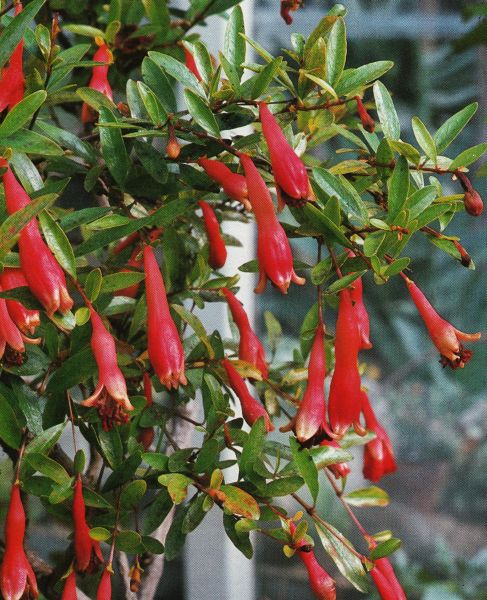
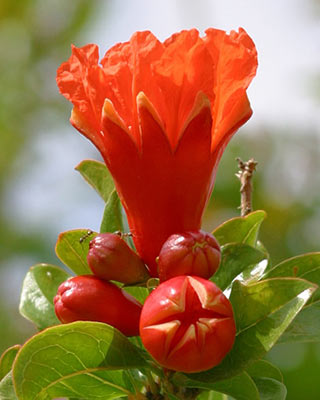
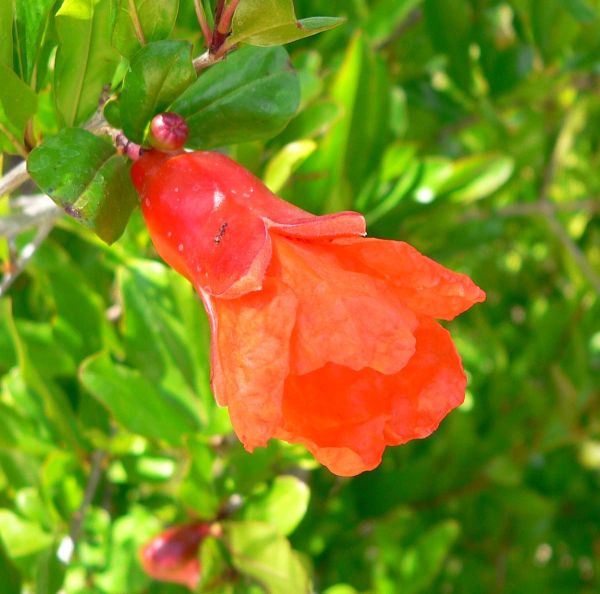
The pomegranate is a small tree with beautiful red flowers shaped like large chalices, growing in threes at the ends of the branches. It can stand on a terrace or, in a smaller form, on a windowsill or balcony. Older plants start flowering in June, younger ones a month later. The flowers have a faint scent.
The pomegranate is not a wild tree but a plant cultivated since ancient times, already grown in pre-Christian Egypt. In Palestine it was known 5,000 years ago. Its fruit was a symbol of fertility, and legend has it that it was the first tree of love in the biblical paradise. The plant was also known as a remedy: treatment with the roots and fruit rind was traditionally believed to help against tapeworm, and the fruit was said to be an aphrodisiac.
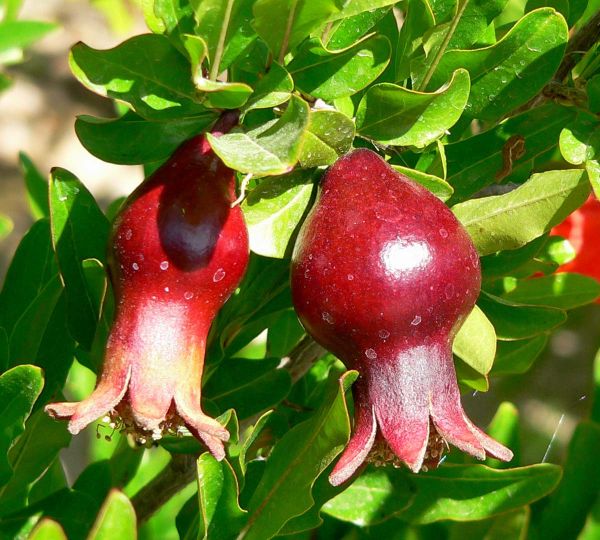
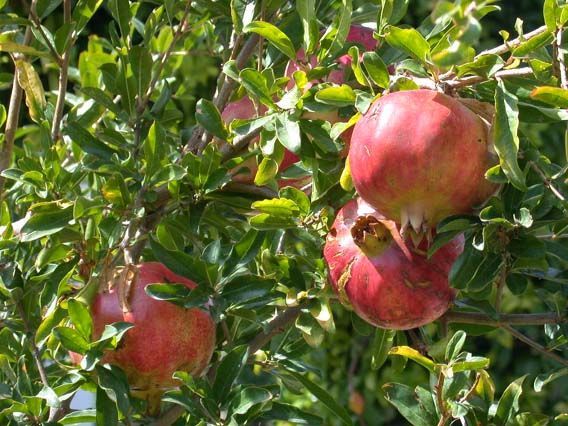
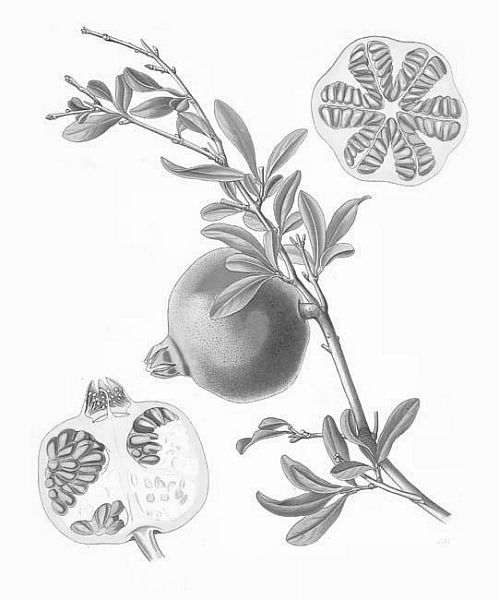
Most people who have visited Mediterranean countries have surely tasted pomegranates. They are round, the size of an apple, with a hard red or green rind, and are eaten with a spoon. Sometimes pomegranates are also available here, imported from Mediterranean countries where they grow on huge plantations alongside peaches, nectarines and oranges.
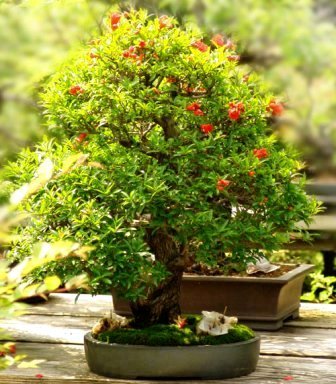
The dwarf pomegranate grows up to one metre tall and is suitable for growing indoors. The common pomegranate grows as a small tree or shrub and does best planted in a large container on a terrace. Dwarf pomegranates are sold when they are about 20 cm tall, but they soon turn into handsome, well-branched plants.
Requirements
Pomegranates are light-loving plants. The most suitable air temperature for them is 18–20°C.
Propagation
Sow seeds in pots filled with a mix of soil and sand. They need 20–25°C to germinate. Only when the seedlings have been moved to larger pots can they be placed somewhere cooler.
Pomegranates are also propagated by cuttings at two times – in spring or in summer. In March, when the plants have no leaves yet, cut 10 cm cuttings from the hard wood. For summer propagation, in June and July, you need semi-ripe, non-woody shoot tips. The cuttings root in trays or pots at 20–22°C. When the plants have rooted and start to grow, move them to pots 10–12 cm in diameter and feed carefully once a week. Place them in the sun and pinch them back several times so that they branch nicely.
Care
In a sunny position the plant flowers all summer. When the leaves fall in late autumn, move the plant to a suitable place: it should overwinter in a room at about 8°C.
From spring to late autumn keep it moderately moist and feed every week. In winter water sparingly and stop feeding.
The plant can stand in a sunny place all summer; an unobstructed south-facing window is a good position.
When repotting, some branches can be trimmed so that the crown branches out better.
When plants get sick
The pomegranate is naturally a healthy, resistant plant, but it can of course be attacked by pests.
Aphids can sometimes be seen in summer. They can very often be removed with a strong jet of water. Special sprays or powders from garden shops can also be used; repeat the spraying within a week.
Mealybugs are a little harder to control. Their presence is revealed by small cottony tufts on the plant – clusters of larvae. In winter, when the plant has no leaves, wipe it with a solution of soapy water and methylated spirit. In spring and summer wash and rinse the plant thoroughly two or even three times.
Before you buy
The common pomegranate is hard to find. You may need to order it from a florist or ask someone for a cutting.
Average lifespan: With proper care the original species can live to a great age.
Difficulty of care: Easy to care for.
Season: pomegranates are best bought in spring or early summer, when they have beautiful green leaves.