Description
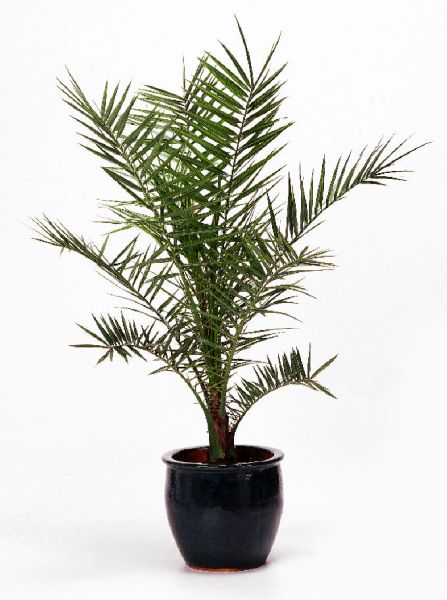
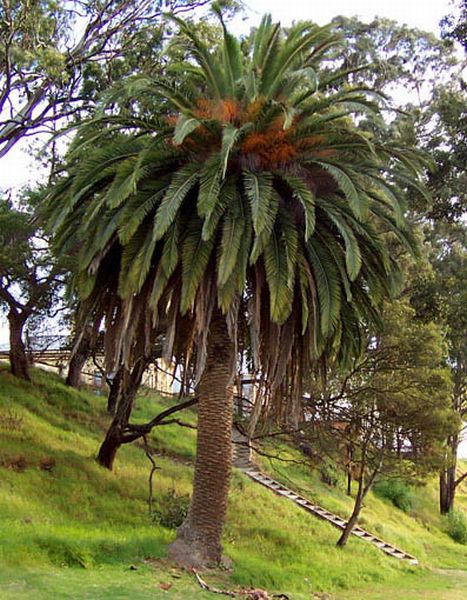
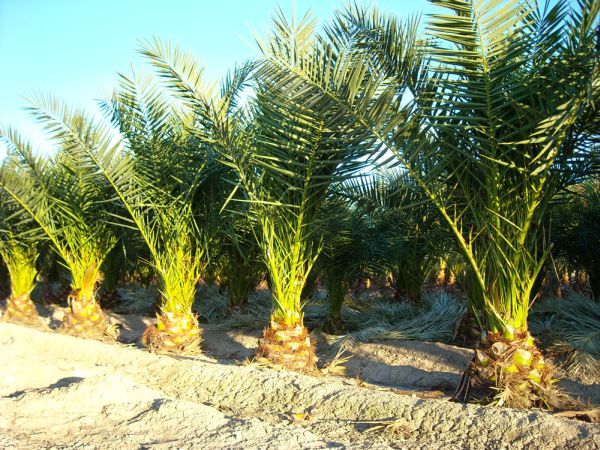
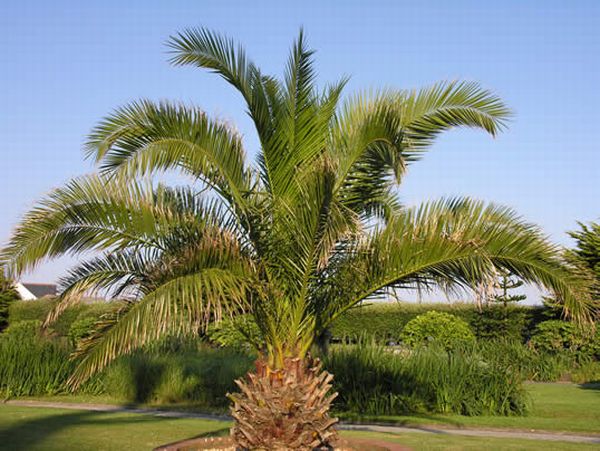
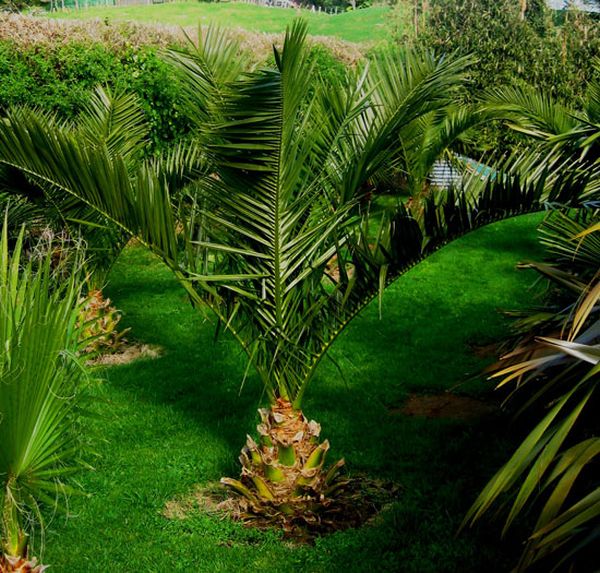
The date palm is one of the most popular palms grown successfully at home. There are about 30 species of date palm, but only two are treated as ornamental plants. Date palms come from Arab countries, Africa and Asia. Phoenix are slow-growing or tall palms, both stemless and trunk-forming. The leaves vary in shape – they may be stiff and upright or delicate and gracefully arching. Older plants produce a spadix-shaped inflorescence. In our homes the most common is Phoenix canariensis (Canary Island date palm). As its name suggests, it comes from the Canary Islands, where it reaches up to 10 m, while plants grown here reach 50–150 cm; it is the hardiest species. A young plant has a short stem, which with age grows into a round trunk. The leaves reach 1 metre in length, are pinnate and gradually arch outwards.
Requirements
At first the Canary Island date palm can be treated as a houseplant, but as it grows, it prefers being outdoors. This makes it an excellent decoration for terraces; it likes a sunny position. For winter give it a well-lit place at 4–8°C.
Propagation
Palms are easiest to propagate from seed. You can use dates from the shop – or rather their stones – or coconuts. Seeds of other palms have to be brought back from warm countries. Sow them as soon as possible, as they quickly lose their ability to germinate. Soak hard-coated seeds in warm water for 48 hours first, then plant them in pots filled with peat mixed with sand; plant a coconut in pure peat. Cover small seeds with a thick layer of compost, and lay a coconut flat in the pot, only half buried. The compost should be constantly moist. At 25°C the shoots will appear after 2–6 months. When the seedlings produce their first leaf, move them to fertile compost and place them where there is plenty of diffused light. After another month start feeding them; for the first few months foliar fertilisers are better. Young plants like being misted – even 5 times a day.
Care
Garden centres sell special palm compost. Palms differ somewhat in their preferences, however: the date palm likes a heavier mix of turf loam, clay soil, peat and sand, while kentia and coconut palms prefer a mix of leaf mould, turf loam, peat and sand. It is important that the compost is acidic.
From March to October feed palms every 2 weeks with a compound fertiliser for foliage plants. For the first year a coconut palm needs only half the dose recommended on the pack.
Water for palms should contain no chlorine or calcium salts – boiled tap water, for example. Water generously in summer. In winter reduce watering, but the compost must stay slightly moist all the time. In this period both waterlogging and drying out of the roots are very dangerous for most palms. Only the Canary Island date palm, kept in a cool room in winter, can have almost dry compost.
In summer palms must be misted regularly. Do this in the morning – later, when the leaves are warmed by the sun, they are easily scorched and brown spots appear. Also mist in winter if palms stand in a dry, warm room.
Palms like narrow, deep containers. Repot young plants every year at the end of February or in March, and older ones every 3–4 years, when their roots almost burst the pot. Put a drainage layer at the bottom of the container to prevent waterlogging.
When repotting, take care not to damage the roots – it is better to gently break the pot to free them. Do not try to separate plants that have grown in one container for a long time. Do not remove the nuts from which shoots grow, as the plants draw essential nutrients from them. When a plant becomes very heavy, replace the top layer of compost every year.
When plants get sick
Leaf tips turning yellow and drying – usually the air in the room is too dry. This mostly happens to newly bought plants, so mist them often for a few weeks and cover the compost with damp moss. Waterlogged or dried-out roots show the same symptoms. Leaves also dry if palms "catch a chill" when the room is aired on frosty days.
Brown spots on the leaves – sunburn, usually after spraying the leaves with water. It is also a sign of too much lime. Change the compost and water the plants only with boiled water.
Yellow, translucent spots on the leaves, turning brown from the centre – symptoms of a fungal disease called yellow leaf spot. Cut off and burn badly affected leaves and spray the rest with a fungicide.
Before you buy
Choose a compact plant with stiff, green leaves.
Average lifespan: – Can live for a very long time.
Difficulty of care: – Easy to grow.