Description
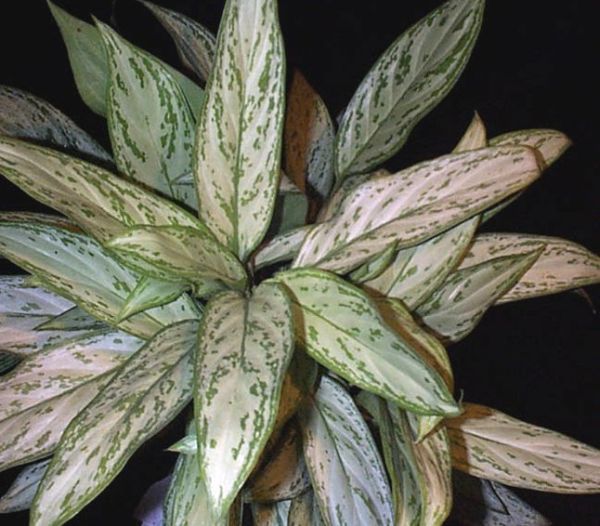
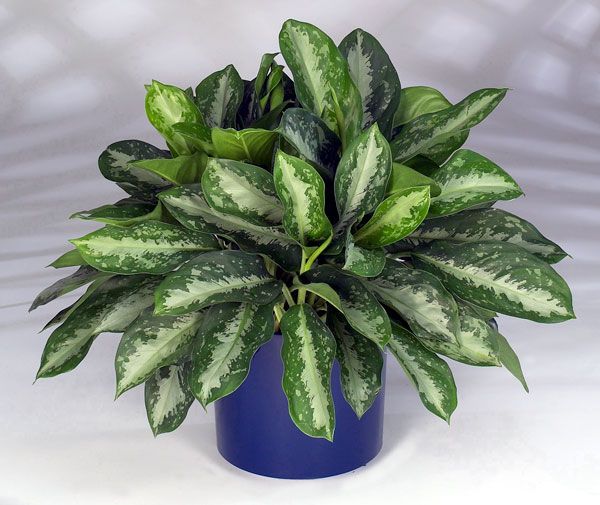
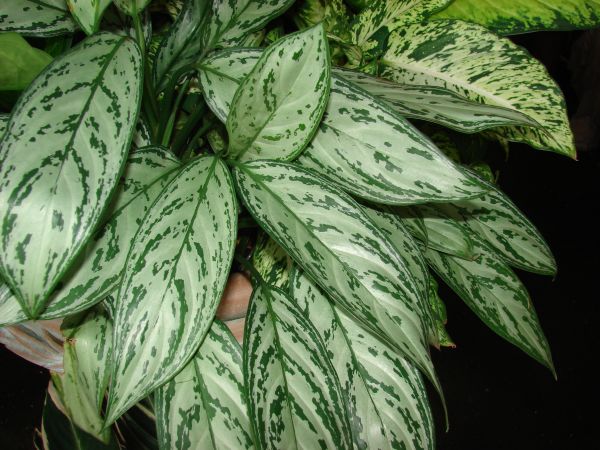
In the wild, Aglaonema grows in South-East Asia. In Poland several varieties are grown, with emerald-green, oval or egg-shaped leaves marked with white patches. Depending on the variety, the plant can reach up to a metre in height.
Requirements
Aglaonema is an easy houseplant that grows well in most conditions and tolerates the dry air in our homes well. It is suitable for poorly lit spots but can also grow in direct sun. It tolerates temperatures down to 10°C fairly well, but it is better to keep it at about 15°C in winter and 24°C in summer, provided the air is reasonably humid.
Propagation
It is good to repot the plant every spring. It does not like compacted soil, so do not press it down too firmly when repotting. Aglaonema is propagated by division. It is best to separate young leafy shoots with roots in April–May and, after planting, keep them at about 20°C until they are growing well. It can also be propagated from tip cuttings, but this takes much longer. After a few years the plants become less lush, and it is best to raise new ones from tip cuttings.
Care
In summer water the plant twice a week (the soil should be constantly moist) and feed with liquid fertiliser every 2 weeks. Remember that it needs moderate air humidity and should be misted twice a week. You can also stand the pot on wet pebbles in a saucer. In winter water at most once a week and keep the atmosphere dry.
Aglaonema leaves are fairly large, so they easily get dusty. Clean them by hand with lukewarm water. Do not use leaf-shine products.
It is good to repot the plant every spring. It does not like compacted soil, so do not press it down too firmly when repotting.
When plants get sick
Sometimes in summer, when the plant is not properly fed, the leaves develop patchy yellowing. The same symptoms appear if the temperature is too low in winter.