Ivy-leaved geranium
Pelargonium x Hederifolium
Description
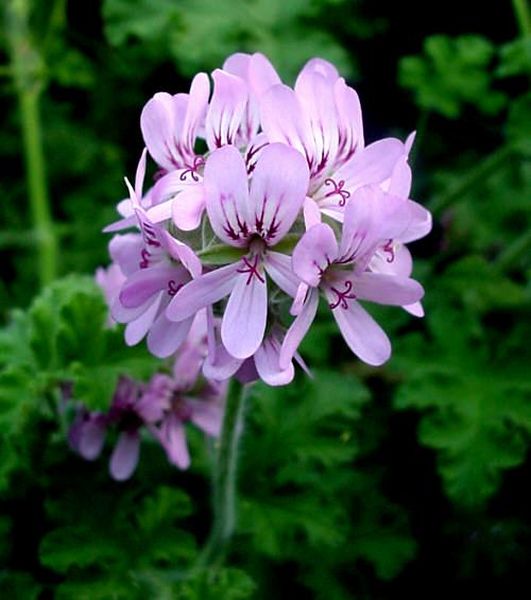
Pelargonium is a genus of perennials and subshrubs of the geranium family. It includes about 200 species, mainly from South Africa. They are the queens of balcony plants, and there are also species for growing indoors.
Zonal pelargoniums are number one among balcony plants, with upright, long-stalked, downy leaves showing a more or less visible pattern on the blade. The flowers may be single or double, gathered in umbels in vivid colours: red, pink, purple, crimson, violet and white. They are also used as bedding plants and grow 25 to 50 cm tall.
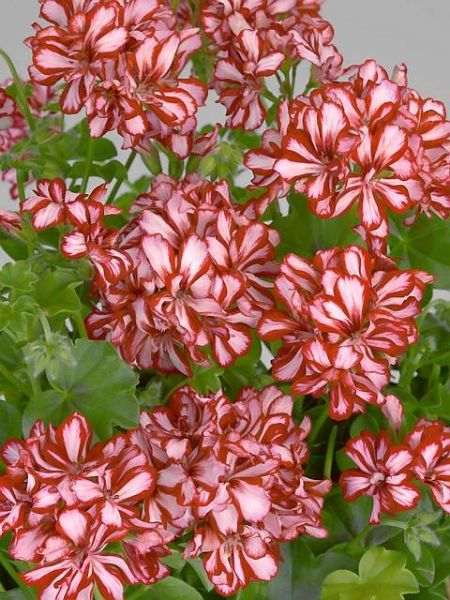
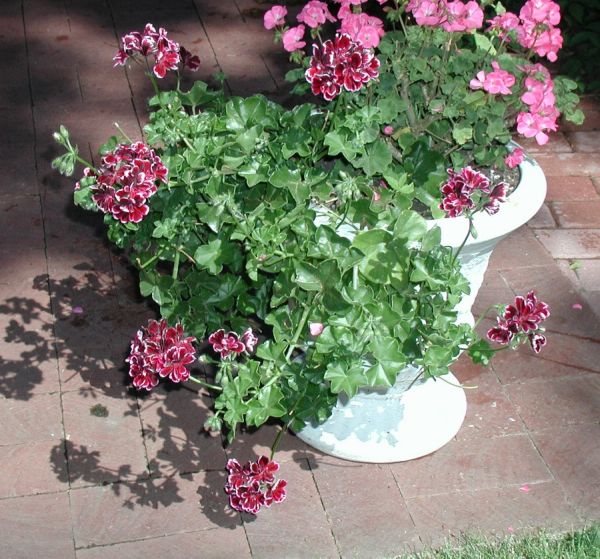
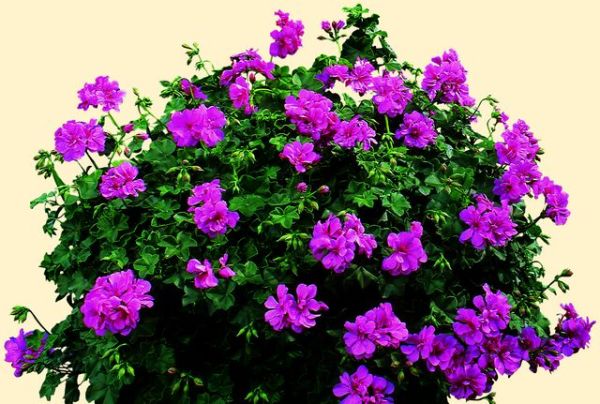
Ivy-leaved geraniums have trailing or creeping stems and fleshy, glossy, ivy-shaped leaves. Their flowers form umbels of 8–15 double or single blooms in many colours, and the stems are 25–80 cm long. They are used mainly in balcony and window boxes and various containers, especially hanging ones.
Requirements
Ivy-leaved geraniums like to be outdoors in partial shade. Their adaptability is very high, however, so they also cope in other conditions. They have no special requirements as to compost: compost-based soil with added peat and sand, a peat-based mix or standard potting compost will all do.
Propagation
Pieces of shoot can be used straight away as cuttings. The tips must not be too woody. Cut off shoot tips 8–10 cm long with one, or better two, pairs of leaves. Put the cuttings straight into water, or dip them in rooting hormone and plant them in a mix of sand and peat whose temperature must not exceed 10°C. Cover the pot with a plastic bag and place it in a warm, very bright spot. Roots form after 2–3 weeks. Then move the plant to pots of loam-based compost and keep it at no more than 12°C – otherwise no flowers will form.
Care
When watering, take care not to let the plants dry out or overwater them; water whenever the compost has dried. In summer, when it is very hot, water even twice a day, morning and evening. Start feeding two or three weeks after planting, ideally with liquid fertiliser every 7–10 days. You can also use slow-release fertilisers, so you do not have to keep track of feeding dates; in rainy weather feed less. Do not plant pelargoniums too densely – at least 25 cm apart. It is important to remove spent flowers regularly, which extends flowering even until the frosts. After flowering the plant can be trimmed a little; harder pruning is done when repotting at the end of February.