Description
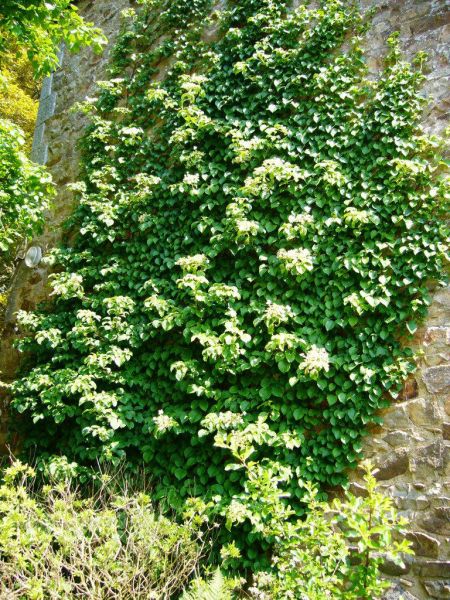
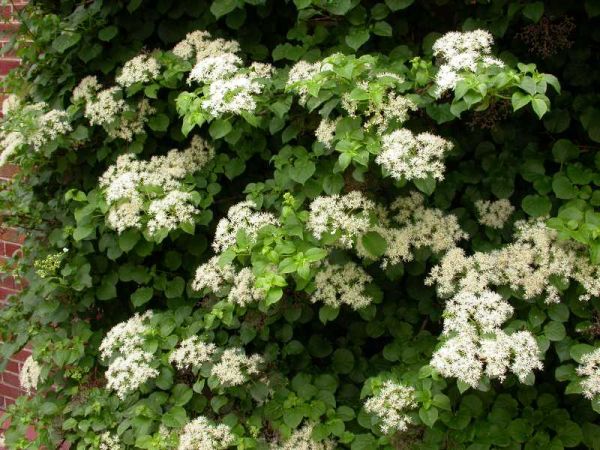
The climbing hydrangea is a climber of the hydrangea family (Hydrangeaceae) from the Far East. It climbs using clinging roots, and its stems wind around supports. After a dozen or so years it can reach more than 10 m in height. It grows fairly slowly, about 0.5–1 m a year. The leaves are dark green, oval, pointed and 10 cm long, turning golden-yellow in autumn.
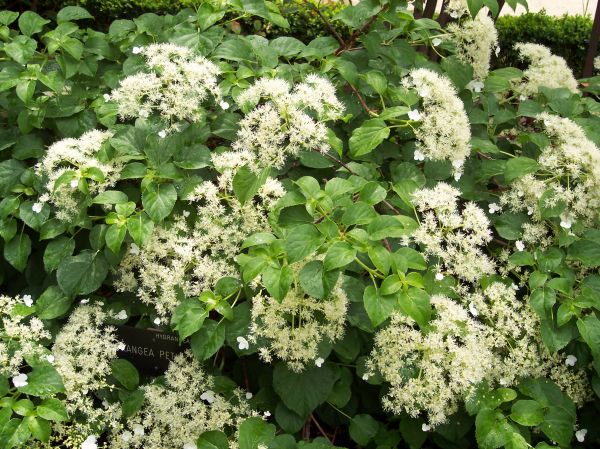
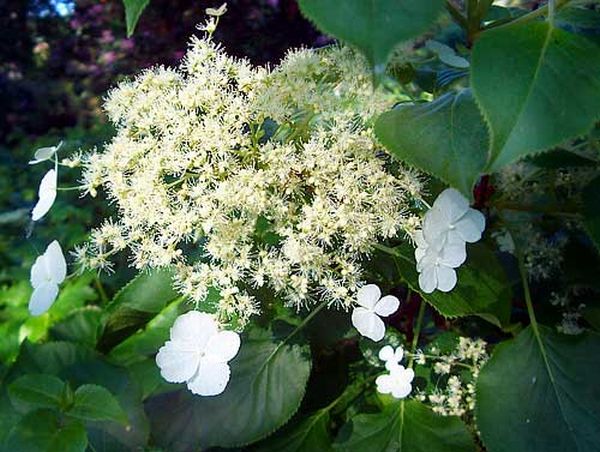
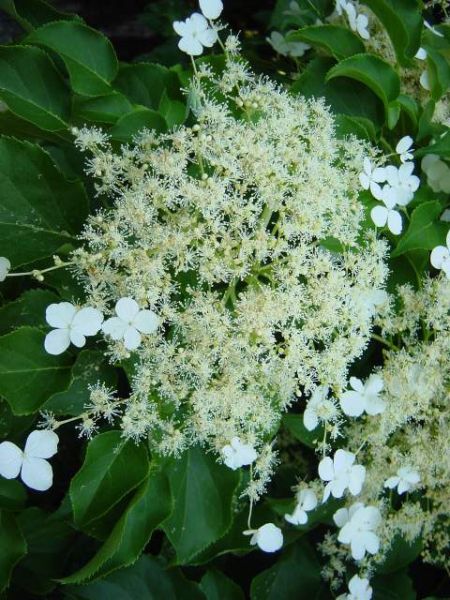
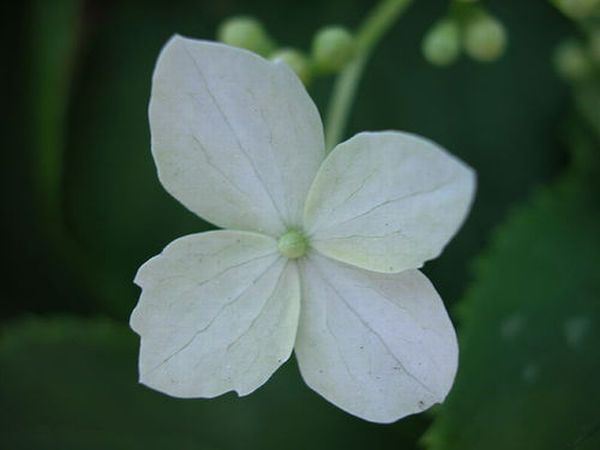
It flowers from June to the end of July. The flowers are gathered in flat clusters up to 25 cm across. Around the edge of each cluster are white sterile flowers about 2 cm across, while the centre is filled with smaller, greenish-white fertile flowers. The fruits are inconspicuous capsules developing from the inner bisexual flowers, with winged seeds. They are not very striking but provide food for birds.
Requirements
It needs partial shade and fresh, humus-rich, slightly acidic soil, though it can also grow on slightly alkaline soils. It tolerates drought very badly, especially in the first few years after planting. It is completely frost-hardy.
Propagation
Care
When planting young plants by supports, it is best to lay the shoots on the ground and tie them to the support.
It is used for planting by walls and older trees, and as a climber covering arbours, pergolas or strong trellises. It can also grow without support as ground cover, reaching 1–2 m in height.