Description
Lily of the valley is a perennial of the lily family (Liliaceae). It comes from temperate Europe and Central Asia and also grows wild in Poland.
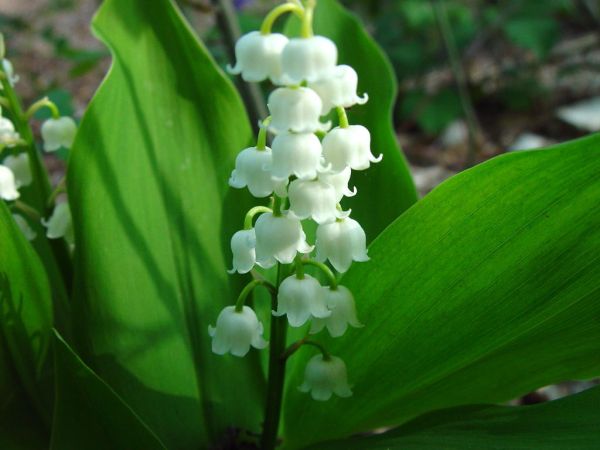
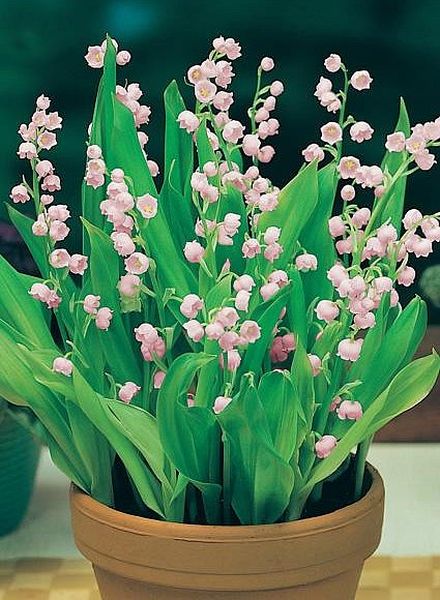
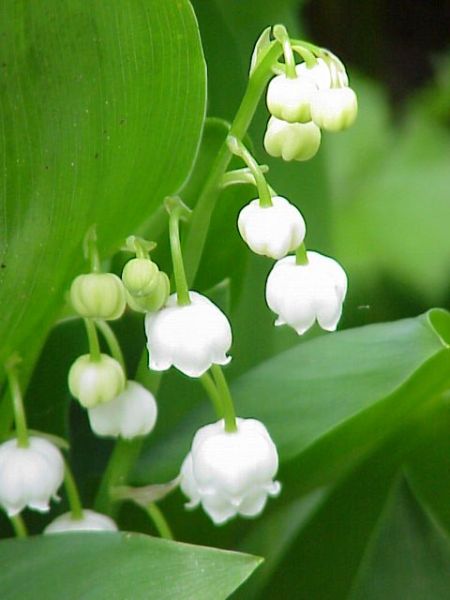
It forms numerous thin rhizomes that spread just below the surface. Buds form on these rhizomes; in the first year they produce one or two leaves, and in the second year 2–3 oval leaves. In spring of the third year a flower spike grows as well as the leaves. After flowering the rhizome stops growing, and 1–2 vegetative buds form at the base of the flower bud, producing new rhizome branches that again grow only vegetatively for a while. The flower stem is 15–25 cm tall and ends in a one-sided raceme. Wild lily of the valley has 6–9 flowers per raceme; garden forms have 11–18. The flowers are small, usually white, bell-shaped and fragrant. Lilies of the valley grown outdoors flower in May.
Lily of the valley is a long-lived plant. It is used in borders, for planting in front of ornamental shrubs and under trees, and as a cut flower. Lilies of the valley in pots are also available, to decorate homes, balconies and terraces.
Requirements
Lily of the valley needs humus-rich, free-draining and moist soil. In the wild it grows on slightly acidic soils. It grows best in partial shade, where there is shade for at least half the day.
Propagation
Lily of the valley is propagated by dividing the rhizomes from mid-October to mid-November. Pieces of rhizome 10–12 cm long are planted shallowly at 20–25 x 10–12 cm.