
Description
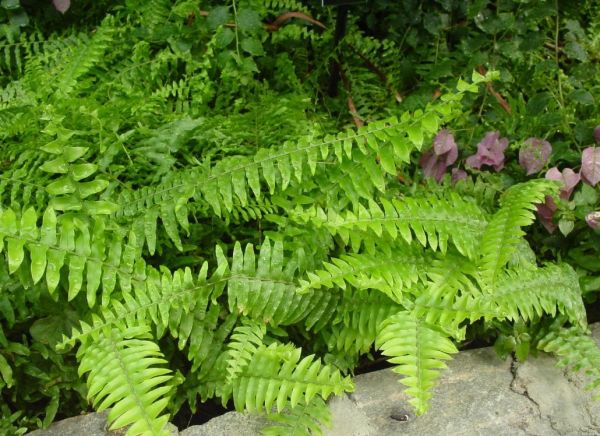
The Boston fern (sword fern) comes from northern South America (Brazil, Guyana), the Caribbean and southern North America (Mexico, Florida). It is grown as an ornamental plant.
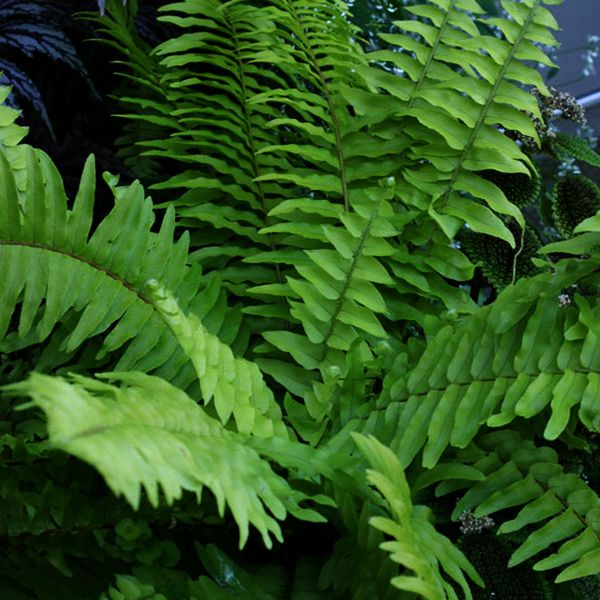
In warm countries it is grown in gardens and by water; in Poland mainly in greenhouses and at home as a houseplant. Its fronds are often used to decorate bouquets, wreaths and occasional arrangements. Its ornamental value lies in its light green, lush, arching fronds, which in some varieties are bipinnate or frilled. It was very popular in the Victorian era and is still one of the most commonly grown ornamental plants. Because of its long, arching fronds it is suitable for hanging pots or wall planters. It grows fairly fast and, properly cared for, can live up to 12 years.
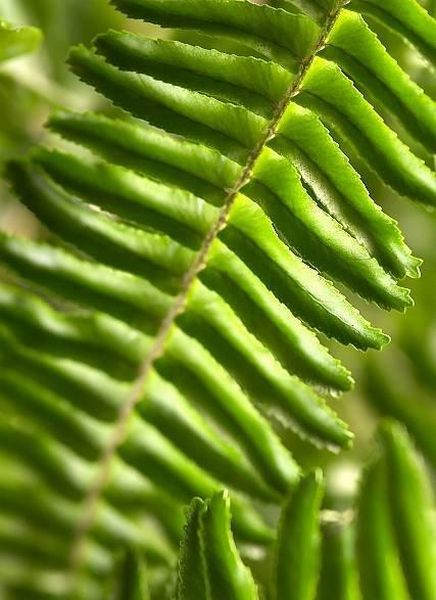
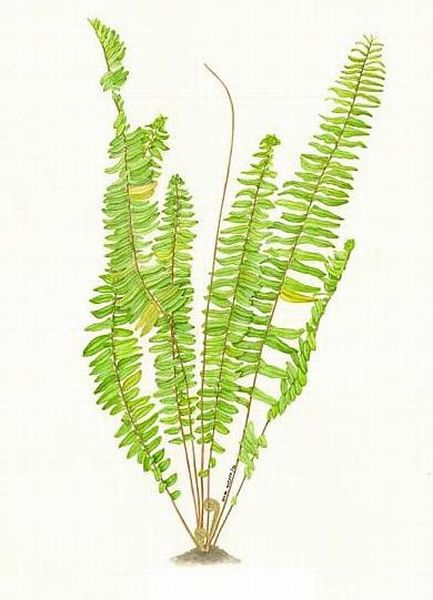
The fronds are pinnate or bipinnate and, depending on the variety, 80–180 cm long, though indoors they usually do not exceed 80 cm. The sporangia are on the edges of the fronds, and spores are usually produced in spring or summer. Cultivated varieties are usually sterile, however, and even if they produce spores, ferns grown from them do not inherit the features of the parent variety.
Requirements
Like most ferns, it needs high air humidity. The optimum temperature in summer is 18–21°C, and 14–15°C in winter. The best compost is slightly acidic (pH 5.5–6), made of humus-rich leaf mould, cold-frame soil and peat. It does not like direct sun – a slightly shaded spot is best.
Propagation
The Boston fern can be propagated in spring by plantlets (small plants) that form at the ends of runners and grow from the sides of the mother plant. They are moved to separate pots.
Care
The most important thing is constant high humidity. A potted plant is best stood in a larger container of constantly moist peat; a plant in a hanging pot should be misted daily, especially in winter when central heating dries the air. In summer feed every 2 weeks with a compound fertiliser diluted in water, but the solution must be very weak, as the Boston fern is sensitive to salt build-up.
When plants get sick
Silvery, shiny spots on the fronds show that the plant has been attacked by thrips. Move it to a cool place and spray it with cold water; if that does not help, use a suitable product.
Light brown spots on the fronds mean scale insects. If there are only a few, they can be scraped off with a knife; in advanced cases use a chemical product.
Fronds turning grey or rough are a sign of mites. An effective remedy is a special spray or dusting powder.
Before you buy
Choose a plant with dense, strong, green and undamaged fronds. Check that it is not infested with pests.
Average lifespan: – Can live for several years.
Difficulty of care: – An easy fern to grow.