Description
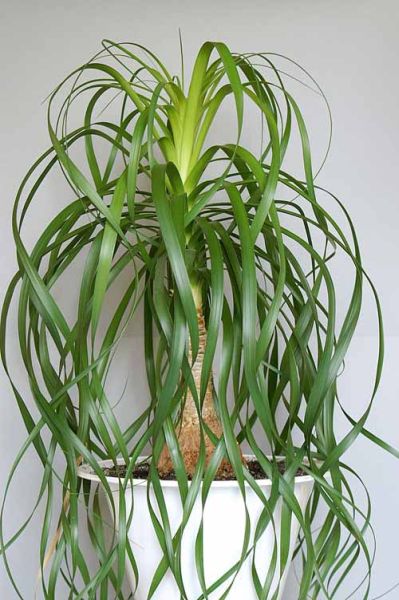
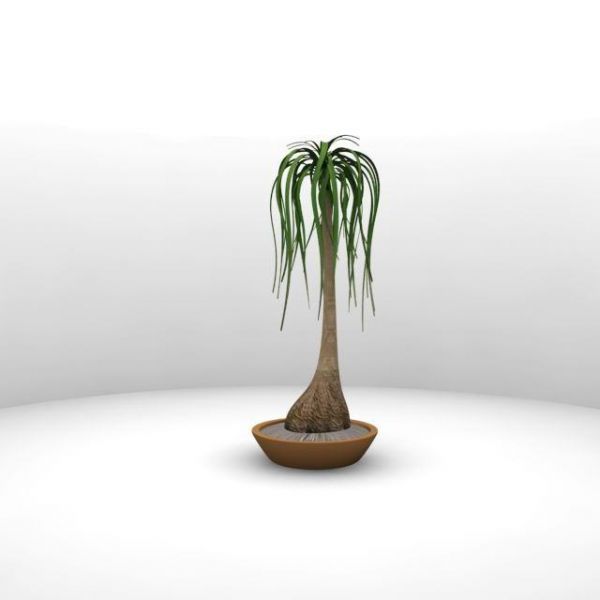
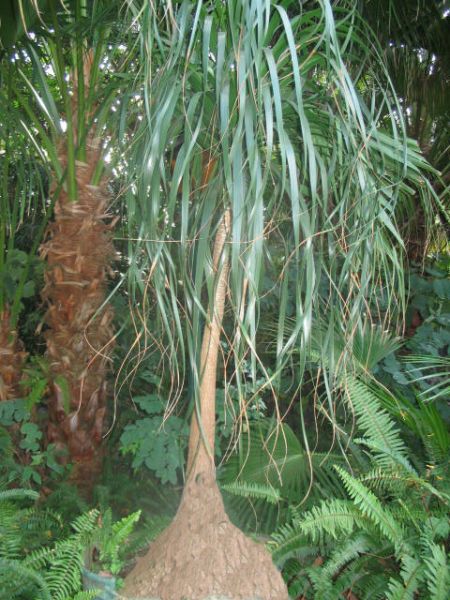
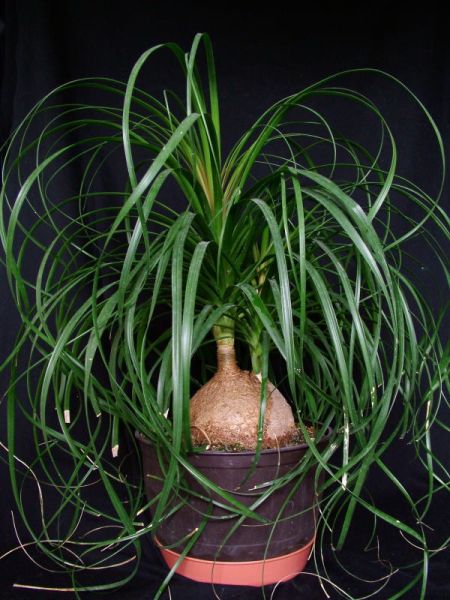
Nolina is a very attractive succulent from the Mexican deserts. Another name for this plant is Beaucarnea recurvata. It grows slowly. In the wild it can reach 4 to 8 m in height; in a pot it is much smaller. Its woody, wrinkled, brownish-grey, bottle-shaped trunk, which serves as a water store, looks very interesting. This unusual shape earned the plant its common name "elephant's foot". From the top of the trunk grows a tuft of narrow green leaves that curve downwards. In the wild it produces showy panicles of tiny white flowers with a slight pink tinge, but indoors it does not flower or set seed. It looks perfect as a solitary plant in modern interiors.
Requirements
A sunny position. It likes fresh air, so it does well right next to a window. In summer it can be put outside.
Propagation
In spring, when repotting, offsets can be detached from the mother plant. Keep them at 24°C.
Care
Plant in a soil-based potting mix with added leaf mould or peat and sand. Good drainage at the bottom of the pot is advisable. Water from spring to autumn, but sparingly. In winter, during dormancy, stop watering. In summer it is worth using a diluted liquid fertiliser every 4 weeks. It can be repotted every two or three years, but grows best in a relatively small pot. Do not feed in the first year after repotting. During the day it does best at 18–22°C; at night it is worth lowering the temperature to about 15°C. The minimum it tolerates is 10°C. Nolina is fairly easy to keep. Because it likes a dry atmosphere, it copes well in centrally heated homes. It does not tolerate excess moisture, however.
When plants get sick
Brown leaf tips can be trimmed off, but in moderation.
Weak, pale leaves and a soft trunk indicate overwatering.
In that case stand the pot on newspaper to soak up some of the water, and water again only when the compost has dried out.
The plant is sometimes attacked by spider mites or scale insects.