Description
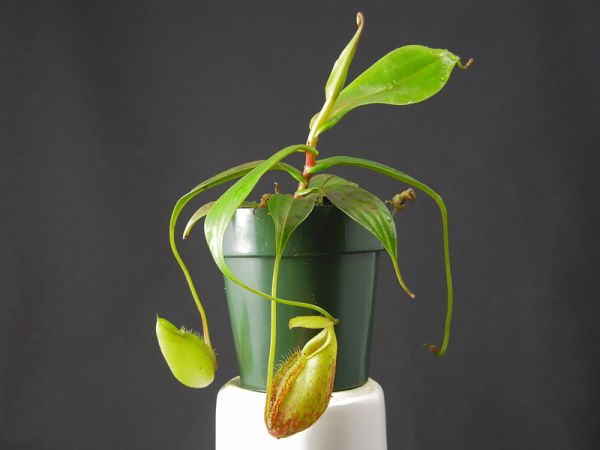
The pitcher plant is carnivorous – it "feeds" on substances of animal origin. It is a climber from the tropical forests of Indonesia and the Malay Peninsula. Various species and hybrids of pitcher plants are sold as pot plants.
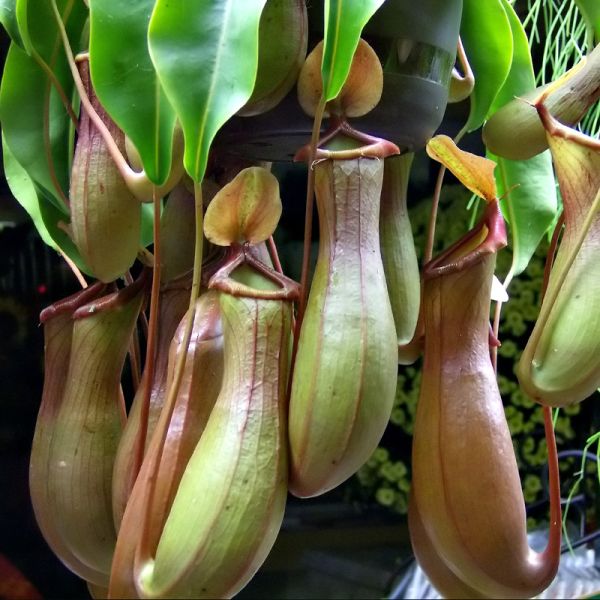
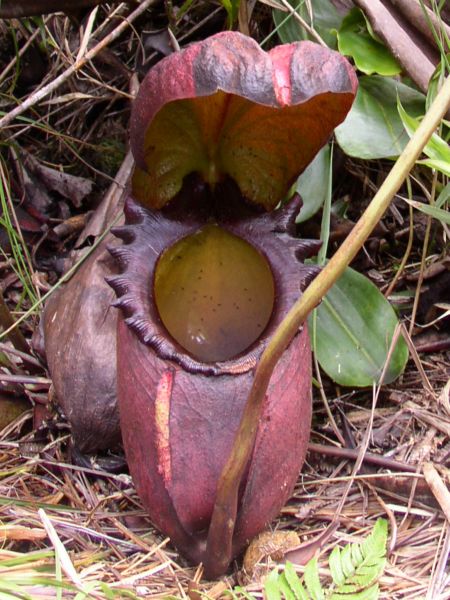
It owes its unusual appearance to its pitchers, which are traps for insects. They are in fact modified leaves of the plant. Each pitcher is filled with a fluid that digests insects, secreted by the walls of the organ. Above the pitcher is a lid, which stops the fluid being diluted by rain. The pitcher lures insects with its colour and the scent of nectar; they settle on its rim and, when they fall inside, sink into the fluid. This triggers glands that secrete digestive enzymes. The insects are slowly broken down and their nutrients absorbed by the plant.
Requirements
If we want a pitcher plant to grow well in our homes, it needs high air humidity, plenty of diffused light and constantly moist compost.
Care
To give the plant the right humidity, it is best kept in an aquarium with three-quarters of the top covered with a sheet of glass. Hardier species and hybrids can be stood over a container of water, but this is more troublesome, and they then need misting 3–4 times a day.
The pitcher plant needs plenty of diffused light; strong sun can scorch it. It is best placed on an east- or north-east-facing windowsill. On south-facing windowsills it must be shaded on hot days. The pitcher plant has no rest period, so it needs a steady temperature of 18–25°C all year round.
The compost must be constantly moist but not wet. Water moderately, never letting water stand in the saucer or the compost dry out. During growth, from spring to autumn, the plant needs more moisture, and less in winter. Always water from above with soft water only – ideally distilled, or tap water that has been left to stand or boiled and cooled to room temperature.
Repot every spring into a larger pot filled with a mix of peat, perlite and sand. Do not use ordinary potting compost, as it contains fertiliser that can burn the roots. You can also use pure peat or ready-made orchid compost. Repot very carefully so as not to damage the delicate roots.
If you want the plant to stay compact, cut the shoots back after spring repotting, leaving 2–3 buds. Otherwise you will need to put in a support. Cut off pitchers that have dried up.
Because pitcher plants feed on animals in the wild, their roots are adapted to poor soil. It is best not to fertilise them at all – just drop an insect into a pitcher from time to time. Make sure the traps are a quarter full of fluid; if there is less, top them up with water.