Description
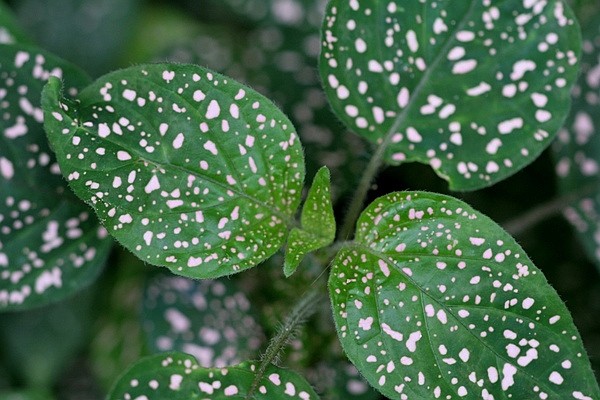
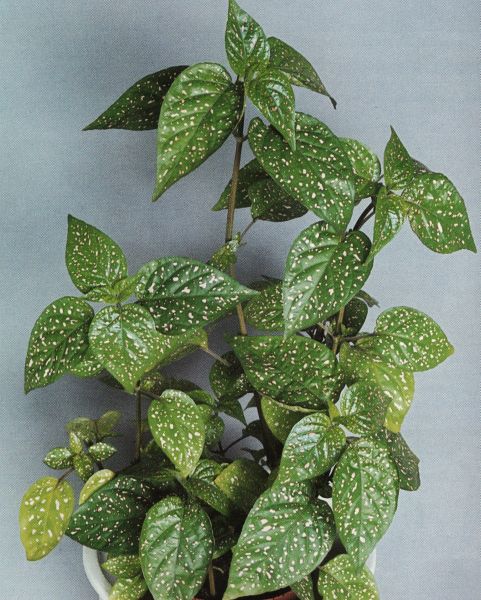
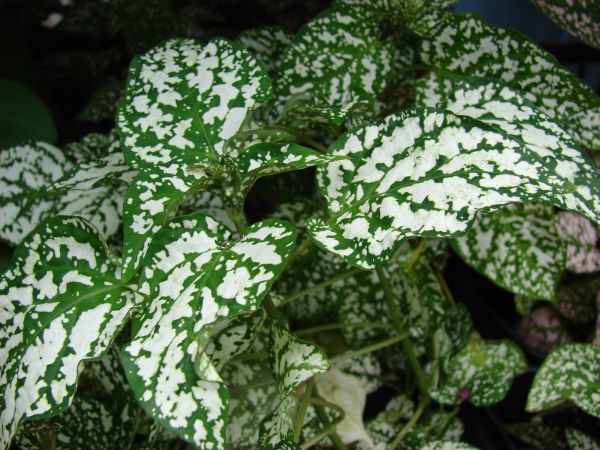
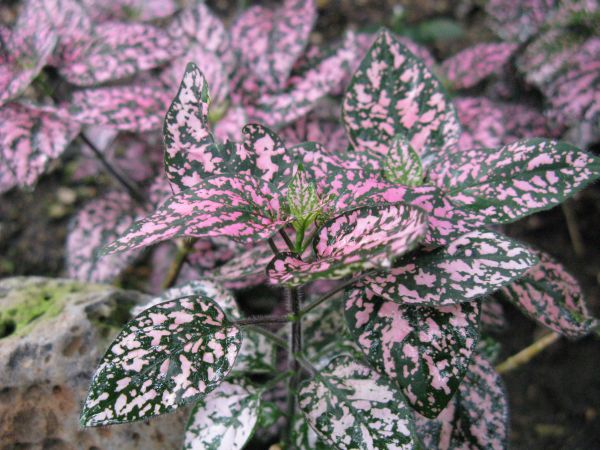
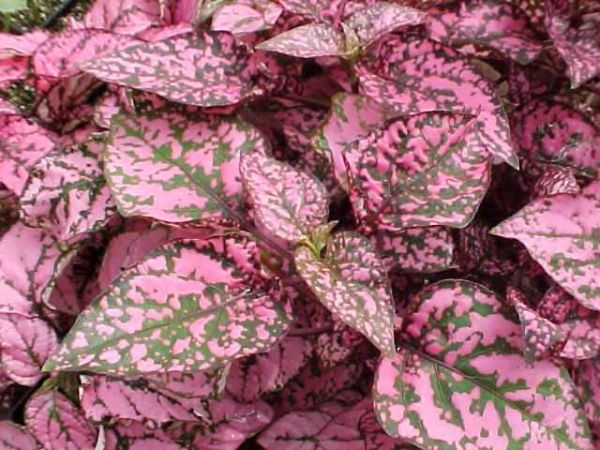
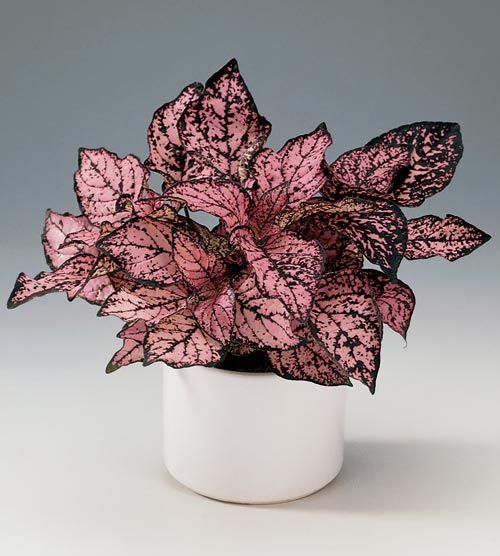
The polka dot plant is a houseplant, like the rubber plant or palms. It attracts attention mainly with the pink dots on its leaves, and hardly at all with its flowers.
There are about 150 species of Hypoestes in Madagascar. The plant first appeared in Europe in 1840, in England. For a long time it was absent from the market, and its popularity grew again when varieties with more pink spots began to be imported. It is a subshrub, which means that in older plants only the lower part of the stems becomes woody, while the upper part stays soft. The stems are upright and heavily branched. It has attractive lance-shaped leaves.
The polka dot plant may flower in summer. The flowers are violet-pink and grow in the leaf axils, but they are of no importance, as the plant is grown mainly for its leaves.
Requirements
In its native Madagascar the polka dot plant grows in warm, humid conditions, and it needs the same climate in our homes all year round. Apart from that it is easy to grow and just as easy to propagate. It needs light only to keep its spots.
Propagation
Propagation from shoots
Shoot cuttings can be taken in spring, and also in August. Only the top end of the shoots is suitable. Cut a piece about 10 cm long with three pairs of leaves and break off the bottom two. Insert the cutting in moist soil mixed with peat. For the first few weeks put a plastic bag over the pot to create a greenhouse microclimate. Place the pot somewhere warm and well lit. Pinch back the young plants several times to make them really bushy.
Care
The ideal spot for the polka dot plant is in partial shade with good air circulation. If it is kept too dark, it loses its spots. Normal room temperature suits it all year round. The air must be humid.
Always water with soft, room-temperature water. From March to August feed once every three weeks. Mist the plants often and stand the pot on a layer of peat or pebbles in a saucer filled with water.
Repot in spring into smaller pots with ordinary potting compost.
Prune the plant regularly so that it stays no taller than 40 cm. On young plants you have raised yourself, pinch out the shoot tips several times so that they grow bushy.
The plant does well in a group, as it needs high humidity. Make sure, however, that taller plants do not shade it, or it will lose its beauty.
When plants get sick
Grey mould – recognised by greyish-white or brown spots on the leaves. It appears when the plant is too shaded, cold and damp. Find the plants a brighter spot and let them dry out.
Brown scale insects – can be found on the undersides of the leaves. Wipe them off with a cotton bud soaked in spirit.
Before you buy
Average lifespan: – it can last several years.
Difficulty of care: – easy to care for, but needs plenty of water.