Persian buttercup (Ranunculus)
Ranunculus Asiaticus
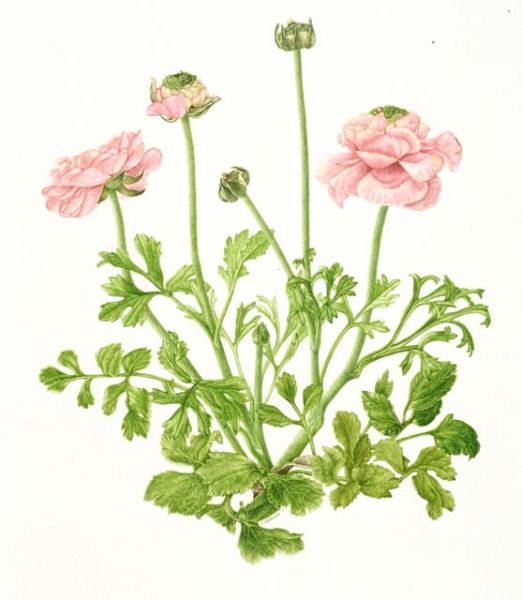
Description
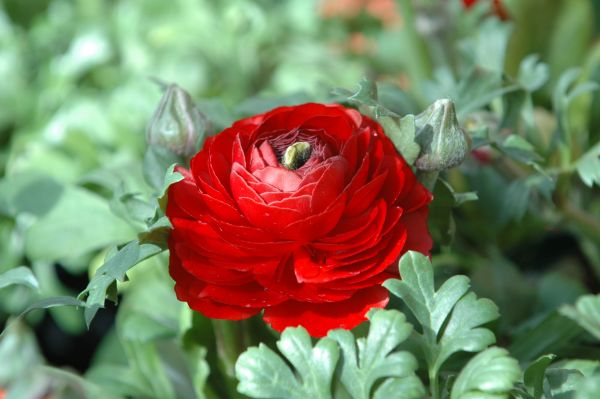
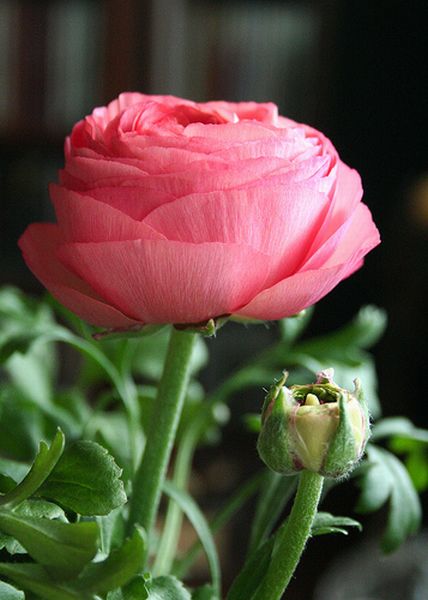
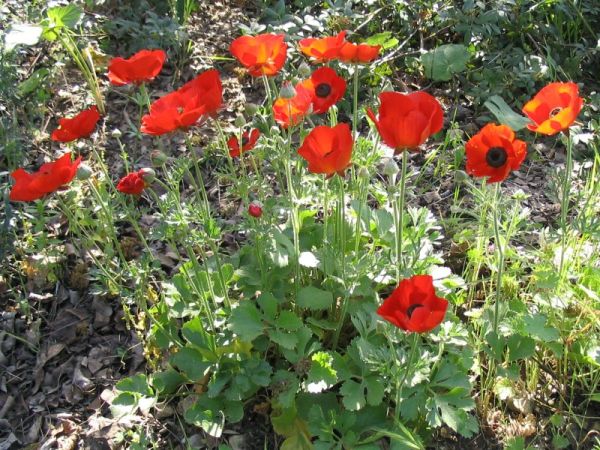
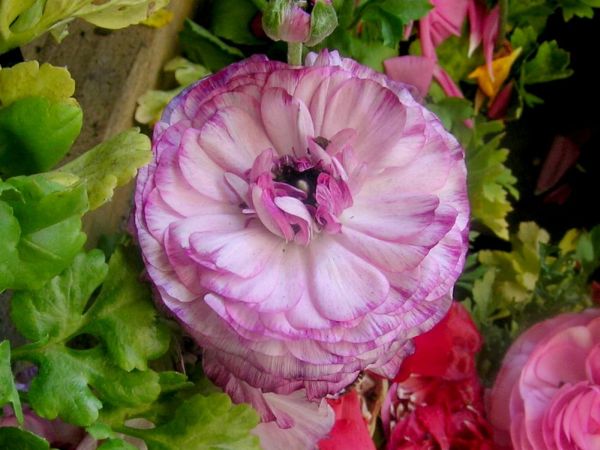
The Persian buttercup is a perennial from southern Europe, Syria and Iran. Its flowers are usually double, 6–8 cm across, in bright colours: yellow, orange, red, pink or white. There are also bicoloured varieties with yellow-purple and white-pink flowers.
Ranunculus is often planted in perennial borders and natural gardens, and it is excellent as a cut flower.
Requirements
A sunny to partially shaded position. Moist or moderately moist, nutrient-rich soil. Ranunculus does not tolerate dry soil.
Propagation
Propagate by sowing seeds immediately after collecting them, or by division.
Care
Ranunculus is very sensitive to excess water in the compost – its roots rot easily. But the compost must not lack moisture either, or the flowers soon droop. Water moderately but regularly (the higher the temperature, the more often), ideally by pouring water into the saucer. Every two weeks it is worth feeding with a compound fertiliser solution.
To keep the roots until next spring, as soon as the danger of frost has passed, sink the pot with the faded plant into the ground in the garden or into a balcony box in a lightly shaded place, and water it so that the soil stays slightly moist, so the leaves can keep growing for a few more weeks and feed the claw-like underground tubers. Later the plants go dormant and their above-ground parts dry up. Then remove the dried leaves, leave the roots in the pot and move it to a dry, cool room. You can also take the roots out of the pot and cover them with slightly moist fresh peat.
In February–March take the tubers out of the compost and soak them in water for a few hours, then fill a pot with fertile, free-draining soil, plant the roots 4–5 cm deep and water fairly generously. The pot is best kept in a cool room. Water again only when the leaves appear. If you have a cool but frost-free veranda, you can plant the tubers in fresh compost in autumn.
When plants get sick
Ranunculus can be attacked by aphids, thrips and other pests. As soon as you notice insects or signs of feeding on the leaves, such as silver and white discolouration, put a systemic insecticide into the soil.