Dipladenia (Mandevilla)
Mandevilla Sanderii
Flowering plantsClimbing and trailingBalcony plantsGarden plantsCut flowers
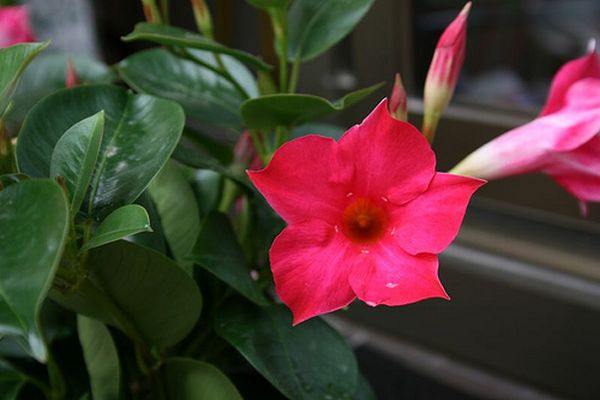
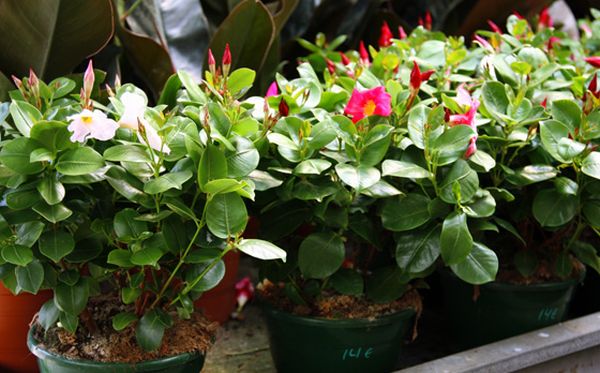
Description
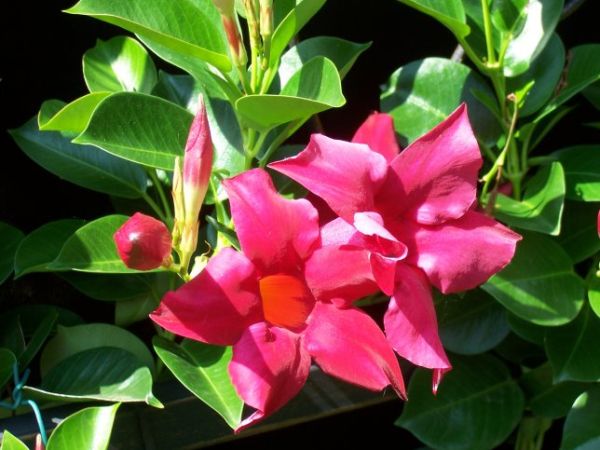
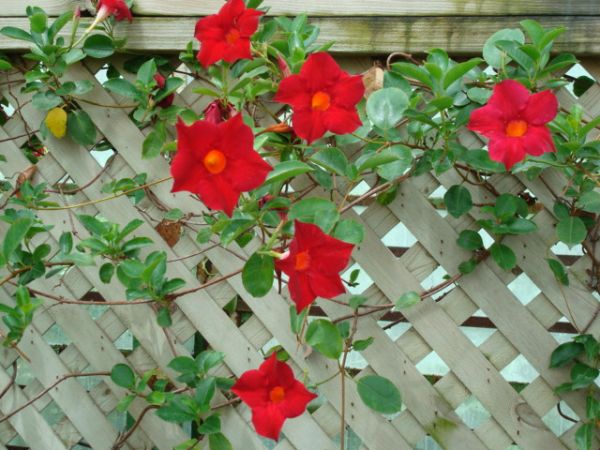
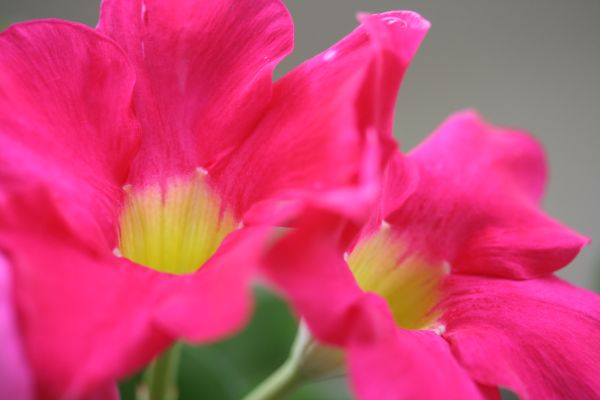
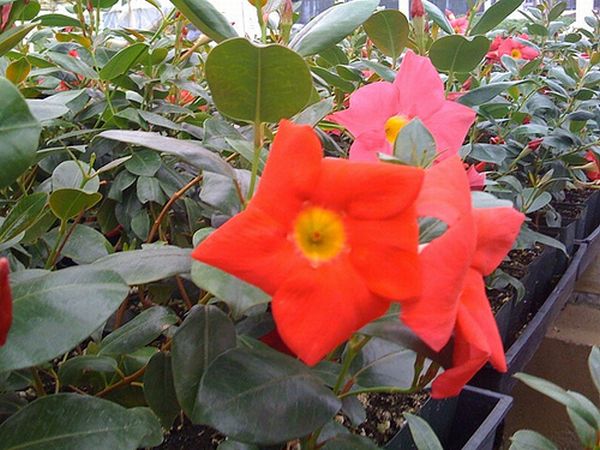
Dipladenia is also known as Mandevilla. It comes from South America and belongs to the dogbane family (Apocynaceae). It is a showy climber with red flowers, although there are also varieties with white and pink flowers. This patio plant, popular in the warm regions of Europe, is increasingly grown in Poland. It is recommended for large containers on balconies and terraces, and in gardens too.
Dipladenia's ornament is its numerous decorative flowers. The plant flowers profusely and for a long time, until the first frosts. Its glossy, dark green leaves are an additional decoration. The plant has long, trailing, twining stems and needs supports. It can be shaped by pruning, but too much pruning reduces flowering. It is a perennial, but in our climate it must be brought indoors for the winter.
Requirements
It needs a sunny, warm and humid position; indoors it is best placed at a south-facing window.
Propagation
The plant can be propagated in spring from tip cuttings. They root within six weeks in a warm place.
Care
During growth water regularly so that the compost is evenly moist, avoid standing water and mist the leaves. Feed moderately every week from March to August. From May to autumn provide a temperature of 18–20°C. If it does not get enough air humidity or is exposed to direct sun, the leaves may curl.
In autumn cut dipladenia back hard and keep it until the next season in cool conditions indoors, ideally at 12–15°C. In winter water sparingly – just enough to stop the roots drying out. The second condition for successful overwintering is giving it as much light as possible in winter. In February cut the plant back so that it bushes out better.
Dipladenia's root system is fairly vigorous, so make sure you move it to a larger pot in good time. The compost should be fertile and humus-rich. Remember good drainage when repotting.
When plants get sick
Dipladenia is very rarely attacked by diseases and pests.