Description
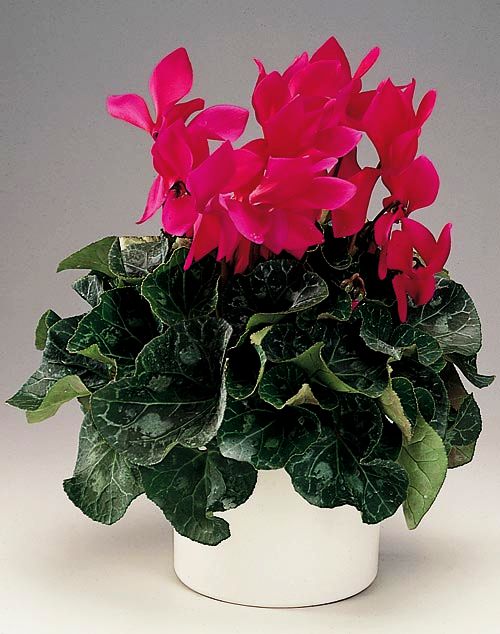
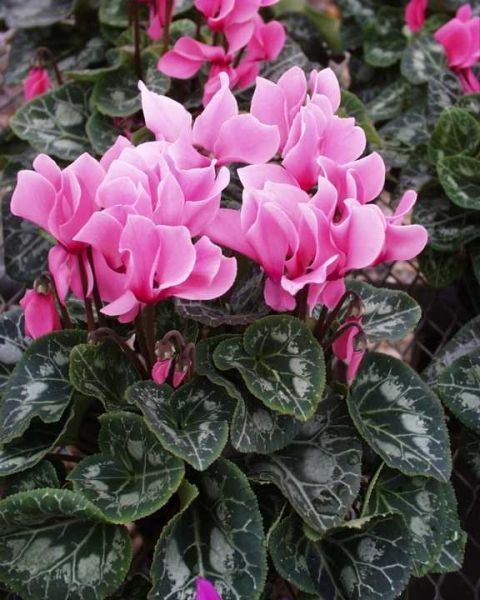
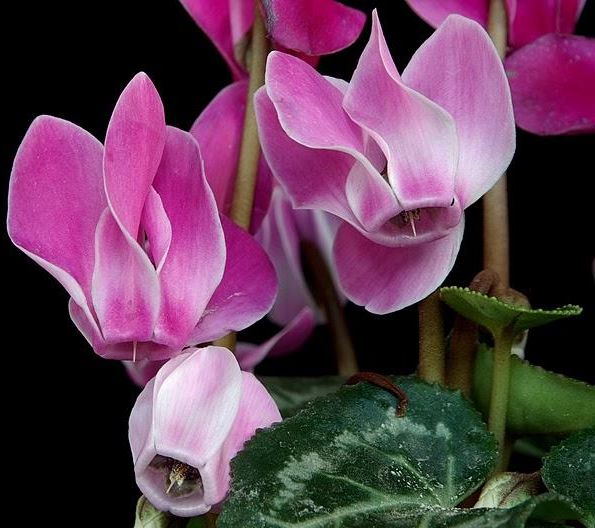
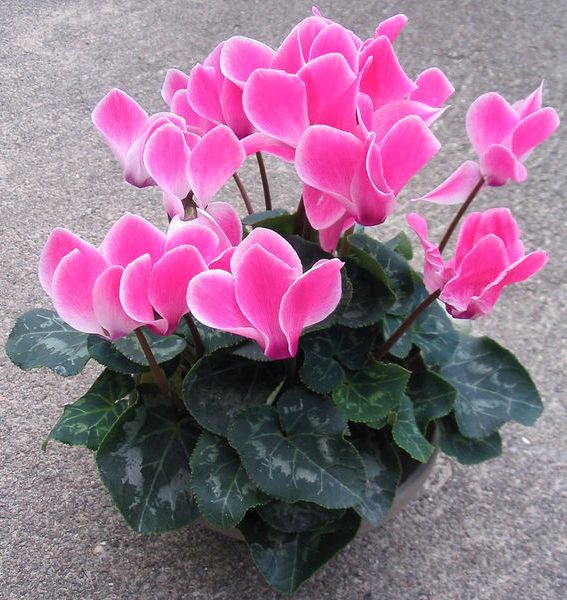
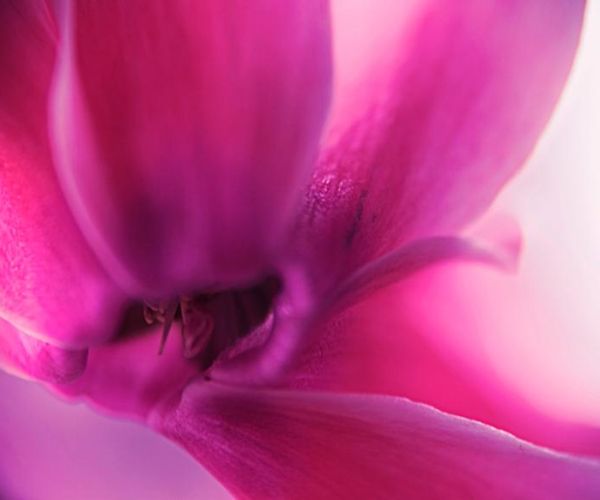
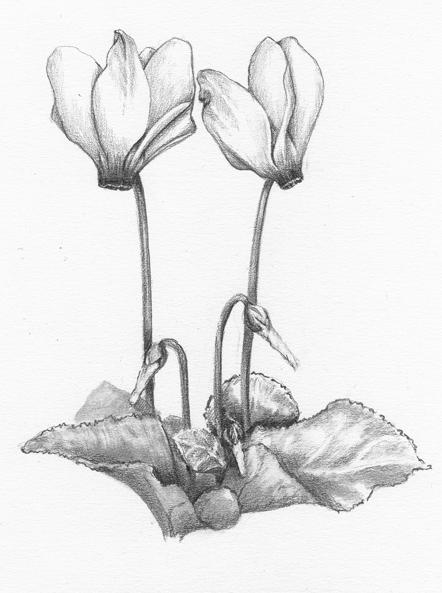
The Persian cyclamen is one of the most beautiful houseplants flowering in winter. Its flowers are in pastel shades, and its leaves are heart-shaped.
The cyclamen is a perennial that comes from the mountainous regions of the Mediterranean; in the wild it grows in the mountains, on the Greek islands and in Turkey.
It was first domesticated in England in 1735, but the first flowering came only 4–5 years later. Through breeding and crossing, the time to flowering has been shortened to less than a year.
The Persian cyclamen is one of the most popular pot plants. Its flowers come in all shades of red and pink, as well as white and multicoloured, with smooth or frilled edges. The best known are the large cyclamens, the result of crossing. There are also dwarf forms, however, which are just as rich in flowers as their relatives.
Cyclamens usually grow 30–40 cm tall, but there are also varieties 20–25 cm tall.
They flower from September to March, often so profusely that some of the flowers can be cut for vases without spoiling the plant. Unfortunately they have no scent.
Requirements
They do best in cool rooms and partial shade. Temperatures below 20°C are ideal. During flowering they need a lot of water, but the tubers should not be waterlogged.
Propagation
Seeds
Seeds can of course be bought, ideally in small packets, or – with a little luck and skill – collected from your own plants. First, though, the flowers must be pollinated. This is done as follows: hold a large brush under a fully open flower and shake the flower. Transfer the pollen that falls onto the brush back onto the flower's stigma. Then water that plant only moderately and keep it cool, at 12–14°C. The seeds ripen in May and June. Pick the seed capsules off the stalk and leave them for 6–8 weeks in a dry, cool place to ripen.
Sowing
Sow into fresh compost. A long flower trough covered with glass or film is suitable. The compost must be moist. After sowing, place the trough in a cool, dark room – the seeds will not germinate unless they are in complete darkness. After 3–4 weeks, move the trough to a lighter place. Remember never to let the compost dry out.
Thinning
Once the plants have germinated, thin them out: remove the weak ones and keep the strong ones. When one or two leaves appear, transplant them into separate pots, always making sure the tuber is covered with soil. If it dries out, the plant will not grow any further.
Propagation by dividing the tubers
Care
Pour water into the saucer, but tip away what is left after half an hour. It is good to keep the plant in a room with high air humidity.
Repot the cyclamen after flowering, i.e. in April–May, removing any damaged roots at the same time. The top of the tuber should stick out a little above the soil. Do not use pots that are too large – the plant flowers better in smaller ones.
All year round, remove wilted leaves and flowers to make room for the new buds that keep appearing.
After the period of intense flowering, the cyclamen enters its rest period. Water less and less and stop feeding. If possible, put the plants out on the balcony or in the garden for a while, in a shady spot. Bring them back indoors before the frosts, and water them now and then while they are outside.
When plants get sick
Grey mould – shows as a thick grey coating, brown spots on the leaves and wilting stems. Little can be done against this fungus.
Small leaves and few flowers – a sign of insufficient nutrients. However, never use a stronger dose of fertiliser than recommended on the packet.
Dry spots on the leaves – appear when the plant has been put in the sun while the leaves were still wet.
Aphids – sit on young shoots and under the leaves. Use a suitable insecticide against them.
Note – the Persian cyclamen does not tolerate any leaf-shine products. Clean it with a brush and clean water.
Before you buy
Buy plants with healthy, juicy leaves, and make sure they have plenty of buds.
Average lifespan: in cool rooms they last many years and flower every year.
Difficulty of care: easy to care for.