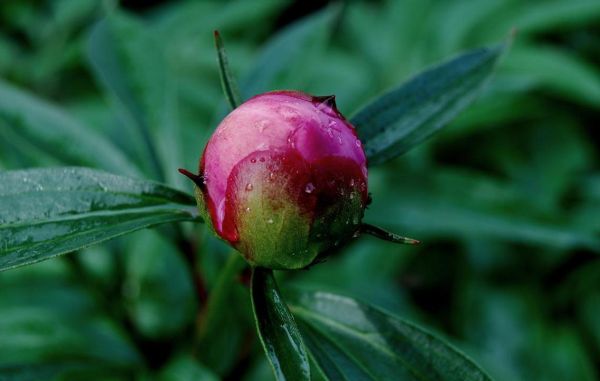
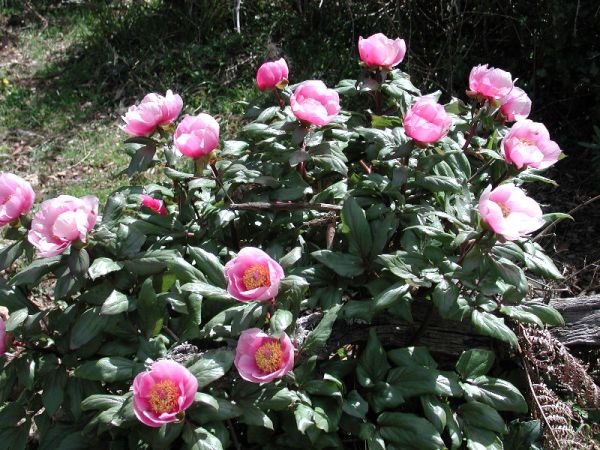
Description
The peony is the only genus in the peony family. Among its approximately 40 species are some of the most beautiful garden perennials. It grows in clumps about 80–90 cm tall. Peonies are also valuable for their large clumps of green leaves, often tinged red in spring and darkening in autumn.
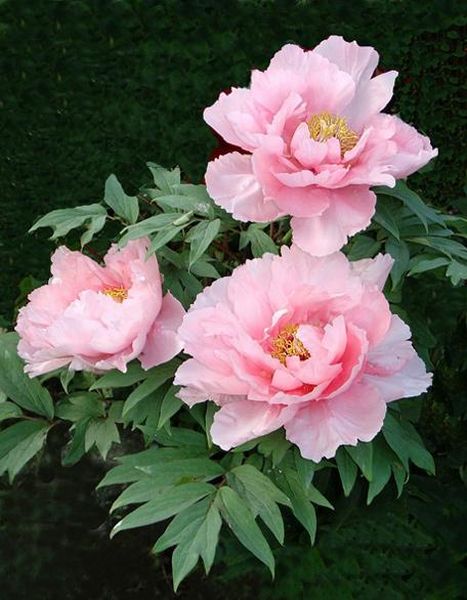
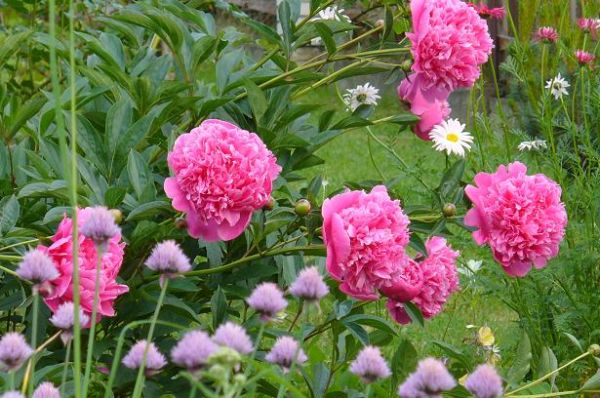
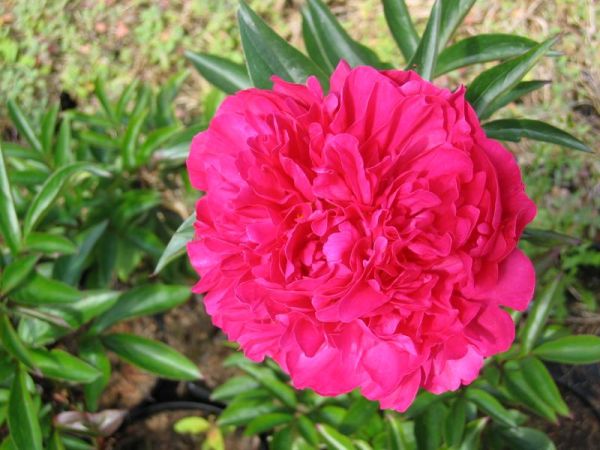
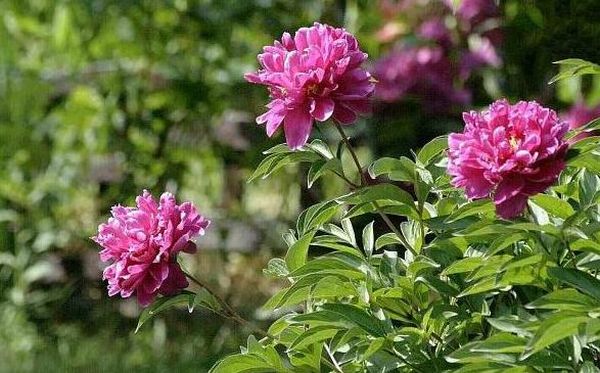
Peonies are native to the cooler regions of Asia, southern Europe and western North America. Among the many species there are varieties with white, pink, purple and, more rarely, yellow flowers, often fragrant. Peony hybrids also have bicoloured and double flowers. Peonies bloom at the turn of May and June. The most beautiful displays are made of different peony varieties planted side by side, surrounded by spring-flowering bulbs.
Requirements
Peonies need sunny places sheltered from the wind. Only good sun will guarantee success.
Propagation
Peonies are propagated by dividing the crowns from mid-August to the end of September. Peony roots are fleshy and very brittle. To avoid breaking them when lifting, first dig around the roots, then lift the plant and gently remove the soil from between the roots. Then cut off the leaves and divide the crown into several parts, so that each has at least three to five healthy buds at the base of the stems and several thick, undamaged roots. It is worth carefully washing the crown under running water first and leaving it for a few hours to dry. The roots then become less turgid and easier to cut without damage.
Care
Plant peonies in August, 60 x 100 cm apart, choosing a place where peonies have not been grown for several years. Peonies planted in spring need to root well in their first year, so remove their flower buds. Move them to their final position only once they flower weakly. Remember, though, that it takes several years after planting for them to flower lavishly.
After planting, cover the buds at the base of the shoots with no more than 4–5 cm of soil. Watch the depth – peonies planted too deep may not flower. Peonies respond very well to mulching with compost.
When buying peonies sold in pots or plastic bags, check the condition of the roots: make sure they have not dried out or become mouldy, and that the pink buds at the base of the shoots are alive and undamaged. If shoots have already started growing from the buds, choose those that are as short as possible.
Feed peonies with humus, well-rotted manure or compost, or with mineral fertilisers for garden perennials with added superphosphate. It is worth mulching the soil under the plants, e.g. with pine bark. Of the many species, only the Chinese and common peony are frost-hardy and need no winter protection.
When plants get sick
In wet summers the shoots may die back due to grey mould, which usually starts at the base of the stems. Diseased shoots turn yellow, then brown, and must be removed immediately. In case of severe infection cut the plant down to ground level.
Before you buy
Buy plants in early autumn. The tuberous roots must not be damaged, and the shoot buds should be clearly visible.
Never buy plants with mouldy, damaged or dried-out roots.
Average lifespan: – Can live for a very long time.
Difficulty of care: – Easy to care for.