Description
The alpine aster is a perennial of the aster family (Asteraceae). It comes from the mountains of North America, Asia and Europe and is also found in the limestone areas of the Polish mountains.
It is a low species, reaching 20–30 cm. The stem and leaves are softly hairy. The lower leaves are spoon-shaped, while the upper ones are lance-shaped.
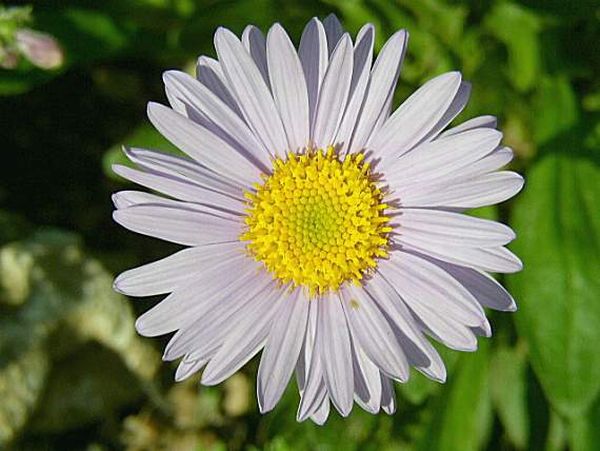
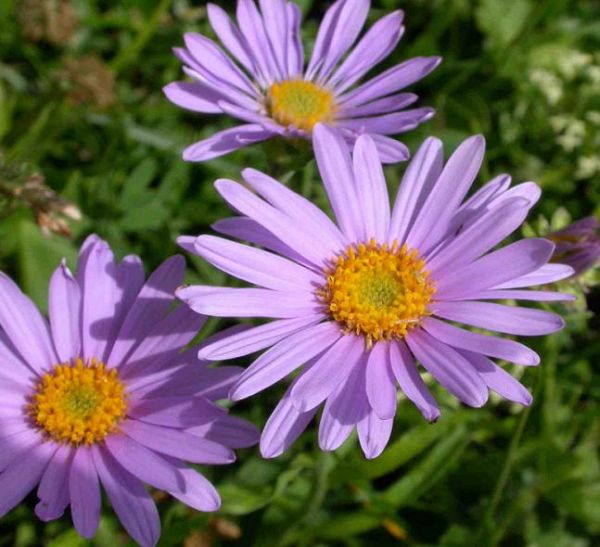
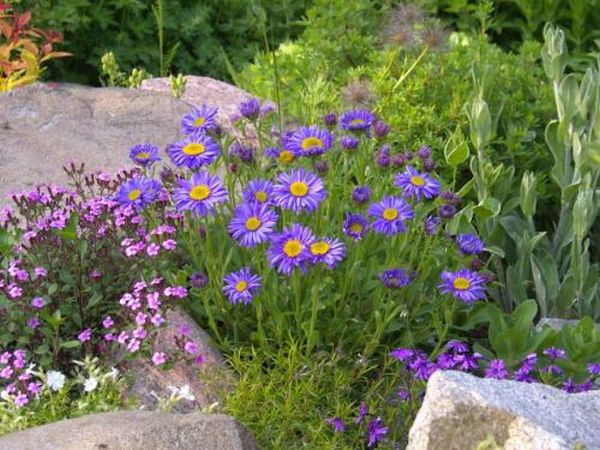
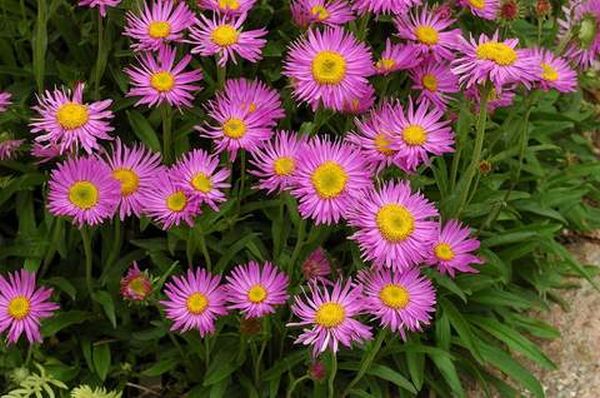
It flowers in May and June. The flowers appear at the tips of the stems; they are solitary, with fairly large flower heads. The ray florets are blue, violet or white, and the disc florets are yellow. There are many varieties with flowers in different colours.
Cut, it will decorate your home or garden summer house. It is not a demanding perennial.
Requirements
The alpine aster prefers sunny positions and is suitable for borders and rock gardens.
Propagation
It is propagated by division, cuttings and seed.
Care
All species of perennial aster need sunny, airy positions. The vigorous New England, New York and bushy asters like free-draining, fertile and moist soil. To keep them healthy and flowering profusely, feed and water them during the season. On dry, poor soil they quickly lose their lower leaves.
All species except Frikart's aster are fully frost-hardy. Alpine and Tongolese asters growing in a rock garden should be covered with conifer branches for the winter.