Description
Ground ivy, also known as creeping Charlie or alehoof, is a perennial of the mint family. It occurs throughout Europe, in the temperate zones of Asia and in Siberia, and has become established in North America, where it was introduced. It is common throughout Poland. In cultivated land, especially gardens, it is a common weed.
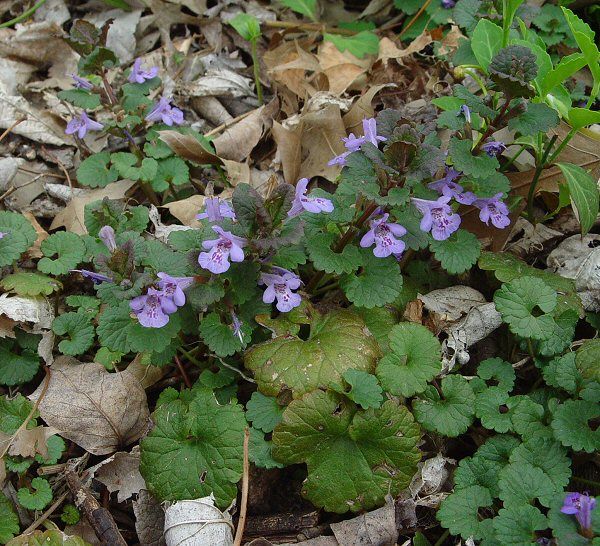
The plant is 10–20 cm tall, with long creeping runners that root easily. The stem is ascending, sparsely hairy or smooth, branched, square and soft, with long leafy runners.
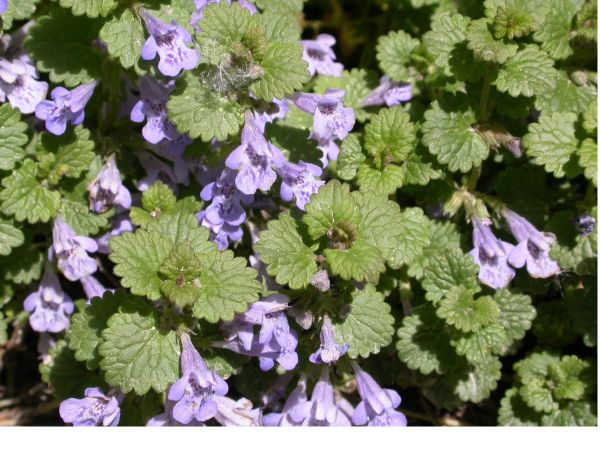
The leaves are evergreen, opposite, 1–3 cm long, heart-shaped to round or kidney-shaped, with scalloped edges. The undersides are often purplish-red.
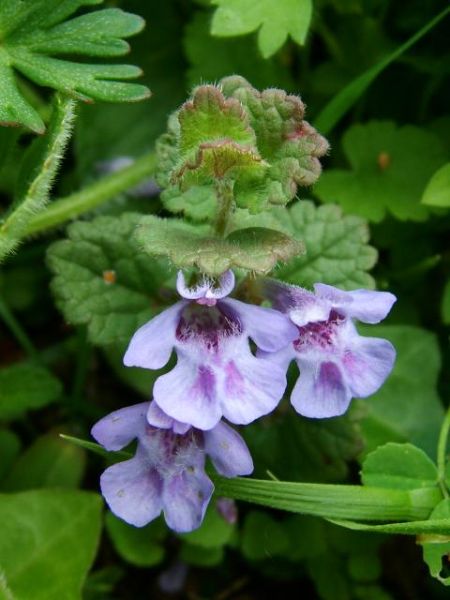
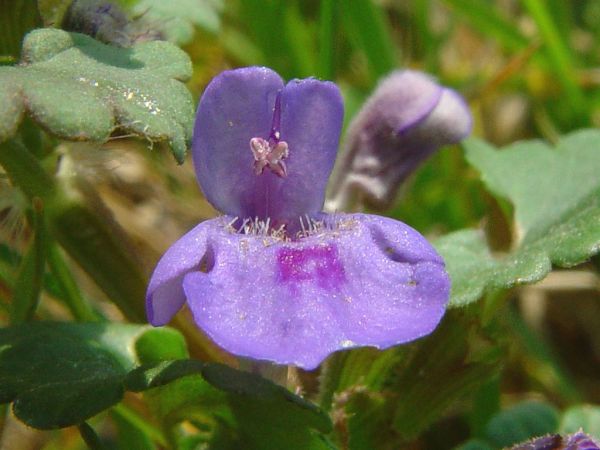
The flowers sit in groups of 2–4 in the leaf axils on short stalks. The calyx is tubular and indistinctly two-lipped; the corolla is blue-violet to reddish, occasionally white, with hairs in the throat. The upper lip has two lobes, the lower lip three. There are two kinds of flowers – bisexual flowers and female flowers with sterile stamens. It flowers in its second year, from April to June, and is pollinated by insects.
Ground ivy is frost-hardy and popular with bees. It is a fast-growing plant used as ground cover for shady places. It covers walls and mesh fences nicely.
Requirements
The plant needs fertile, moist, mineral-rich soil and a partially shaded to shady position.
Propagation
It is propagated from stem cuttings, which root very easily.
Care
If the plant spreads too much, cut it back. Do not let the soil it grows in dry out, as the leaves quickly turn brown.