Description
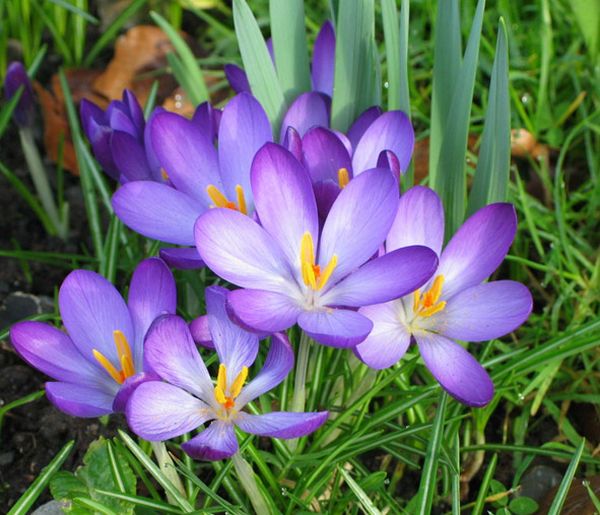
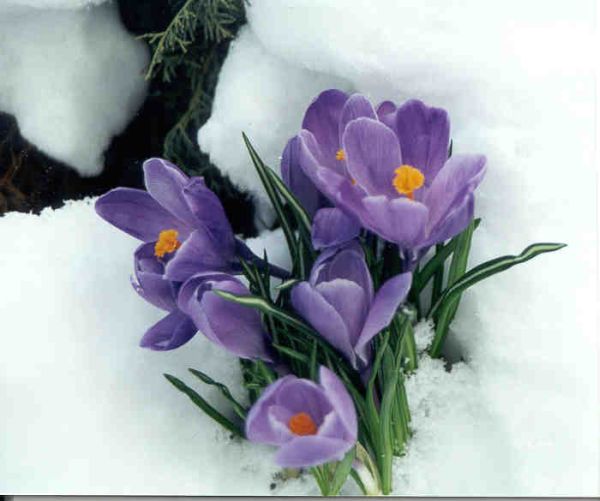
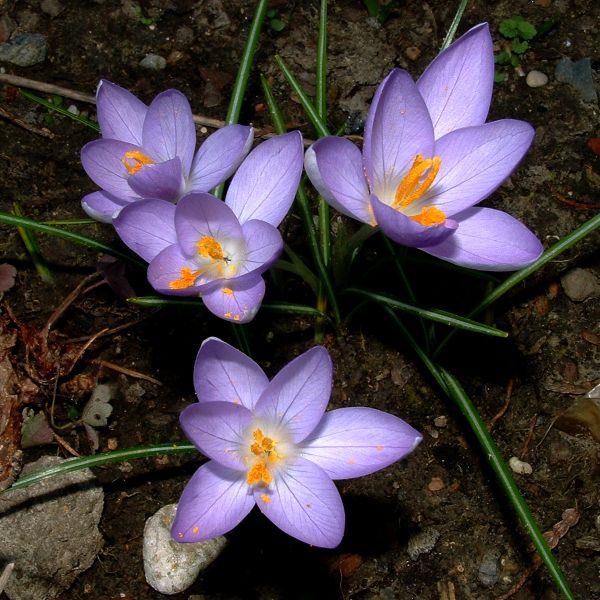
Crocuses are among the earliest plants to flower in spring. They are perennial corm-forming plants. The most popular in cultivation are the large-flowered Dutch crocuses.
In the wild, crocuses occur from Europe to Asia and North Africa. The best-known varieties are: 'Blue Pearl' – blue outside with a white interior; 'Golden Yellow' – golden flowers; 'Ruby Giant' – slightly rounded deep violet-blue flowers; 'Zephyr' – silvery-blue flowers; and 'Zwanenburg Bronze' – yellow flowers with bronze outer markings.
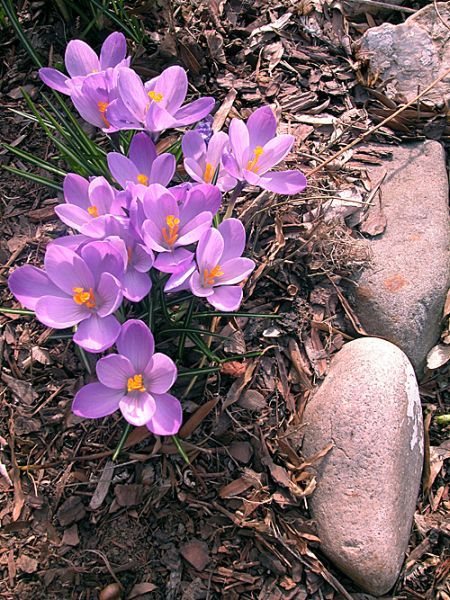
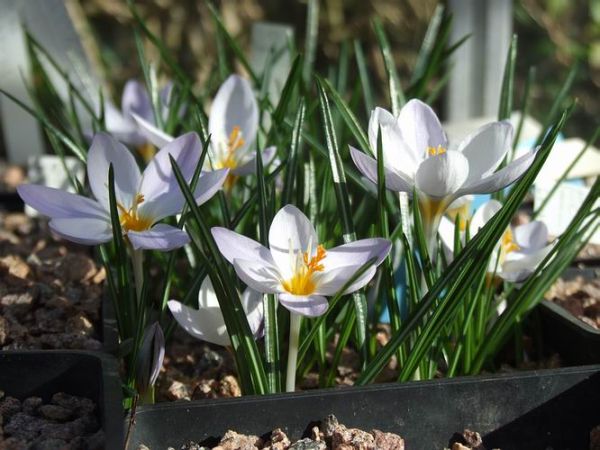
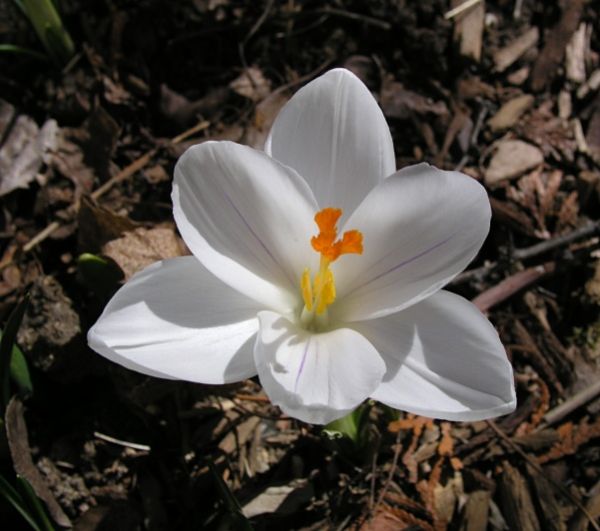
Depending on the species, crocuses flower in spring or in autumn – it is a good idea to plant both kinds together so that you can enjoy flowers twice a year. The flowers are lilac with darker stripes, violet, yellow and white. Crocuses grow up to 15 cm tall.
Crocuses look best planted in groups of a few, a dozen or even several dozen. Growing in the same place for several years, they form dense clumps. They are planted under trees and shrubs, at the edges of borders and in rock gardens. They can also be planted in lawns, but then the grass must not be mown low, as this cuts off the crocus leaves too. That is harmful, because the leaves, growing vigorously after flowering, help the corms grow well and flower abundantly in the following years. They are, however, well suited to less intensively managed lawns that are mown less often and later in the season. Crocuses can also be planted in containers on balconies and terraces.
Requirements
Crocuses are easy to grow and have no special requirements. They grow best in humus-rich sandy soil in full sun.
Propagation
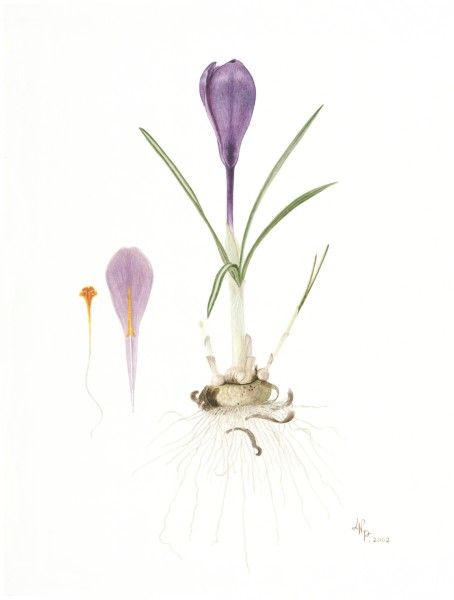
They propagate vegetatively by corms forming at the base of the stem, commonly – though incorrectly – called bulbs. They are best planted in September–October, in the second year after manuring. Plant 3–5 corms together 5–10 cm deep, about 5 cm apart. Once planted, crocus corms stay in the same place for several to a dozen years; when they become too crowded, they need to be divided. Some species can also be grown from seed, but you have to wait 3 years from sowing for them to flower.
Care
Start feeding crocuses 2–3 weeks after planting the corms, preferably with a fertiliser high in phosphorus and potassium. In spring feed twice – first as soon as the plants appear, and again just after flowering. Water generously after feeding.
Plant crocus corms in September and early October. Planting depth depends on corm size: small ones 5–6 cm deep, large ones about 8 cm. The corms should be 10–15 cm apart. Crocus corms last only one year – numerous daughter corms form in place of the mother corm. Lift them every 3–4 years, usually in early or mid-June. After lifting, dry them at 20–25°C, then clean them and separate the offsets. Store the cleaned corms in an airy place at 17–20°C until planting.