Description
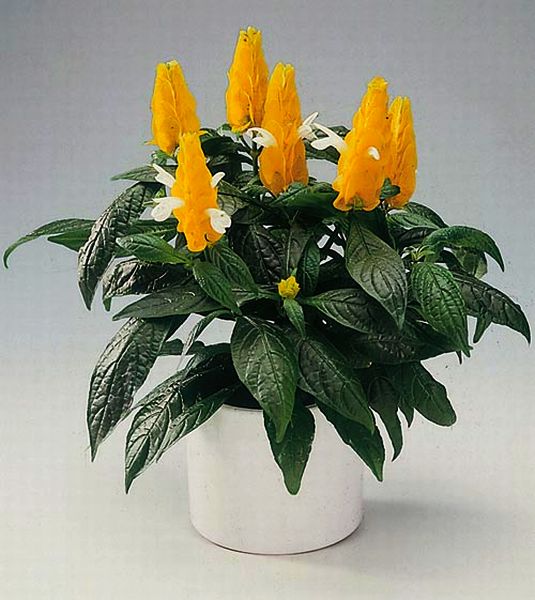
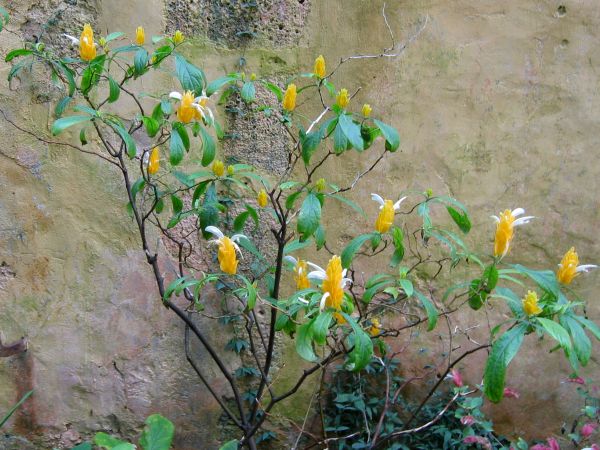
Pachystachys lutea comes from the mountain forests of Peru and Mexico, where it grows up to a metre tall. Here it is known as a low pot plant. Excessive growth can be prevented by hard pruning.
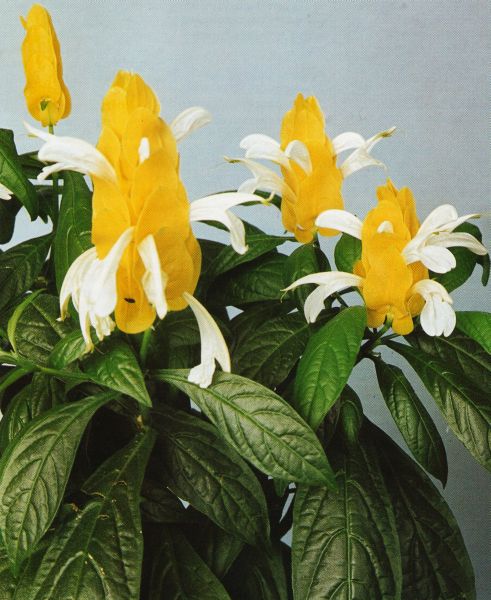
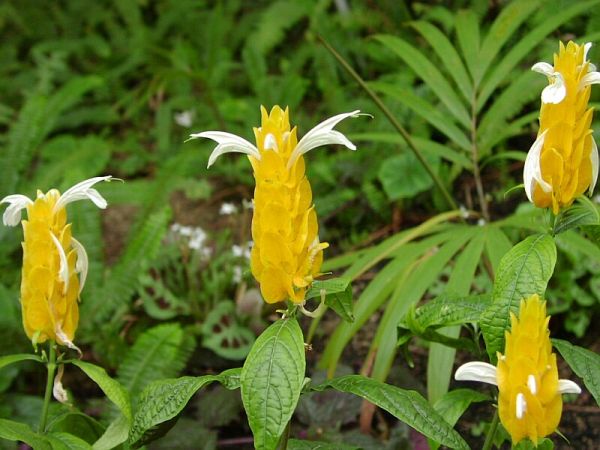
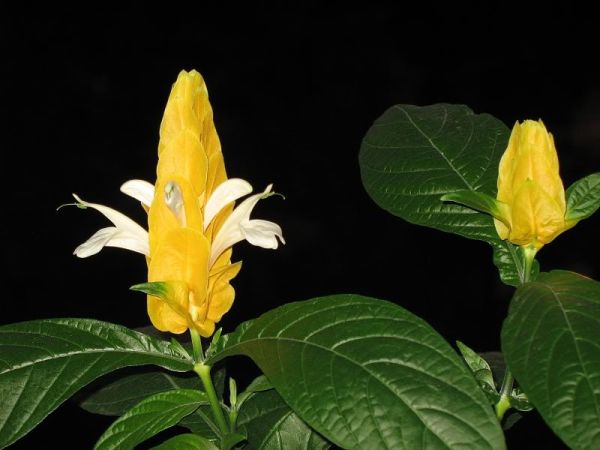
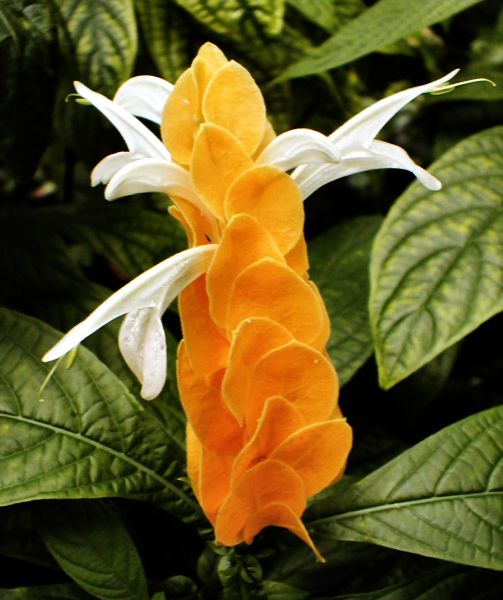
The leaves are long, oval and pointed, light green to green with a slight sheen. Golden-yellow, upright, spike-shaped inflorescences up to 15 cm long form at the ends of the shoots. The bracts are yellow, small and tongue-shaped; the actual white flowers appear later and wilt after two or three days, while the bracts sometimes last until October or November. The plant is unscented.
While many other beautiful plants look best on their own, the lollipop plant enjoys company. It is ideal for growing with other plants in a box or a large container. The other plants should not be too tall, so they do not overshadow it – in shade the spikes may lose their colour. Several plants placed close together also raise the air humidity.
Requirements
The plant should stand in a sunny or partially shaded spot – not in strong sun, but not in gloom either. Water with lukewarm water.
Propagation
When pruning, you can obtain cuttings for propagation at the same time. Use not the upper parts of the shoots, but the lower ones that are not flowering. Cuttings should be about 8–10 cm long, with the two lowest leaves removed. In small pots or trays of light, moist compost they root fairly quickly. Cover the pots with film and place them in a warm, bright spot.
Care
The plant should stand in a sunny or partially shaded spot – not in strong sun, but not in gloom either. It tolerates room temperatures well, but it is better if it is cooler in winter. At too low a temperature, around 8°C, the leaves may drop.
From May to October water regularly with lukewarm water and feed every two weeks with a nitrogen fertiliser. In winter water only enough to keep the compost from drying out, and mist more often.
Once a year, in spring, the plant must be repotted and cut back at the same time. Make sure it is watered properly. After repotting, place the plant in shade and do not feed it for the first six weeks. Ordinary compost or a peat-based mix is enough. Pots must drain well; put fine gravel at the bottom.
When plants get sick
If the lollipop plant is watered too little or kept too cold and damp, it does not thrive. With the right light and care, diseases and pests are rare.
Flowers dropping – the cause is undoubtedly too little air humidity. Counter it, for example, with a moist peat lining.
Pale, dull leaves are the result of too few nutrients. Feed the plant more and check whether it also needs repotting.
Leaves hanging down and drooping – too little water. Put the pot in a bucket of lukewarm water and take it out only when air bubbles stop rising.
Lower leaves dropping – the plant was kept too cool and too wet. Move it to a warmer place.
Before you buy
Buy only dense, attractive plants. Inspect the more delicate leaves – they must not be damaged. The spikes should not yet be in flower.
Average lifespan: – The lollipop plant can live for many years.
Difficulty of care: – Not very demanding; just make sure the compost never dries out completely.