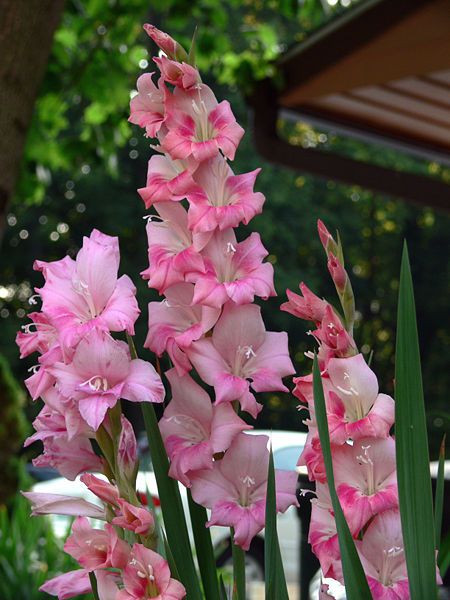
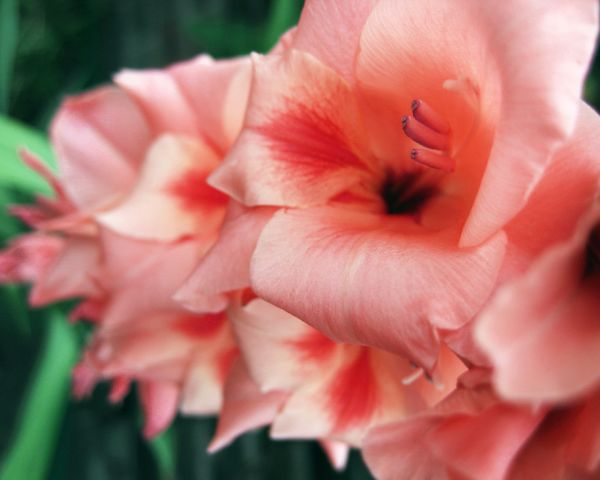
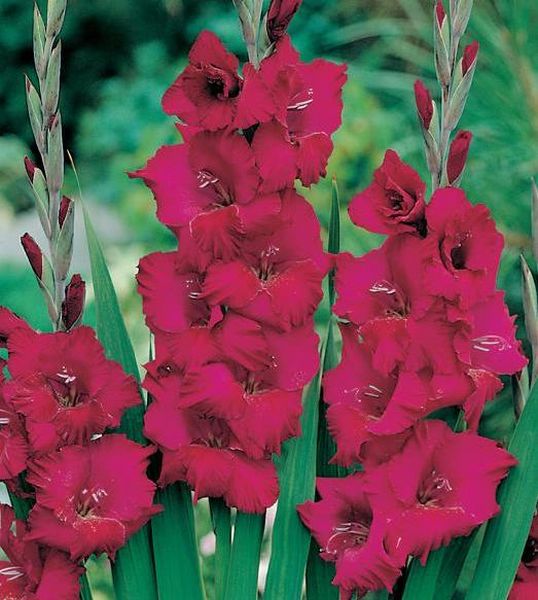
Description
Of the roughly 90 known species of gladiolus, most are native to southern and central Africa. They can also be found growing wild on other continents, e.g. in Europe and Asia. In Poland the marsh gladiolus, the Turkish marsh gladiolus and the small-flowered gladiolus grow wild. Breeding has produced many attractive hybrids and garden varieties.
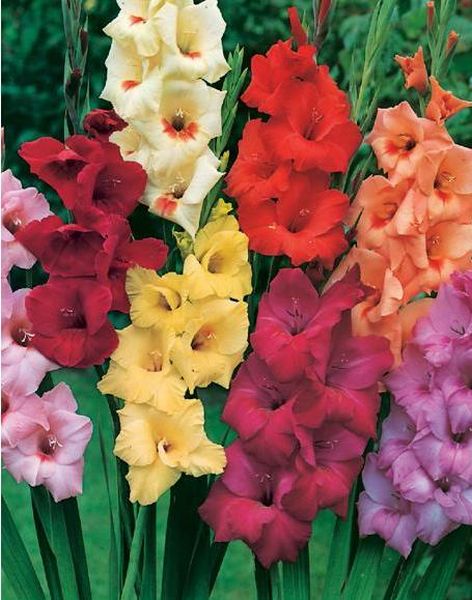
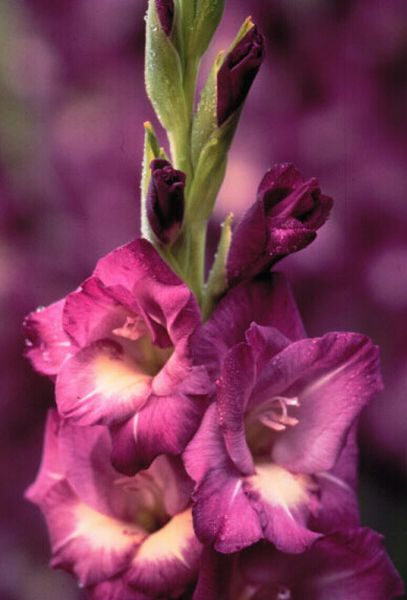
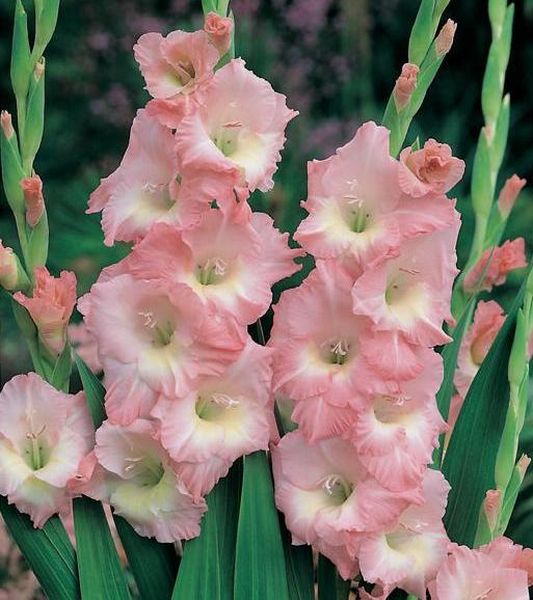
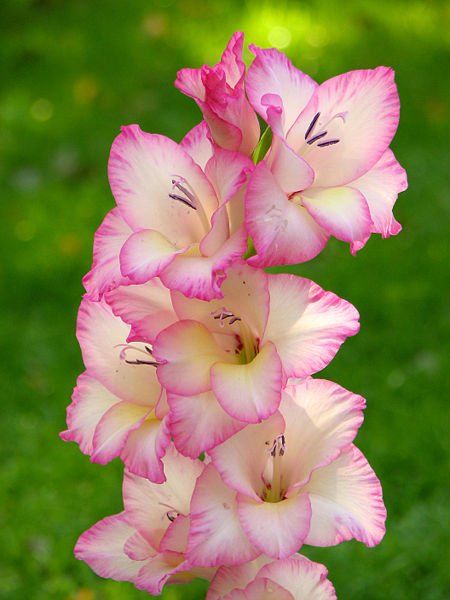
Gladioli are among the most popular and best-loved ornamental plants and belong to the iris family. They are perennials 100–120 cm tall, with an unbranched, straight stem, thickened at the base and ending in a spike of flowers. The flowers are mostly colourful and large, 12–24 per spike. Besides the most widespread many-flowered varieties, there are also miniature varieties with small, dainty flowers.
Gladioli are grown mainly as cut flowers. In gardens they look good in groups.
Requirements
Gladioli need a sunny position sheltered from the wind and humus-rich, fertile, nutrient-rich soil with a neutral pH.
Propagation
They are propagated by the offset cormlets and replacement corms they produce. Gladioli are grown from seed only in breeding.
Care
Care involves weeding, feeding with fertiliser for flowering plants and watering. Do not water gladioli with a strong jet of water, as it softens the soil and the plants may topple over.
In our climate gladioli do not overwinter in the ground, so they must be lifted for the winter, ideally from mid-September and in October. After lifting, cut the stems 5–10 cm above the corms. Once dried, clean the corms of the old corm, stem remains and roots, separate the cormlets, sort and inspect them, place them in slatted boxes and put them in a dry room at about 5–10°C.
Plant gladioli at the end of April or beginning of May, 8–12 x 20 cm apart depending on corm size, 8–10 cm deep. Remember that it is a good idea to treat the corms with a fungicide before planting to avoid unpleasant surprises during the growing season. Propagation is by corms: a corm planted in spring produces roots from its lower part and up to two leafy shoots from the top.