Description
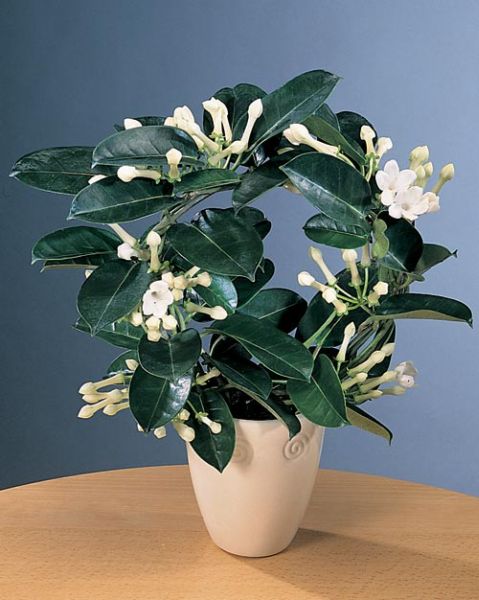
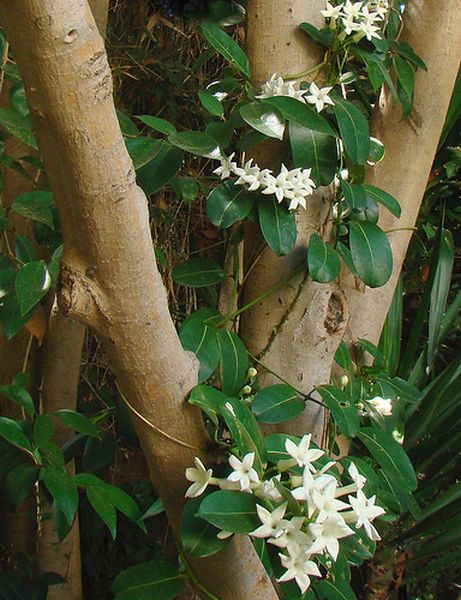
Madagascar jasmine is a climber grown as a pot plant. It belongs to the milkweed family (Asclepiadaceae). It comes from Madagascar, where its shoots grow up to 6 m long in the wild. Indoors it grows up to 2.5 m.
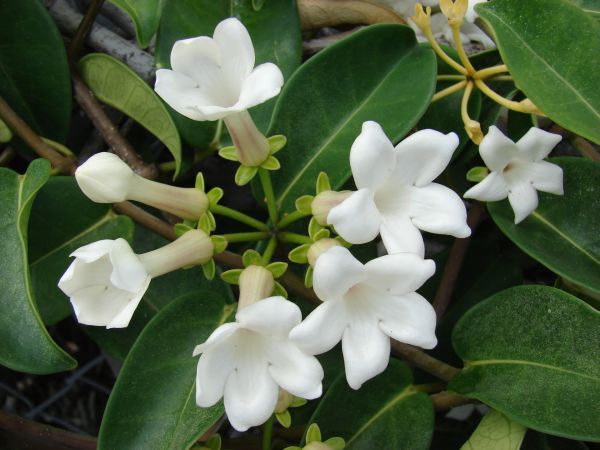
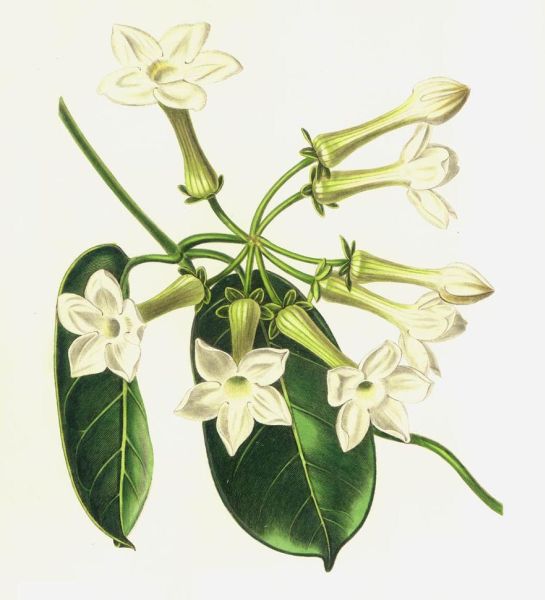
Stephanotis has tough, flexible stems and oval, leathery, glossy, dark green leaves. It usually flowers from June to September. Its very decorative, star-shaped flowers are gathered in clusters, white and strongly fragrant.
Requirements
Stephanotis needs a bright room, protected from direct sun.
Propagation
Propagate by ripe-wood cuttings rooted in spring and summer in warm conditions, 20–25°C. Rooted cuttings are usually obtained within a month.
Care
Stephanotis needs a bright room, protected from direct sun. In summer about 20°C is best, and 12–14°C in winter. During growth water generously with lime-free, lukewarm water – the compost should be constantly moist. At this time also mist the plant often and feed every 2 weeks from April to September. After flowering gradually reduce watering, and during dormancy (October to January) water minimally – just enough to stop the compost drying out. After flowering overlong shoots can be pruned.
The compost should be humus-rich and free-draining, with good drainage (e.g. potting compost with added sand). Repot young plants every year and older ones less often, ideally in February.
Stephanotis is very sensitive to being moved – do not move or turn it, as it may then drop its flower buds and leaves.
When plants get sick
Stephanotis is susceptible to scale insects, mealybugs and spider mites. It is also very sensitive to changes in conditions, so do not move or turn it, as this can make it drop flower buds and leaves. It is a good idea to mark on the pot which side faces the light – it will certainly prove useful. Hard water makes the leaves turn yellow.
Before you buy
Buy stephanotis when it already has buds. The leaves should be green and fresh; yellow leaves are a sign of mistakes in its care.
Average lifespan: – Can live for a very long time.
Difficulty of care: – Not one of the easy plants to grow.