Description
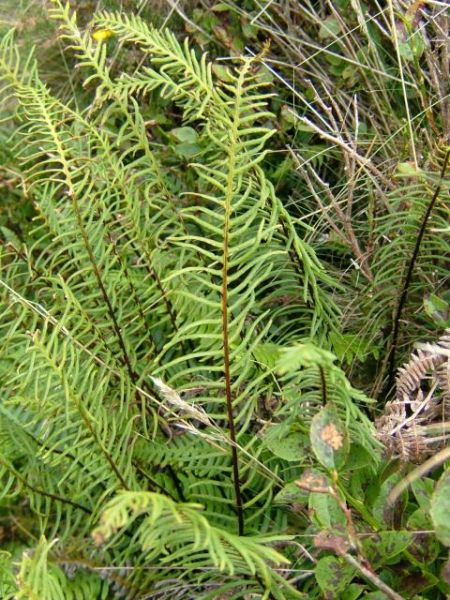
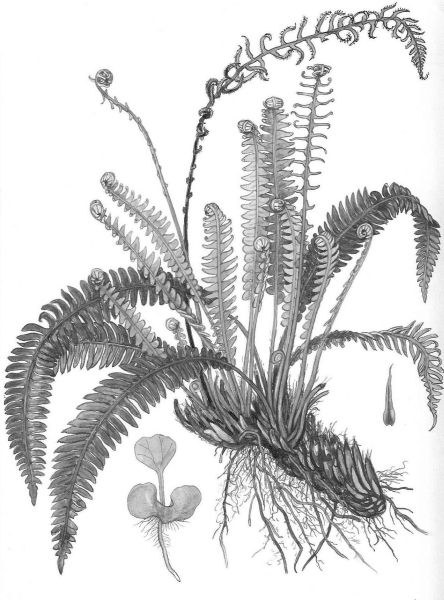
The hard fern occurs in North America, Europe, North Africa and the Caucasus. In Poland it is rare; it is much more common in the Carpathians and Sudetes and can also be found in their foothills. In the lowlands it is very rare. It is a perennial reaching 20–50 cm in height, consisting of a rhizome with roots, sterile (photosynthetic) fronds and fertile (spore-bearing) fronds. The species is protected. In Pomerania it is dying out; in the Polish lowlands it is a glacial relict.
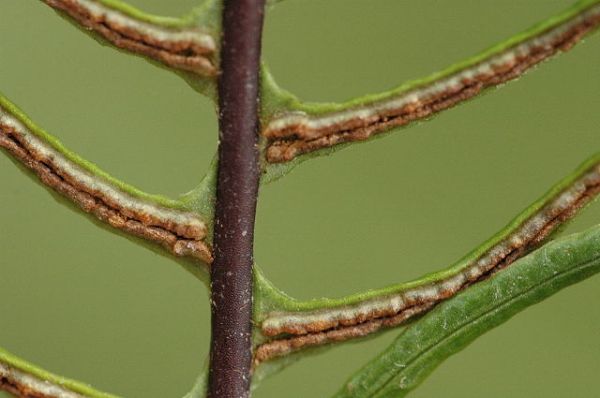
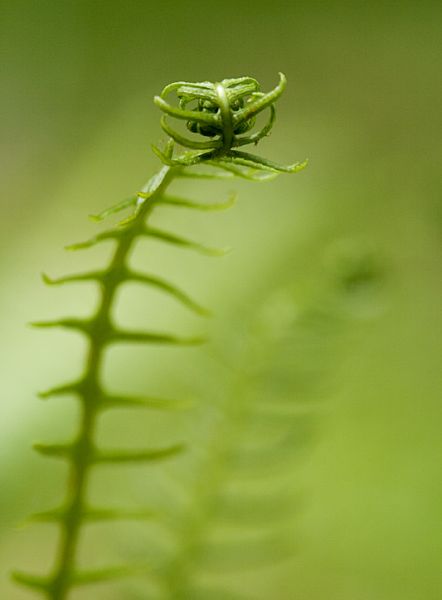
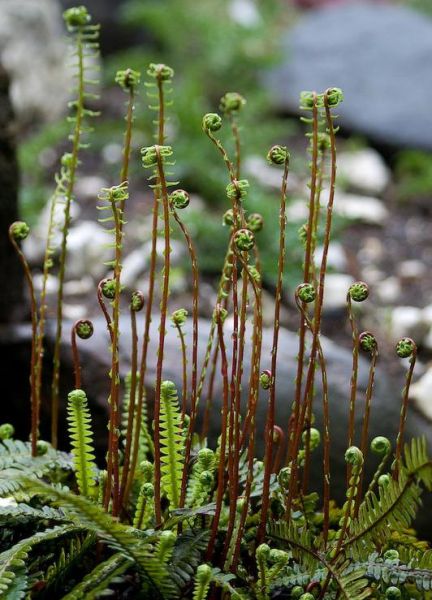
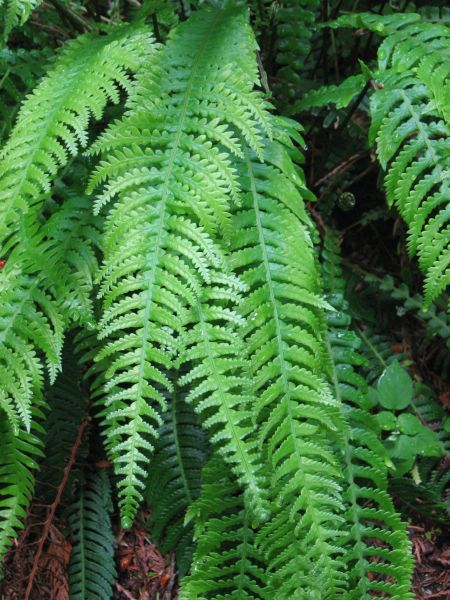
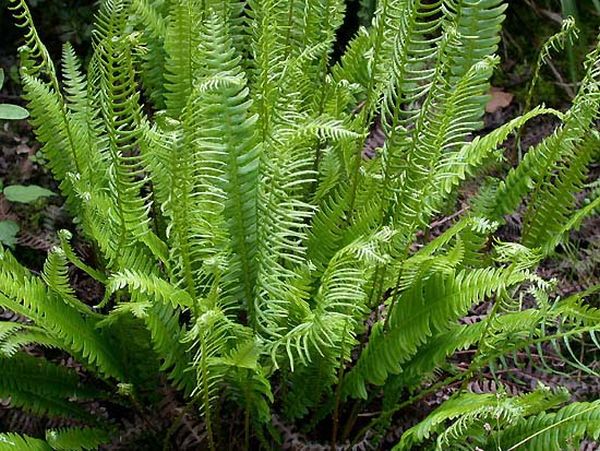
The dark green, glossy fronds are evergreen with a green midrib. They are leathery and narrowly lance-shaped, pointed at both tip and base. The leaflets are narrow and curve forward like sickles. The sterile fronds spread widely to the sides. The fertile fronds are about one and a half times longer than the sterile ones. They grow from the centre of the rosette of sterile fronds, are stiff and stand straight up. They are not evergreen. They grow on long stalks and have a brown main axis. They are pinnately divided, but with very narrow segments with rolled edges.
Requirements
It prefers moist, acidic, humus-rich, stony soil.
Propagation
By dividing the rhizomes
The hard fern is very easy to propagate if several well-established plants grow in the garden or in a balcony box. Lift older plants in autumn and divide the rhizomes into several pieces with a knife or spade. Plant the individual pieces where the plants are to grow and water them. In winter cover the plants with conifer branches.
By sowing spores
This method takes time and effort. At the end of summer prepare a mix of leaf mould and fine peat. Gently shake the fern fronds so that the spores fall out. Sow them in trays of the prepared compost, place them in a warm, bright spot and cover with a sheet of glass. When the first spores germinate after a month, remove the glass. After several more months, transplant the young plants into pots about 5 cm across. They still need light and warmth. In summer the pots are taken out to the garden, but the plants are not removed from them. In winter the pots are plunged in the ground and covered with conifer branches. Only in spring of the following year are the plants planted in their final position.
Care
This fern grows best in light, moist soil. It develops properly in a mix of slightly acidic soil and humus. In dry periods, water plants growing in the garden as well. Use only water that has been left to stand and is low in lime. From time to time liquid fertiliser can be added to the water, but do not spray it on the fronds. The fern is not pruned. Replant it every 4–5 years. The hard fern is not suited to growing alongside other plants – it looks best on its own.
When plants get sick
Very pale fronds, the fern does not grow – the result of watering with hard water, which raises the soil pH.
Small slugs feeding on the undersides of the fronds – the soil is too wet. Reduce the moisture and collect the slugs regularly.
Before you buy
Average lifespan: – it can live a very long time.
Difficulty of care: – the hard fern is not difficult to grow.