Description
Asparagus is a perennial, subshrub or shrub that in the wild grows in subtropical and, less often, temperate climates. Its structure shows its adaptation to a dry climate: tuber-like structures for storing water have formed on the roots, and the leaves have turned into scales.
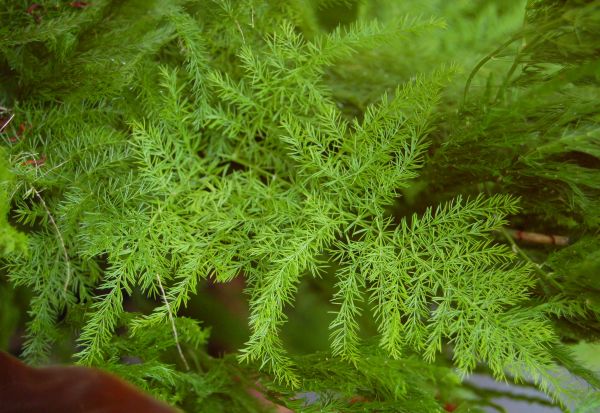
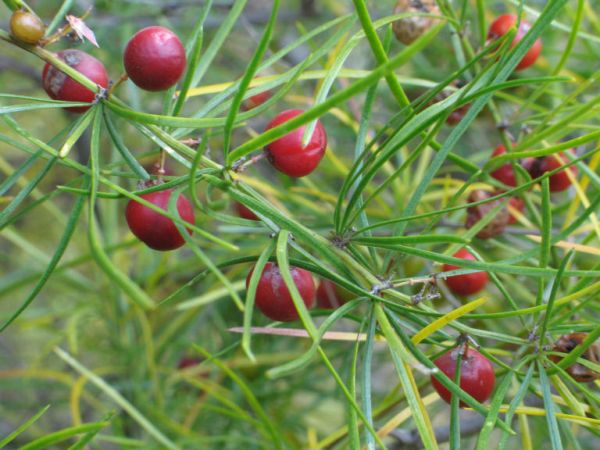
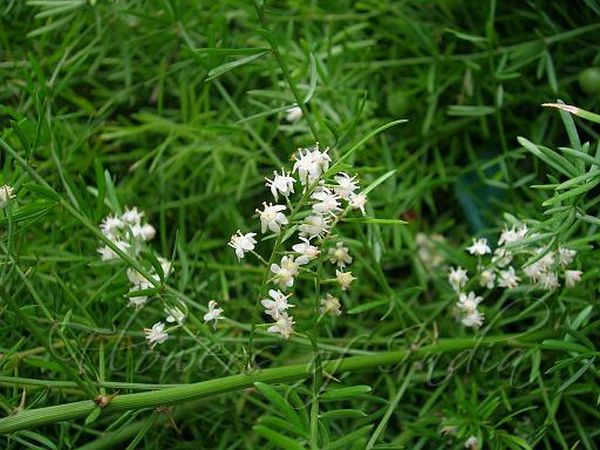
The flowers are tiny, white and delicately scented, usually appearing in summer. After flowering, the fruits – colourful berries – develop. The asparagus fern has horizontally spreading branches and very fine needle-like leaves that give it a light appearance.
For years the delicate sprigs of asparagus fern have been an indispensable part of bouquets and arrangements, adding lightness and grace. Potted asparagus ferns are wonderful for decorating interiors. They are best planted in hanging pots or placed high on plant stands or shelves, so that their stems can trail freely down to the floor.
The plant is used in floral arrangements.
Requirements
The plant should stand in a bright spot, but not in direct sun.
Propagation
Asparagus ferns are propagated mainly from seed, and sometimes by dividing older, well-grown plants. Seeds removed from the fruit pulp should be sown as soon as possible after harvesting, from October to February. To make the plants come up quickly and evenly, soak the seeds in warm water for 48 hours before sowing.
Care
In summer shade them around midday, otherwise they turn pale green and their stems become woody and break very easily. In spring and summer it is best to keep them at 20–25°C; in winter provide plenty of light and a temperature of about 15°C.
In summer water the plants 2–3 times a week, fairly generously, so that the soil stays constantly moist. If the soil dries out too much, stand the pot in a bowl of water until air bubbles stop rising to the surface. In winter water less often, especially when the plants are in a cool room, but never let the roots dry out. Asparagus ferns like misting, even in winter.
Because they are heavy feeders, asparagus ferns should be repotted every year into fresh compost enriched with fertiliser. The pots must not be too large – move up to a bigger one only when the roots have filled all the compost. The plant needs feeding during the growing season, especially from May to October, with liquid fertiliser every 7–10 days.