Description
Zamioculcas is a perennial that in the wild occurs in eastern and north-eastern Africa, where it grows on dry, stony ground in the shade of taller plants.
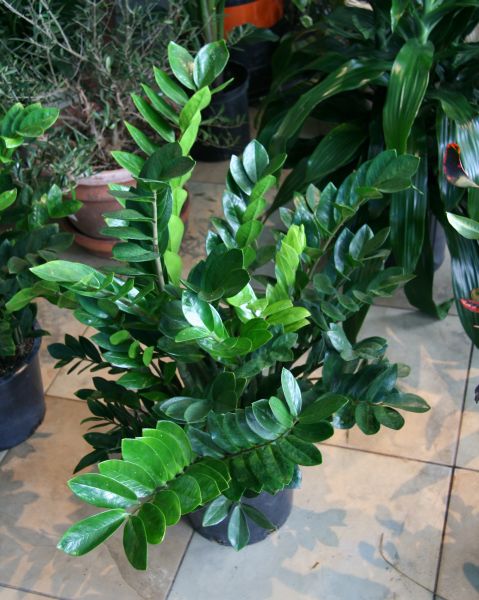
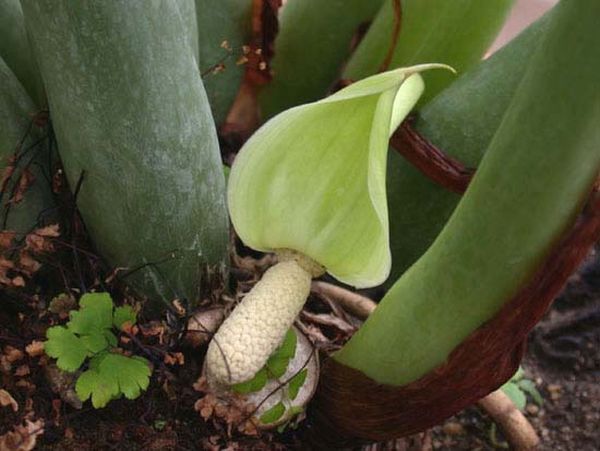
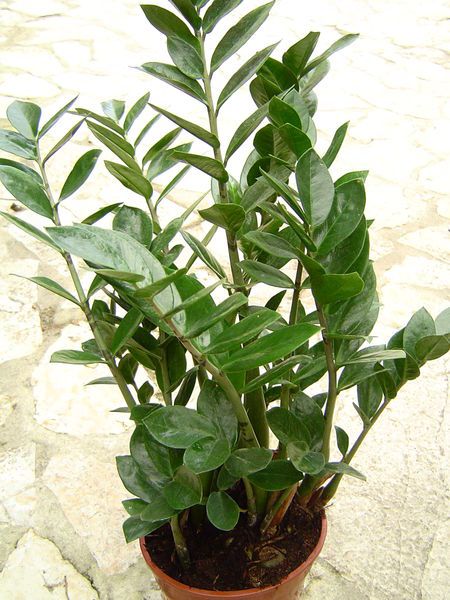
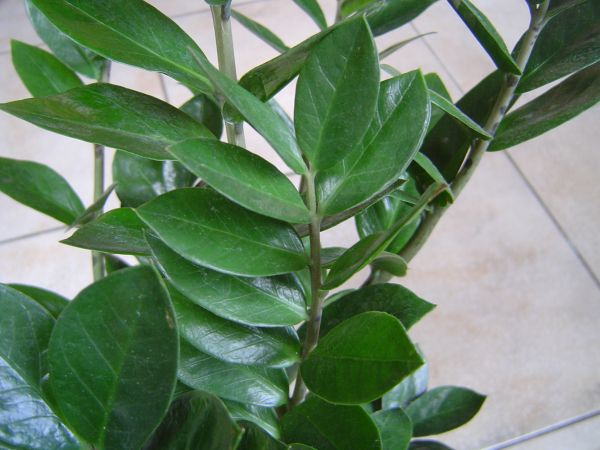
The plant's main ornament is its leaves. They grow from a horizontal underground rhizome, which also stores reserves. The leaf stalks are fleshy and strongly swollen at the base, and the individual leaflets are thick, with a tough skin. Every year the plant produces 3 to 7 new leaves, each growing 1–2 cm a day – almost visible to the naked eye.
Requirements
Zamioculcas has modest requirements and is very resistant to adverse conditions. It grows best in partial shade and can even stand in shade. Harsh sun is harmful to it. The leaves bend towards the light, so turn the pot from time to time.
Propagation
Propagation from seed is simple, but seeds are hard to get for amateur growers. In spring large clumps can be divided, or from April to June leaf cuttings can be taken. Cut individual leaflets from the lower or middle part of the leaf stalk, right at the base. Then insert them in the compost, burying the lower part about 1 cm deep, or lay the leaflets completely flat.
The best rooting medium is perlite, or peat mixed half and half with sand or perlite. The cuttings root after 3–4 weeks, and a young plant appears at the base of the leaflet.
Zamioculcas is the only species of the arum family that can be propagated from leaf cuttings.
Care
This species does not tolerate overwatering. An overwatered plant loses its leaves, its rhizome rots and the plant dies. Zamioculcas does, however, tolerate short dry spells.
During vigorous growth water so that the compost is slightly moist but not wet. In winter, when it is cooler and when the plant stands in a poorly lit place, water much less.
Use water that has been left to stand, at room temperature. Avoid wetting the leaves, as this causes unsightly spots.
Repot young plants every year and older ones every two or three years, in March or April. Shallow containers in which the rhizomes can spread freely are best.
There must be a drainage layer at the bottom of the pot. The compost should be fertile, humus-rich and free-draining, such as a peat-based mix with sand or fine gravel, with an acidic or slightly acidic pH.
Take care not to damage the roots when repotting.
During the growing season feed every 2–3 weeks with a compound fertiliser containing a full set of micronutrients, as the plant is sensitive to their lack.
When plants get sick
Watery spots on the leaf stalks and the leaf gradually rotting – phytophthora. It is favoured by low temperature and waterlogged compost. If the infection is mild, the disease can be controlled by spraying with an organic product.
Symptoms similar to the above plus spots with a fishy smell – bacterial soft rot. This bacterial disease is incurable and the plant must be thrown away.