Description
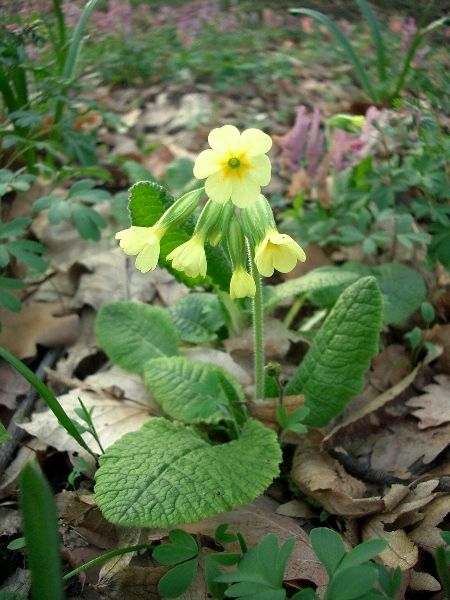
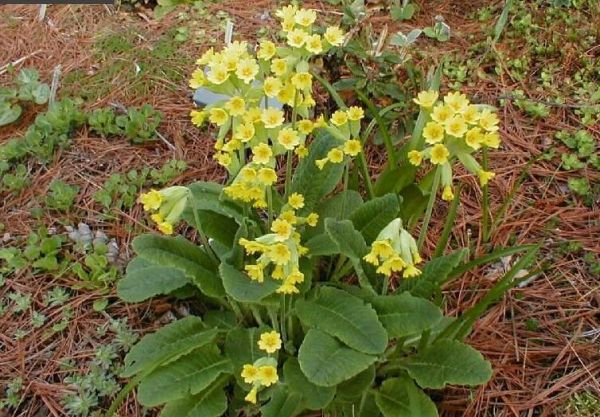
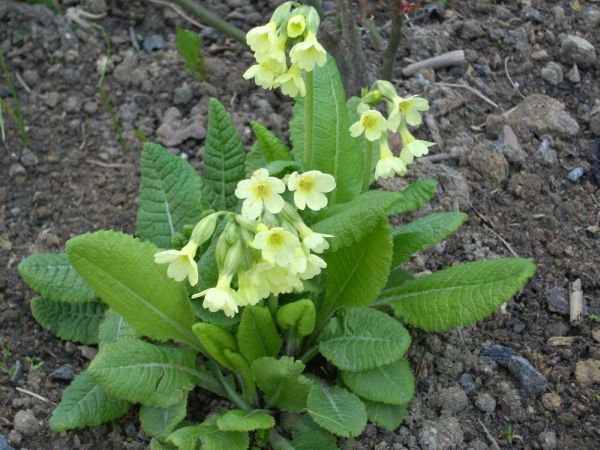
The oxlip is a perennial of the primrose family (Primulaceae). It grows wild in Europe and also occurs in the Caucasus, the Urals, the Altai and Iran. The leaves are oblong, egg-shaped or broadly elliptical, rounded at the tip, with scalloped or toothed edges and a slightly wrinkled, softly hairy surface.
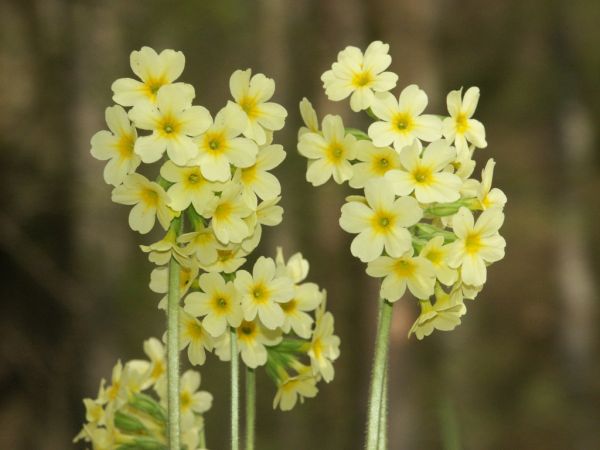
The oxlip flowers from April to May. Its flowers, on thin stalks, are gathered about 10 together in one-sided umbels. They are yellow and unscented.
Besides the original form and botanical varieties, cultivated hybrids are grouped into strains such as Grandiflora, Colossea, Vierlander Riesen and Pacific. They have large flowers up to 6 cm across in a rich range of colours – from white through yellow, orange and red to chestnut-brown. Pink and blue primroses have also appeared. The flowers always have a yellow or orange eye at the mouth of the corolla tube, and the flower heads are borne on stems up to 20 cm tall.
It is planted in rock gardens, on lawns, under trees and ornamental shrubs, and in beds of spring-flowering plants. It is also suitable as a cut flower.
Requirements
The oxlip needs fairly heavy, loamy, humus-rich and moist soil and a partially shaded or shaded position.
Propagation
The oxlip is propagated from seed and by dividing plants in spring after flowering. Divided plants grow somewhat more weakly but produce more flower stems. Plant out in the final position 30 x 25 cm apart.
Care
To get plants that flower earlier, you can force them, using strong, well-grown plants raised from seed. In autumn plant them in cold frames, which at the end of January are surrounded with mats and covered with frame lights, allowing good access to light. The frames usually need no heating; only during late frosts are the already grown plants protected from low temperatures by covering them.