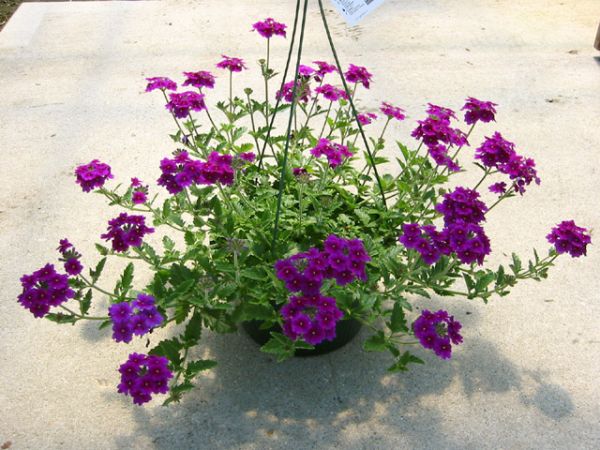
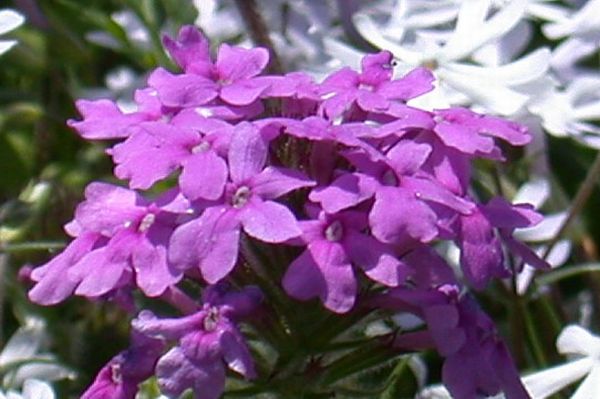
Description
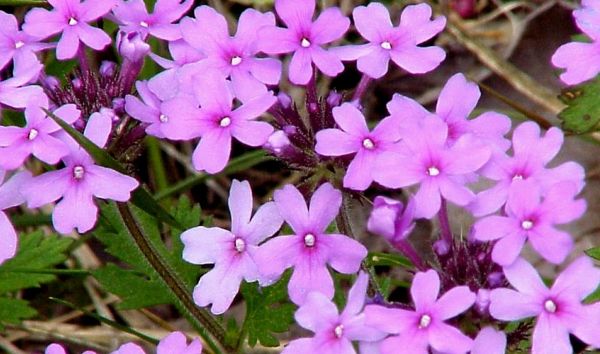
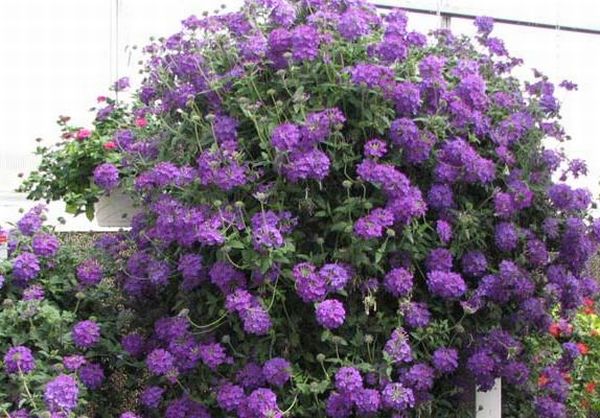
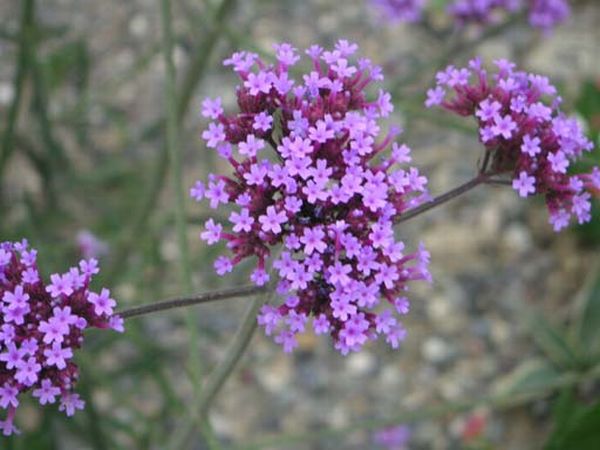
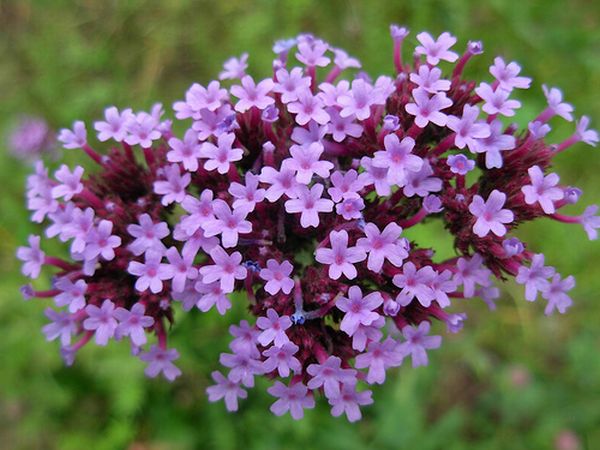
Garden verbena belongs to the verbena family and was bred by crossing several verbena species from the Americas. It is one of about forty species in the genus. Garden verbena forms compact, irregular clumps 20 to 40 cm tall depending on the variety. The stems are hairy, and the leaves oblong and scalloped. The flowers are small, five-petalled, single-coloured or with an "eye", gathered in dense, rounded, pleasantly scented heads. There are two groups of varieties: Grandiflora, with tall varieties up to 40 cm, and Compacta, with low varieties 15–30 cm tall with trailing stems.
Requirements
Verbena is not fussy and does well in most soils, as long as the position is fairly moist.
Propagation
You can try propagating the plants yourself by sowing seeds in February in trays indoors, in a greenhouse or in a heated cold frame. When the seedlings have grown, prick them out into separate pots and stand them, for example, on a sunny windowsill. In the second half of May the plants can be planted outdoors in the garden, or in boxes or containers on a terrace or balcony.
Care
The most suitable compost is humus-rich and free-draining, in full sun. To get attractive, bushy plants, pinch out the main shoots. In the second half of May plant out in the final position 30 x 20–30 cm apart. Verbena grows very slowly at first.
It is sensitive to spring frosts, so plant it only after 15 May, when the danger of frost has passed. Water the plants daily, and during flowering feed them with fertiliser for flowering plants. Also remove spent flower heads and dry stems.