Description
Winter aconite is a perennial of the buttercup family. It grows wild in south-western and central Europe – the former Yugoslavia, Bulgaria and Italy – and in western Asia – Iraq and Turkey. In Poland it is grown (rarely) and sometimes naturalises. Apart from winter aconite, 9 other species of the genus are known, all of them native to Europe and Asia.
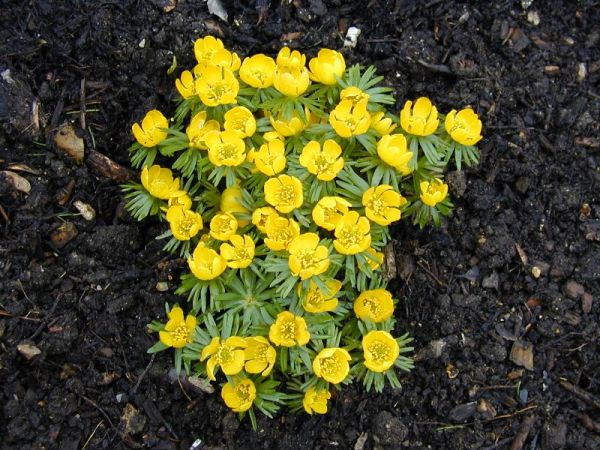
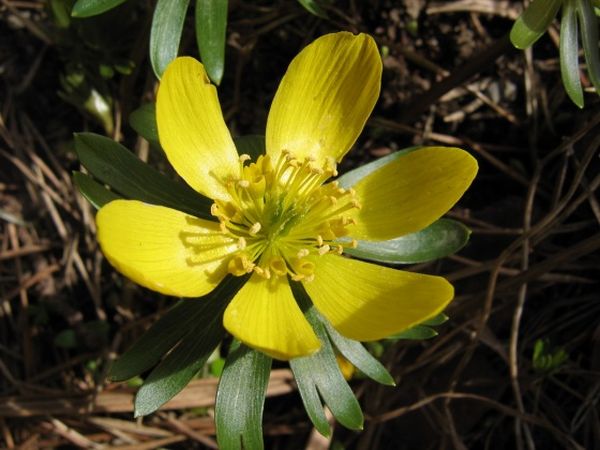
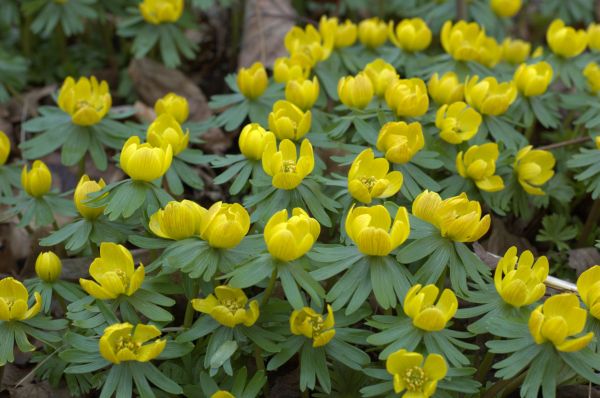
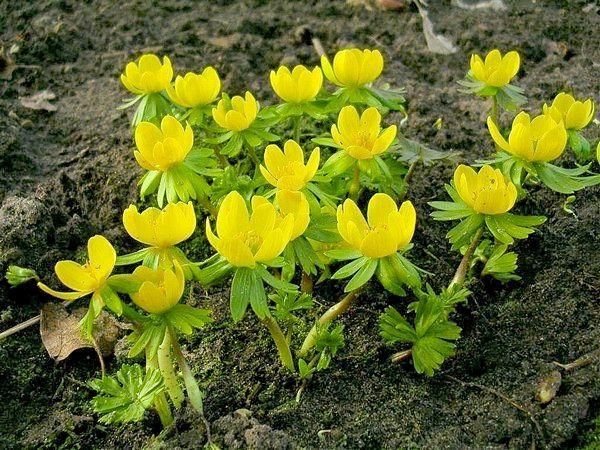
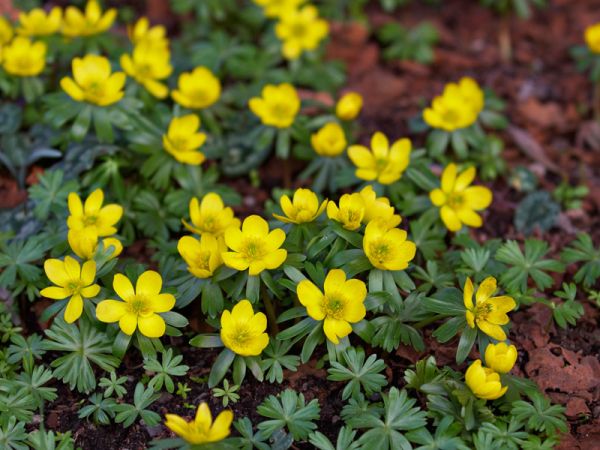
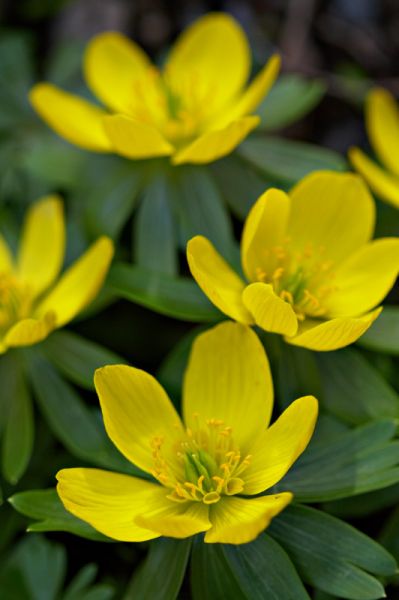
Straight stems up to 15 cm tall grow from the tubers, each topped with a yellow flower 2–3 cm across with six petals. Just below it is a ruff of three green leaves divided into narrow lobes. Only after flowering does the long-stalked foliage leaf develop. The fruit is a follicle. The plant is a good source of nectar. It flowers very early – from February to March – and for a long time, but only at low temperatures; when the temperature rises above 10°C, it finishes flowering.
Winter aconites are used mainly in rock gardens, but they are also popular combined with plants of similar habit. This produces a beautiful effect that delights every gardener who grows these lovely flowers.
Requirements
Winter aconite needs moist, humus-rich, loose, not too acidic soil and plenty of light.
Propagation
The tubers multiply easily. Plant them in autumn, but soak them in water for 10 to 14 hours beforehand. The plant also produces many seeds, which are sown in late spring in cold ground.
They do not need lifting every year, but to keep them multiplying it is worth dividing them every 2–3 years.
Care
It is best planted among deciduous trees and shrubs, where plenty of sun reaches it in early spring and the fallen leaves protect it from severe frosts in autumn. It looks lovely in a rock garden or border alongside early-flowering primroses, snowdrops, snowflakes and squills, and hellebores or violets.
Caring for winter aconites comes down to watering and weeding around them.
Before you buy
Winter aconite is a highly poisonous plant!