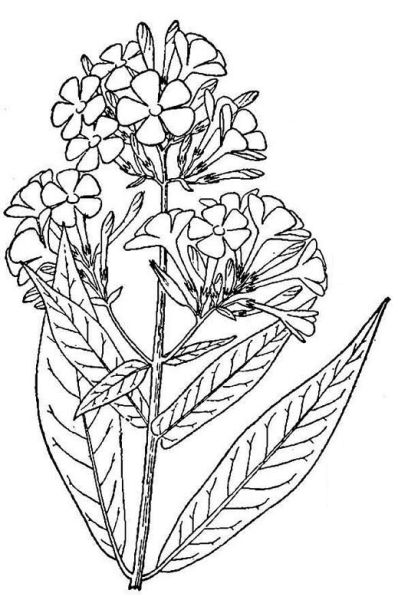
Description
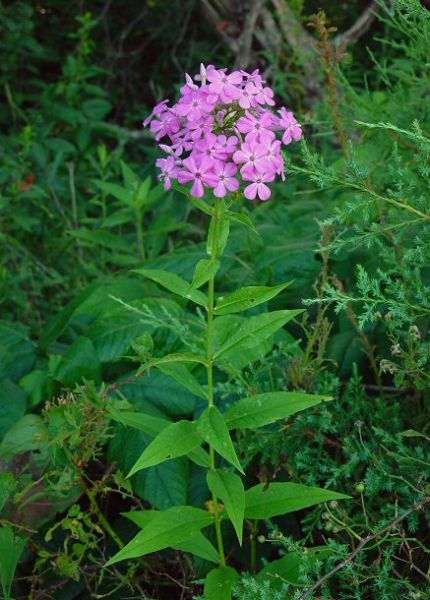
Garden phlox is a perennial of the phlox family (Polemoniaceae). It comes from North America. The plants grow 50–120 cm tall, with stiff, straight stems that become slightly woody at the base by the end of the season and are densely covered with long, lance-shaped leaves.
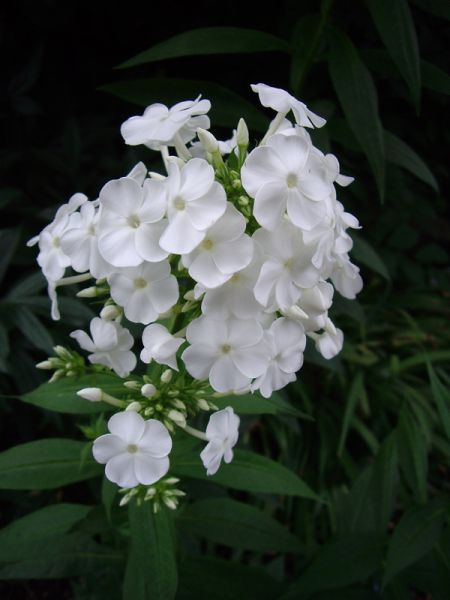
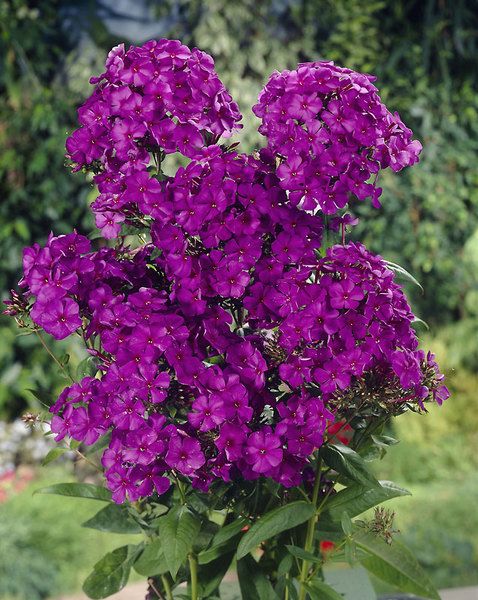
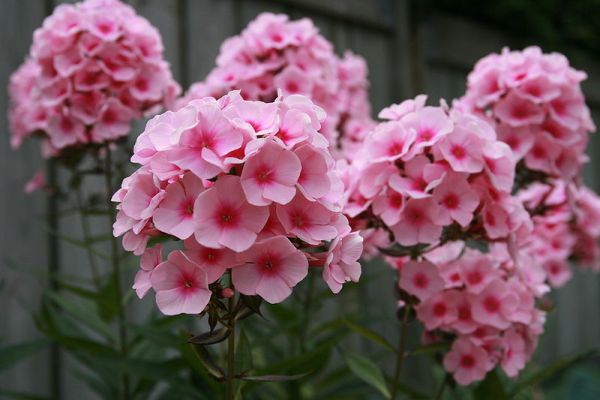
Garden phlox flowers from the first half of July to the end of August. Flowering can be extended by pinching out the shoot tips in June, which makes the plants bush out strongly and flower later. The five-petalled flowers come in a wide range of colours and are gathered in terminal, pyramidal panicles.
There are many cultivated varieties of perennial phlox, sometimes sold as Phlox paniculata hybrida. Depending on flowering time they are divided into:
those flowering in the first half of July
those flowering in the second half of July
and late varieties flowering from mid to late August.
Requirements
Phlox need fertile, humus-rich, deeply cultivated but free-draining, slightly acidic soil and a sunny or partially shaded position. They need watering during droughts.
They are used in perennial borders and as cut flowers, though they last only 2–3 days in a vase.
Propagation
Garden phlox is grown from seed only for breeding purposes. Amateurs can propagate it by division and by stem or root cuttings. Divide plants in spring or autumn. Stem cuttings 8–10 cm long are snapped off with a "heel" in mid-May or June and planted in compost previously disinfected by steaming. Red- and pale-violet-flowered varieties root poorly.
Care
Root cuttings are made in winter or early spring by cutting roots 0.5 cm thick into 6 cm pieces, which are planted in trays and placed in a warm cold frame. Plant out in the final position 30–40 x 40–70 cm apart. In autumn or very early spring very well-rotted manure or peat-and-manure compost can be spread between the plants, never in the middle of the clumps. Phlox are long-lived: properly fed, watered and free of disease, they can grow in one place for up to 10 years.