Virginia creeper
Parthenocissus Quinquefolia
Description
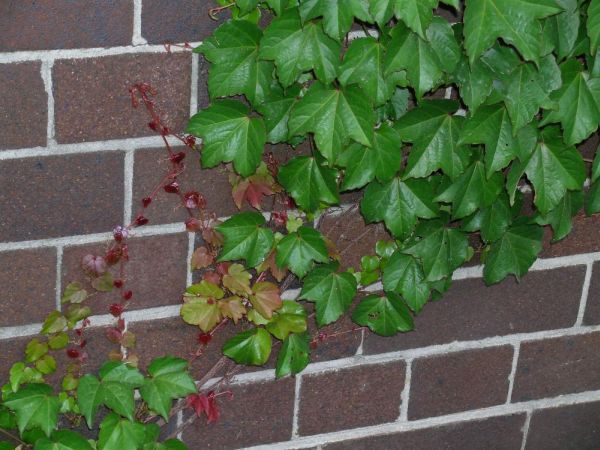
Virginia creeper belongs to the grape family. It comes from North America. It is a vigorous deciduous climber that clings to supports and climbs by itself with adhesive pads, clinging roots and forked, twining tendrils. Young shoots are reddish.
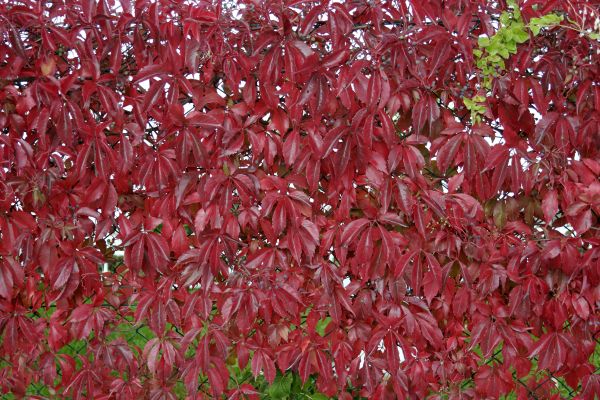
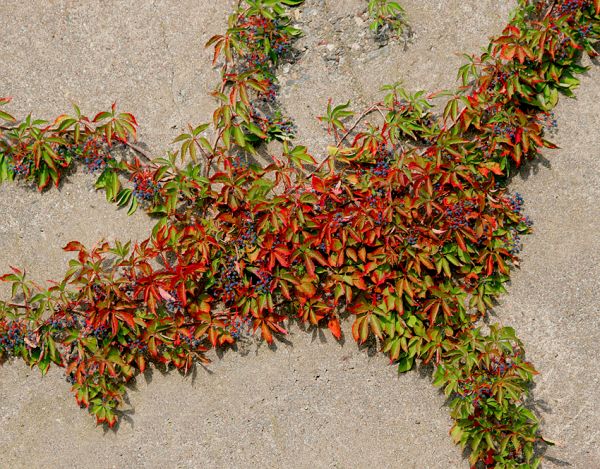
The leaves are usually made up of 5 elliptical leaflets 4 to 10 cm long, green above and grey-green below, with coarsely toothed edges. In autumn the leaves turn scarlet. The shoots reach 10 to 20 m in length.
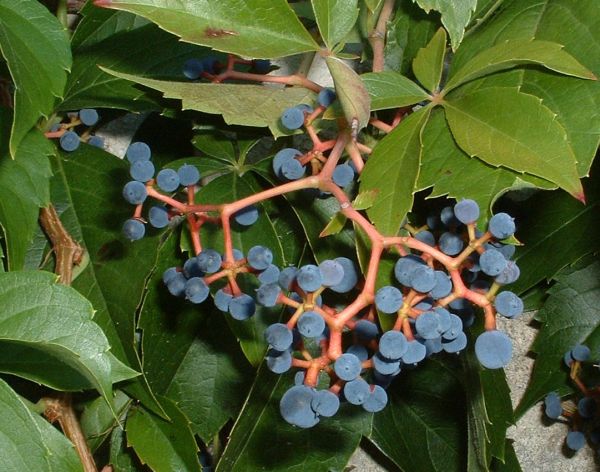
The flowers are inconspicuous and greenish, opening at the end of July and beginning of August, and are a good source of nectar. After flowering come round, navy-blue berries with a waxy bloom, which ripen in September and October.
Virginia creeper is suitable for covering fences, walls, arbours, pergolas and other supports. It can also be planted on balconies. If it is not planted by a support, it grows as a dense ground cover.
Requirements
It is completely frost-hardy and undemanding. Virginia creeper can grow in sun, partial shade or shade, in average free-draining soil. Plants in sunny positions, however, colour a more intense scarlet in autumn.
Propagation
Virginia creeper is propagated by softwood cuttings taken in late summer or early autumn. Plant them in pots of sandy compost and place them in a propagator at 13–16°C. In summer you can also take hardwood cuttings 25–30 cm long, heel them into sand and plant them out in a sheltered bed in spring. It can also be propagated by layering long shoots in mid-autumn – separate the rooted layers from the mother plant only after a year.