Description
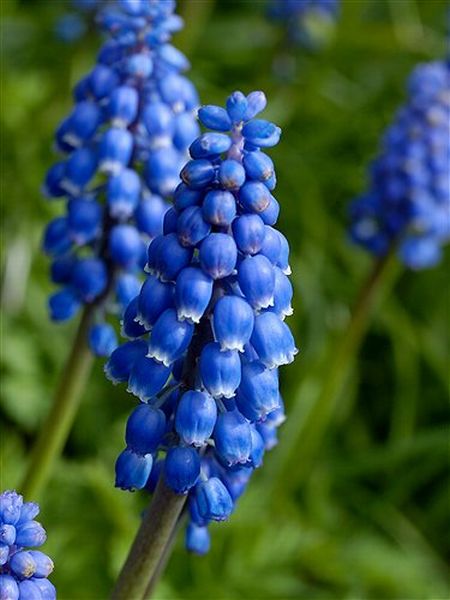
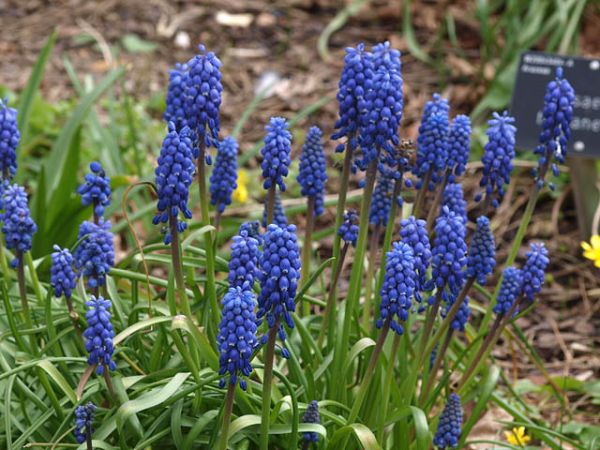
Grape hyacinths are small but very attractive and easy-to-grow bulbous plants. Several dozen species of this genus occur in Mediterranean countries and Asia Minor.
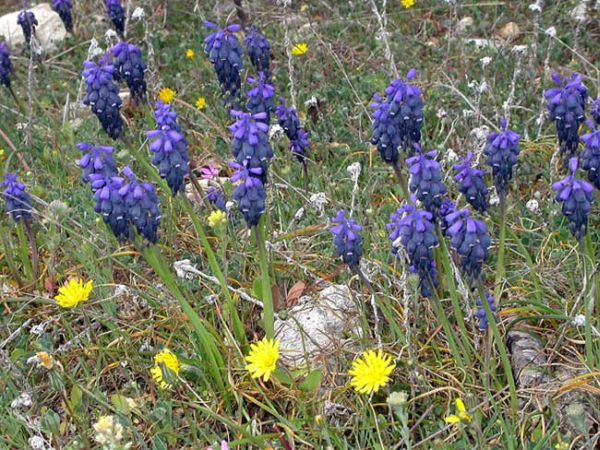
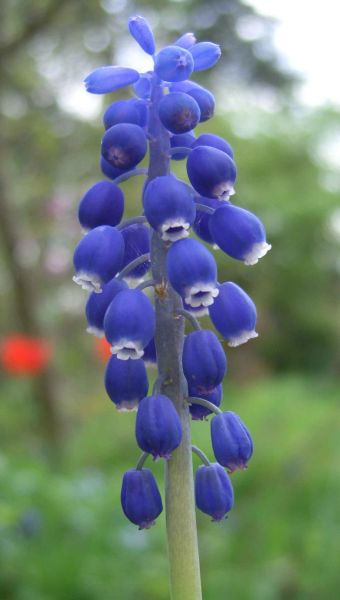
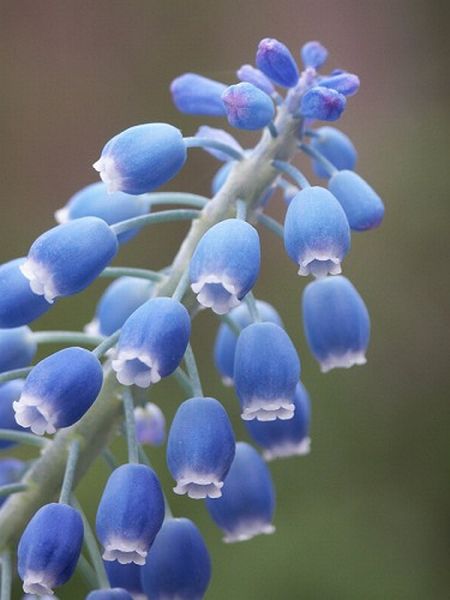
The two most widespread species are similar in build and flowering time: the Armenian grape hyacinth, Muscari armeniacum, and the common grape hyacinth, Muscari botryoides. The flowers of the former are small, white or sapphire-blue, hanging on short stalks and gathered in dense racemes on a 20 cm stem. The common grape hyacinth has violet-blue flowers with a white rim, or white ones, on a shorter stem – 15 cm.
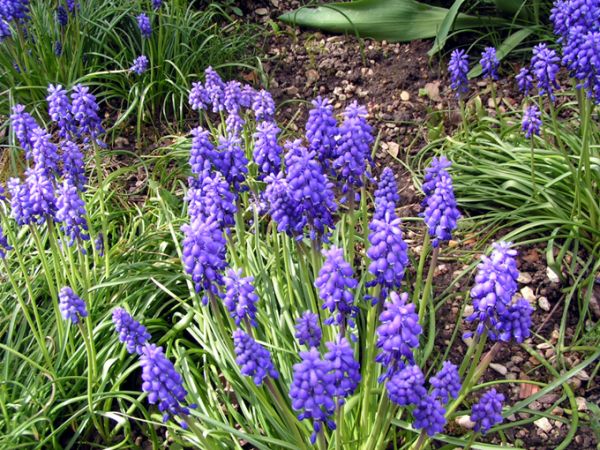
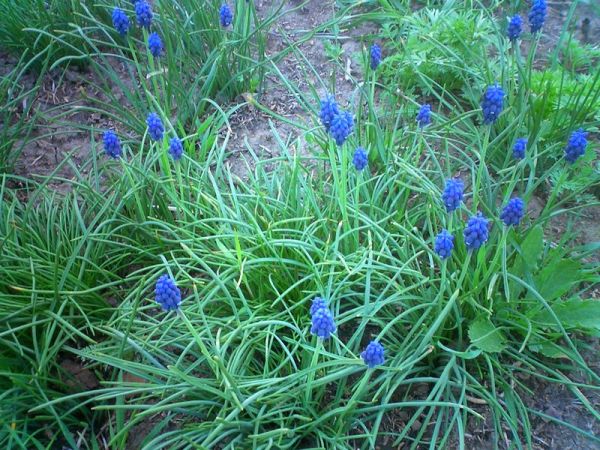
Grape hyacinths are excellent for rock gardens, edging, groups in lawns, borders and underplanting ornamental shrubs.
Requirements
Grape hyacinths are not very demanding and cope in almost any position. The best conditions are fertile, humus-rich, sandy-loam soil that is not too moist, in sun or partial shade.
Propagation
Muscari are propagated from seed or offset bulbs. Sow in autumn. Lift and replant the bulbs from June to September.
Care
Plant the common grape hyacinth in its final position in September and the Armenian one rather in October, to avoid frost damage to the leaves, which, thanks to late planting, will only appear in spring. Plant grape hyacinths in groups, as they look best that way, 7 x 10 cm apart and 5–10 cm deep, depending on the size of the bulbs. Muscari can grow in one place for up to 5 years, but remember to feed them. Water them during droughts, which gives more abundant flowering and better bulb growth. It is also recommended to remove spent flowers so that no seeds form, as seed production greatly weakens the plant. Stop watering at the end of May, when the plant prepares for dormancy.