Description
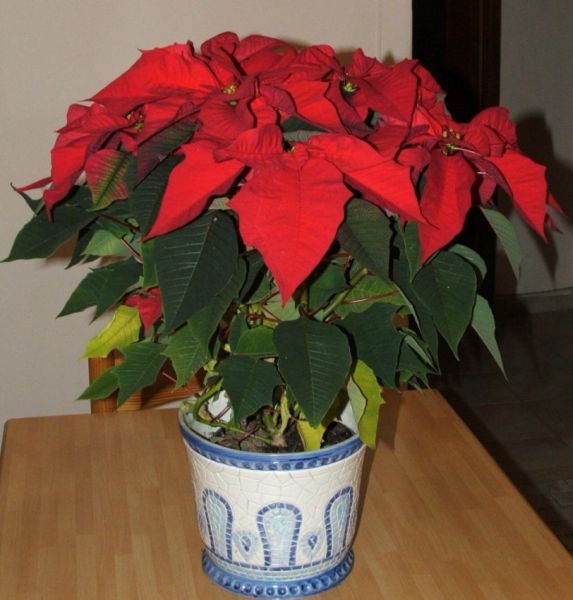
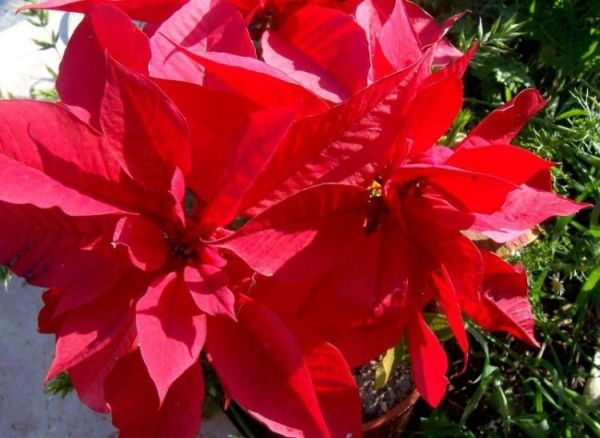
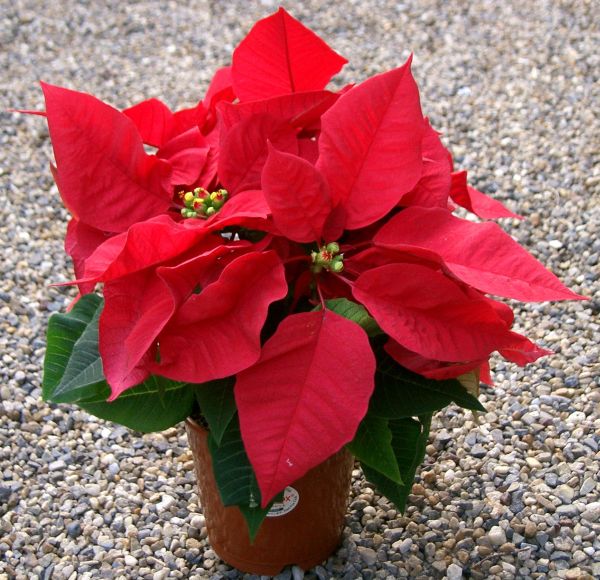
The poinsettia comes from Mexico and Central America. What makes Euphorbia decorative is not its flowers, which are small and inconspicuous, but the brightly coloured leaves around them, called bracts. The classic Christmas star has intense red bracts and dark green leaves, but varieties are also available with bracts ranging from white, cream and yellow through pale pink to various shades of red. Recently plants with speckled bracts, green leaves with white margins and wavy bracts have also appeared.
Requirements
The poinsettia likes humidity.
Propagation
In cultivation the plant is propagated from tip cuttings 5–8 cm long. Before inserting them in the compost, dip the ends in warm water at 45°C to let the sap run out. The rooting medium is peat with perlite. The optimum compost temperature is 24–28°C. Cover the cuttings with film. The air temperature should be lower than the compost temperature. The compost must not be too wet, or the cuttings will rot. After 4 weeks the cuttings have rooted. They can then be potted into small decorative pots and later into their final pots.
Care
During flowering water it fairly often so that the compost (ordinary flower compost mixed with peat) is always moist. It is best to pour water into the saucer and tip away the excess after a few minutes. It is very sensitive to cold air, so do not stand it in a draught, as it will drop its lower leaves. The poinsettia needs a bright position, but not direct sun. It grows well at room temperature, although 15–18°C suits it best.
The poinsettia loses its appeal fairly quickly – after just a few weeks the coloured bracts fade and some of the leaves drop. Most of us simply throw the plant away at that point. But it can be kept until the following year and brought into colour again. At the end of February gradually reduce watering and move it to a cooler place. Then cut the poinsettia back, shortening the stems to about 10 cm. During this time the plant can do without light and should not be watered. After about two months, repot it in fresh compost and place it in a warm, bright spot, but out of direct sun. Water the leafless poinsettia generously with warm water that has been left to stand so that it starts to grow. After a few weeks start feeding it, ideally with a fertiliser for decorative foliage plants. Provide as much humidity as possible. When it has produced young shoots with 4–5 leaves, pinch them back to make it bush out more. If you want the poinsettia to colour up for Christmas, in September you must artificially shorten its day by moving it into a dark room or simply covering it with black cloth or a cardboard box. The plant must be kept dark for about 14 hours a day. During this time reduce watering again and lower the temperature to about 15°C. After about two months uncover the poinsettia permanently, feed it and wait for it to colour.
Before you buy
To make the poinsettia decorate your home for as long as possible, choose the plant carefully. Above all check that it has healthy leaves, and choose one whose true flowers have not yet opened.
Warning! The poinsettia contains milky sap that oozes from the stem when it is damaged or cut. It irritates the skin, so wear rubber gloves when pruning; you can lightly singe a broken stem with a flame to stop the white sap running.