Cup-and-saucer vine
Cobaea Scandens
Flowering plantsClimbing and trailingBalcony plantsGarden plants
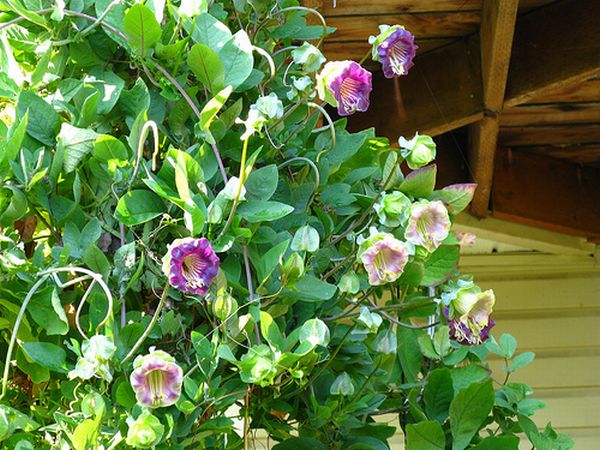
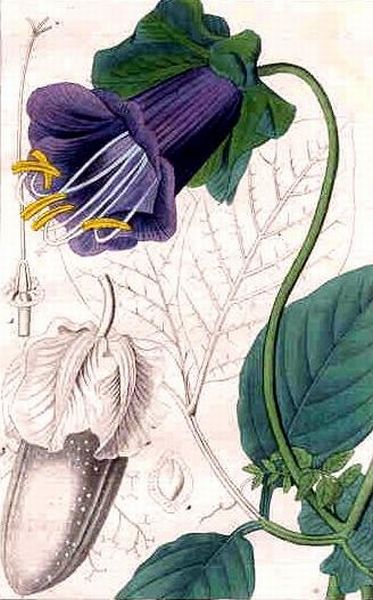
Description
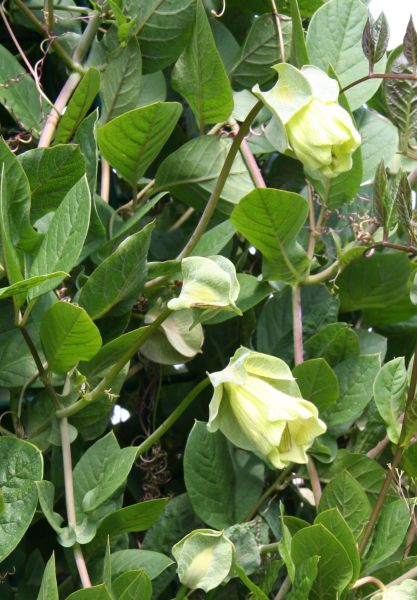
The cup-and-saucer vine is an annual climber of the phlox family (Polemoniaceae). It comes from Mexico. Its angular, flexible, brittle stems usually grow to 3–4 m. The pinnate leaves end in tendrils. In autumn they turn purplish-red.
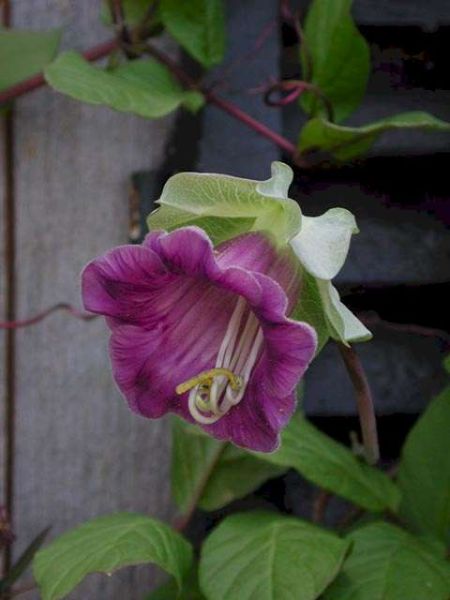
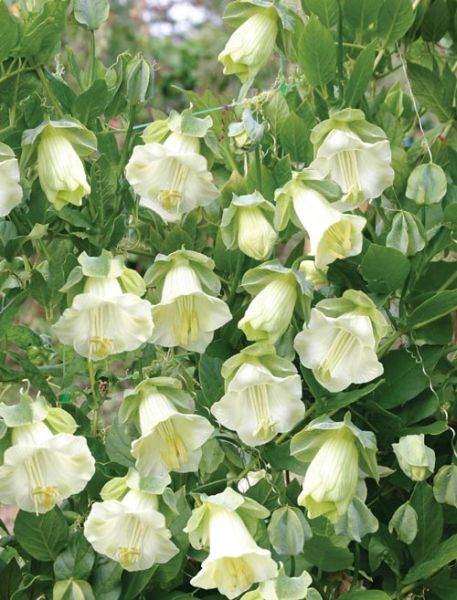
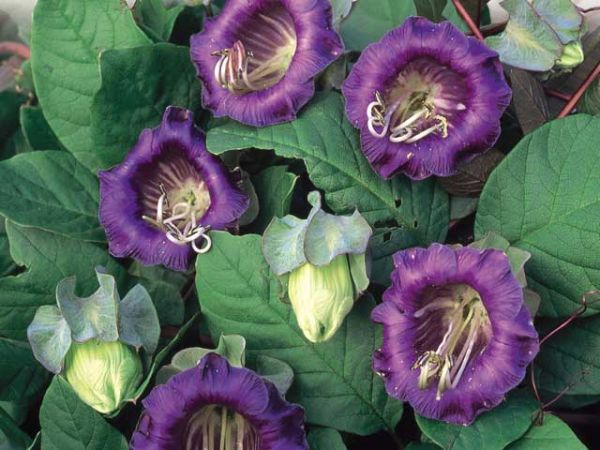
Cobaea usually starts flowering in mid-July. It has large, bell-shaped flowers, greenish at first and later violet-purple, with a characteristic saucer-like calyx. They sit singly in the leaf axils on long, tough stalks. Remove faded flowers to make the plant produce new ones.
Requirements
Cobaea needs free-draining, moderately fertile soil and a sunny, sheltered position.
Propagation
Cobaea is propagated by seed sown at the end of February or beginning of March. Soak the seeds well before sowing: cover them with room-temperature water in a jar and leave them overnight. Push them into the pots edgeways. At about 20°C they come up after 21–25 days. Plant out after mid-May, 50 cm apart.
Care
For abundant flowering, feed the plant from mid-June with phosphorus-potassium fertilisers with a minimal dose of nitrogen.
As it is a perennial in the wild, you can try overwintering the plants. A plant intended for overwintering is best grown in a container. Before bringing it indoors, cut it back to 10–15 cm. Over winter keep it at 8–12°C and water as little as possible. In March take cuttings from the overwintered plant and root them at a temperature of at least 25°C. Plants propagated this way flower earlier than those grown from seed.