Description
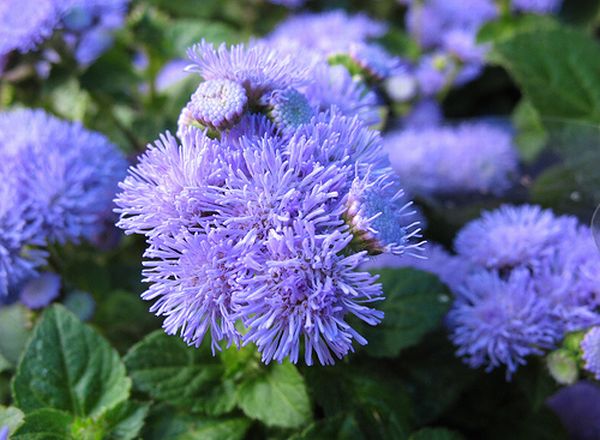
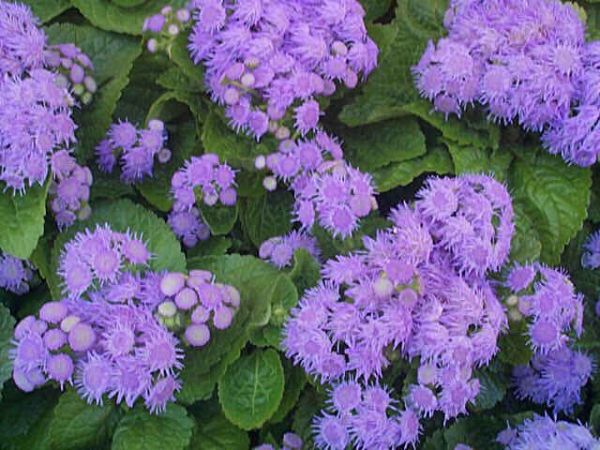
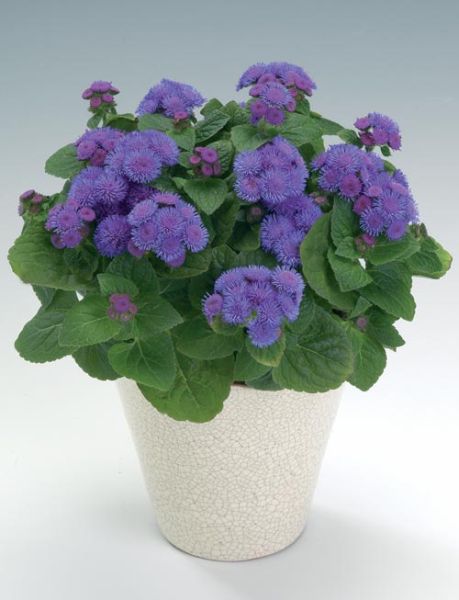
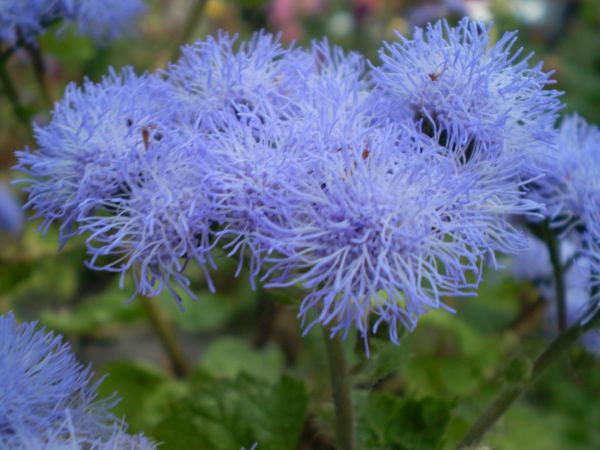
Floss flower is a perennial of the daisy family, but in our climate it is grown as an annual. It comes from Central and South America. Depending on the variety it is 10 to 60 cm tall: dwarf varieties 10–15 cm, medium ones 20–30 cm, tall ones up to 60 cm. The plants are rounded or flattened, less often loose in habit. The stems are heavily branched and hairy, and the leaves are heart-shaped to oval, slightly scalloped and also hairy.
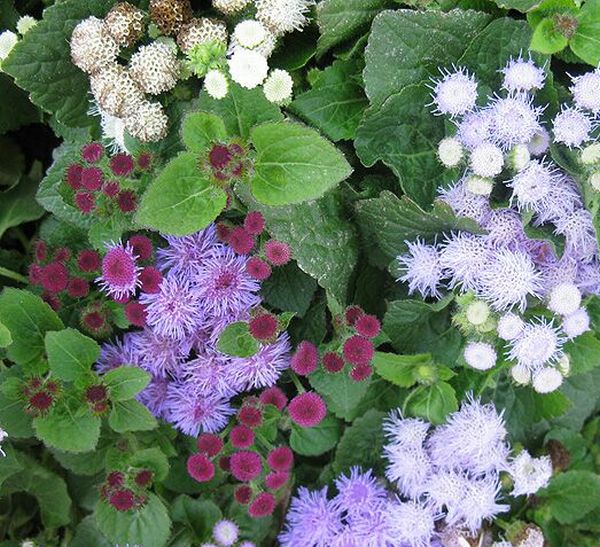
The small flower heads, made up of tubular florets, are borne at the tips of the shoots in corymbs. The flowers are blue in various shades, and sometimes dusky pink or white. Plants grown from cuttings start flowering in early May; those grown from seed flower in mid-June. Floss flower blooms profusely all summer until the first autumn frosts.
It is ideal for flower beds, edging and decorating balconies. Some vigorous varieties with large flower heads are suitable as cut flowers.
Requirements
Floss flower needs light, free-draining, fertile soil and a sunny position. It is very sensitive to low temperatures, so plant it out in the garden or on the balcony only after the last spring frosts.
Propagation
It is propagated by seed and by cuttings. Sow seeds in trays from mid-February at 18–20°C. Once they have germinated, prick out the seedlings at 3 x 4 cm, and after 3 weeks plant them in a cold frame or in pots in moderately moist compost. To propagate floss flower from cuttings, select mother plants in the garden during the growing season and pot them up at the end of August.
Care
Keep the plants over winter in a well-ventilated room at 12–14°C. Unfortunately some of them will die, but from mid-January cuttings are taken from the rest and planted in a mix of peat and sand. Bottom heat is recommended, with moderate moisture, occasional misting and shading. Plant out in the final position after 15 May, at a spacing of 10–15 x 15–20 cm.