


Description
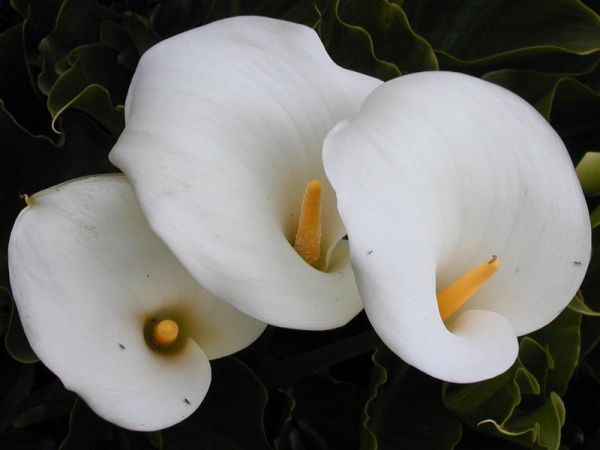
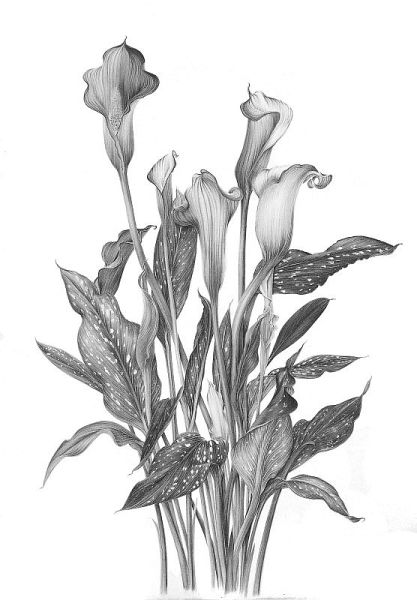
Zantedeschia, more often called the calla lily, grows wild in Central and Southern Africa, where it inhabits wetlands that dry out in summer. It has broadly arrow-shaped, fleshy leaves on straight stalks. Zantedeschia belongs to the arum family (Araceae), so its inflorescence has the shape typical of the family: a spadix surrounded by a spathe. Plants of this genus grow up to 80 cm tall. The best-known species is Z. aethiopica, with a white spathe surrounding the spadix. In pot cultivation you can also find species with yellow and lilac-pink/purple spathes and spotted leaves.
Requirements
Zantedeschia needs a bright, sunny and warm position.
Propagation
It is propagated by dividing the rhizomes. After the rest period, around late June/early July, clean the rhizomes and separate the tuber-like offsets. In mid-September plant 2–4 rhizomes together with a few smaller offsets. Always plant the rhizomes flat in the soil.
Care
When growing this plant it is essential to send it into a rest period at the right time, which ensures regular flowering.
After flowering, in mid-April to early May, it goes into a rest period lasting two months. During this time water more and more sparingly, so that the leaves almost dry. Keep it in a bright, cool place. After that, move it to the balcony or plunge it, pot and all, in the garden. Water it now and then and feed it to stimulate new growth and flowering. In late September/early October bring it indoors and repot it no deeper than it grew before. The best compost is cold-frame soil mixed with peat. Until December keep it in a room at about 10°C, and then at room temperature until the end of April. During growth and flowering, from December to April, it needs more generous watering. One plant produces on average 8–12 flowers per year of cultivation.
When plants get sick
A dangerous disease of this genus is rhizome rot, which shows as brown spots at the base of the stem and then on the rhizomes and roots. Diseased plants must be removed and burned, as it spreads quickly.
Also watch out for soft rot of the stem base, a fungal disease that rots the rhizome and roots. Over time the affected area becomes covered with a white coating.
Ringspot and streak, a viral disease, shows as spots and streaks on the leaves. Unfortunately an infected plant must be thrown out and burned immediately.
Apart from diseases, Zantedeschia can be attacked by spider mites, thrips, aphids and mealybugs.